Thinning hair. A receding hairline. A widening part. If you're weighing up your options, you've likely landed on two names: scalp micropigmentation (SMP) and hair transplant surgery . They sit at opposite ends of the spectrum — one involves pigment, the other involves follicles — yet both promise the same outcome: looking like you have more hair.
Scalp Micropigmentation vs Hair Transplant: Pros, Cons & Cost Comparison
Thinning hair. A receding hairline. A widening part. If you're weighing up your options, you've likely landed on two names: scalp micropigmentation (SMP) and hair transplant surgery. They sit at opposite ends of the spectrum — one involves pigment, the other involves follicles — yet both promise the same outcome: looking like you have more hair.
This guide breaks down exactly how they work, what results you can realistically expect, what they cost in Singapore, and — critically — who is actually the right candidate for each.
What Is Scalp Micropigmentation (SMP)?
Scalp micropigmentation is a non-surgical cosmetic procedure in which a trained practitioner deposits pigment into the upper dermis of the scalp using a micro-needle. The result mimics the appearance of tiny hair follicles or adds density to thinning areas.
SMP does not grow hair. It creates an optical illusion of density or a shaved-head look. Think of it as a highly specialised tattoo designed to replicate the appearance of stubble or fill the visual gaps between existing hairs.
Common use cases:
- Men with pattern baldness (androgenetic alopecia, AGA) seeking a buzz-cut aesthetic
- Individuals with diffuse thinning who want to reduce the contrast between scalp and hair
- Camouflaging scars from previous hair transplant surgery
- Alopecia areata or traction alopecia coverage
A well-executed SMP treatment typically takes 2–3 sessions, each 3–5 hours, spaced about a week apart. Most practitioners recommend a touch-up session at the 4–6 year mark as pigment gradually fades.
What Is a Hair Transplant?
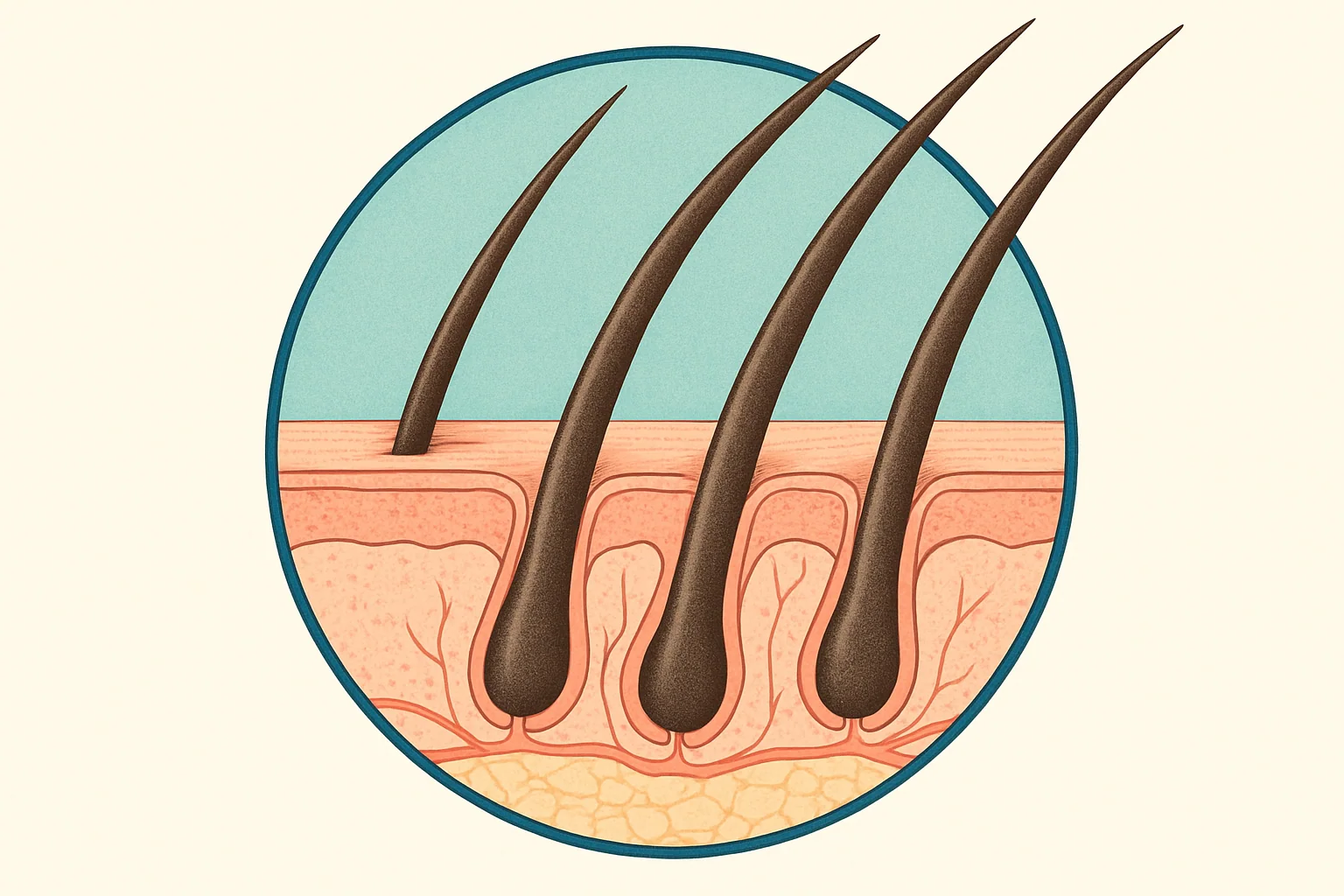
Hair transplantation is a surgical procedure that relocates healthy hair follicles — typically from a donor zone at the back and sides of the scalp — to areas experiencing thinning or loss. The two dominant techniques are:
- FUT (Follicular Unit Transplantation): A strip of scalp is excised from the donor area and dissected into individual grafts. Leaves a linear scar.
- FUE (Follicular Unit Excision): Individual follicular units are extracted one by one using a micro-punch. Minimally scarred, preferred by most modern clinics.
Unlike SMP, a successful hair transplant produces real, growing hair. Once grafts take root — typically over 9–12 months — they behave like native hair: they can be cut, styled, and coloured.
The major caveat: a transplant works with the hair you have. Donor supply is finite. Candidates with advanced Norwood Stage 5–7 hair loss may lack sufficient donor density to achieve full coverage.
Head-to-Head Comparison
| Factor | SMP | Hair Transplant (FUE) |
|---|---|---|
| **Procedure type** | Non-surgical | Surgical |
| **Anaesthesia** | Topical numbing cream | Local anaesthetic |
| **Sessions required** | 2–3 sessions | 1 (sometimes 2 for large areas) |
| **Downtime** | 4–5 days (avoid sweat/sun) | 10–14 days post-op care |
| **Results visible** | Immediately after healing | 9–12 months for full growth |
| **Results type** | Appearance of density / shaved head | Actual growing hair |
| **Longevity** | 4–6 years before touch-up | Permanent (transplanted hair is DHT-resistant) |
| **Suitable for advanced loss?** | Yes — any Norwood stage | Limited by donor supply |
| **Reversibility** | Fades over time; laser removal possible | Permanent |
| **Average cost (SG)** | SGD 3,000–8,000 | SGD 8,000–25,000+ |
Pros and Cons: SMP
Pros:
- No surgery, no scarring — no risk of poor wound healing or linear strip scars
- Immediate results — within days of final session, appearance is transformed
- Works at any stage of hair loss — effective even for completely bald scalps
- Lower cost — significantly more accessible than surgery
- Can camouflage transplant scars — many transplant patients use SMP as a complementary step
Cons:
- Hair does not grow — purely aesthetic, not restorative
- Periodic maintenance — pigment fades and requires touch-ups every several years
- Requires commitment to a shaved/very-short look for the most natural result
- Quality varies enormously — choosing an untrained practitioner carries risk of unnatural colour, dot shapes, or placement that looks artificial
- Not a medical intervention — does not address the underlying cause of hair loss
Pros and Cons: Hair Transplant
Pros:
- Real, permanent hair growth — transplanted follicles are DHT-resistant and last a lifetime
- Natural-looking results with skilled surgeons
- Flexible styling — can grow, cut, and style transplanted hair normally
- Long-term cost efficiency — one-time procedure with no recurring maintenance fees
Cons:
- Surgical risks — infection, scarring, poor graft survival (though rare with experienced surgeons)
- Long wait for results — full density takes up to 12 months; initial shedding ("shock loss") at weeks 2–6 is normal but alarming
- Donor limitation — patients with advanced or diffuse loss may not have adequate donor supply
- Higher upfront cost
- Ongoing medical management still required — without treating underlying AGA with medications, native hair continues to thin around grafts
Cost Breakdown: Singapore
SMP in Singapore:
Pricing is usually based on area treated or number of sessions. Expect to pay SGD 3,000–8,000 for a full scalp treatment across 3 sessions. Partial hairline work starts lower.
Hair Transplant (FUE) in Singapore:
Most Singapore clinics price by the graft. Rates typically run SGD 5–12 per graft, with the average procedure involving 1,500–3,000 grafts. Total costs commonly range from SGD 8,000 to SGD 25,000+ depending on extent of loss and clinic.
Important: Always request an itemised quote. Some clinics quote per graft, others quote per session or by zone. Beware of low headline numbers that exclude anaesthesia, post-op medications, or follow-up visits.
Which One Is Right for You?
There is no universal answer — it depends on your goals, stage of hair loss, and how you relate to the idea of surgery.
Consider SMP if:
- You are Norwood Stage 5–7 and lack donor hair for a full transplant
- You want results quickly and without surgery
- You are comfortable with a closely-cropped look
- You want to camouflage an existing transplant scar
- Your priority is value for money
Consider a hair transplant if:
- You are Norwood Stage 2–4 with sufficient donor density
- You want actual growing hair you can style
- You are prepared for 9–12 months of gradual regrowth
- You are already managing AGA medically and want to restore what medication cannot reverse
Many men choose both — a transplant for the hairline and crown, plus SMP to add visual density in transitional zones and blend any scarring. The approaches are not mutually exclusive.
The Role of Medical Treatment
Neither SMP nor a hair transplant stops the underlying androgenetic alopecia. Without addressing DHT-driven follicle miniaturisation, native hairs surrounding a transplant will continue to thin.
Evidence-based first-line treatments for AGA include:
- Oral minoxidil — vasodilator that prolongs anagen phase; studied in multiple randomised controlled trials including Sinclair et al. (2021) in the Journal of the American Academy of Dermatology
- Finasteride / dutasteride — 5-alpha reductase inhibitors; dutasteride demonstrated superior efficacy to finasteride in a double-blind RCT by Tsunemi et al. (2016) in the Journal of Dermatology
Many hair specialists recommend stabilising hair loss medically before committing to either a transplant or SMP, so you're not making permanent decisions on a moving target.
FAQ — Scalp Micropigmentation vs Hair Transplant
Q: Is SMP permanent?
A: SMP is long-lasting but not permanent. Pigment typically fades over 4–6 years due to sun exposure and natural skin turnover. Touch-up sessions maintain the result. It can be fully removed via laser if desired.
Q: Can I have SMP after a hair transplant?
A: Yes, and this is a common combination. SMP adds visual density between transplanted hairs and can camouflage the linear scar from FUT procedures.
Q: Does SMP look natural on a close-shaved head?
A: When performed by a skilled practitioner using the correct pigment and dot technique, SMP is essentially indistinguishable from a shaved head. The key is matching pigment tone to your natural hair colour.
Q: How long is the recovery after FUE hair transplant?
A: Most patients return to desk work within 3–5 days. Strenuous activity is restricted for 2 weeks. Grafts shed at weeks 2–6 (normal); new growth begins at 3–4 months with full results at 9–12 months.
Q: Can SMP stop hair loss?
A: No. SMP is a cosmetic procedure only. It does not affect hair follicle biology and will not slow or reverse androgenetic alopecia.
Q: What Norwood stage is too advanced for a hair transplant?
A: There is no hard cut-off, but Norwood Stage 6–7 patients typically have insufficient donor density for meaningful coverage. A transplant surgeon will assess donor supply at consultation. SMP remains a strong option at any stage.
The Bottom Line
SMP and hair transplants serve different goals. SMP is fast, accessible, and works regardless of how much hair you have left. A transplant delivers real growth but costs more, demands patience, and depends on donor availability.
If you're managing active hair loss, the conversation starts with understanding your biology — not just your aesthetic options.
Noah offers evidence-based hair loss treatment plans, designed around your hair loss stage and goals.
Start your assessment at ofnoah.sg
References:
- Rassman WR, Pak JP, Kim J. Scalp micropigmentation: a useful treatment for hair loss. Facial Plastic Surgery Clinics of North America. 2013;21(3):497–503.
- Sinclair R, Wewerinke M, Jolley D. Treatment of female pattern hair loss with oral antiandrogens. Br J Dermatol. 2005;152(3):466–473.
- Tsunemi Y, et al. Long-term effects of dutasteride on male androgenetic alopecia. J Dermatol. 2016;43(9):1051–1057.
- International Society of Hair Restoration Surgery. 2022 Practice Census Results. ISHRS; 2022.
- Bernstein RM, Rassman WR. Follicular unit transplantation: 2005. Dermatol Clin. 2005;23(3):393–414.
Reading about it is a good start.
Talking to a doctor is better. Answer a few questions online and a licensed Noah doctor will take it from there, privately.
Get started
Written by our Editorial Team
Last updated 20 Apr 2026