Hair Loss
April 15, 2026
·
read

Hair Loss Shampoo: Do Anti-Hair Loss Shampoos Actually Work?

No items found.

Article 1 (EN/SG)

For a comprehensive guide to hair loss treatment, see our complete guide.

Title: Hair Loss Shampoo: Do Anti-Hair Loss Shampoos Actually Work? Slug: /blog/hair-loss-shampoo-do-they-work Target Keywords: hair loss shampoo, anti hair loss shampoo, best shampoo for hair loss men Word Count Target: ~1500 CTA Destination: ofnoah.sg


Hair Loss Shampoo: Do Anti-Hair Loss Shampoos Actually Work?

If you've spent any time searching for a hair loss shampoo, you already know the market is overwhelming — shelves and screens packed with bold promises, dramatic before-and-afters, and ingredient lists that read like a chemistry exam. But before you reach for another bottle, there's a more important question to answer: do anti-hair loss shampoos actually work, or are they expensive placebos?

The honest answer is: it depends entirely on what's in them — and what you expect them to do.

Why Most People Lose Hair in the First Place

Before evaluating any shampoo, you need to understand the mechanism behind the most common form of hair loss in men: androgenetic alopecia (AGA), better known as male pattern baldness.

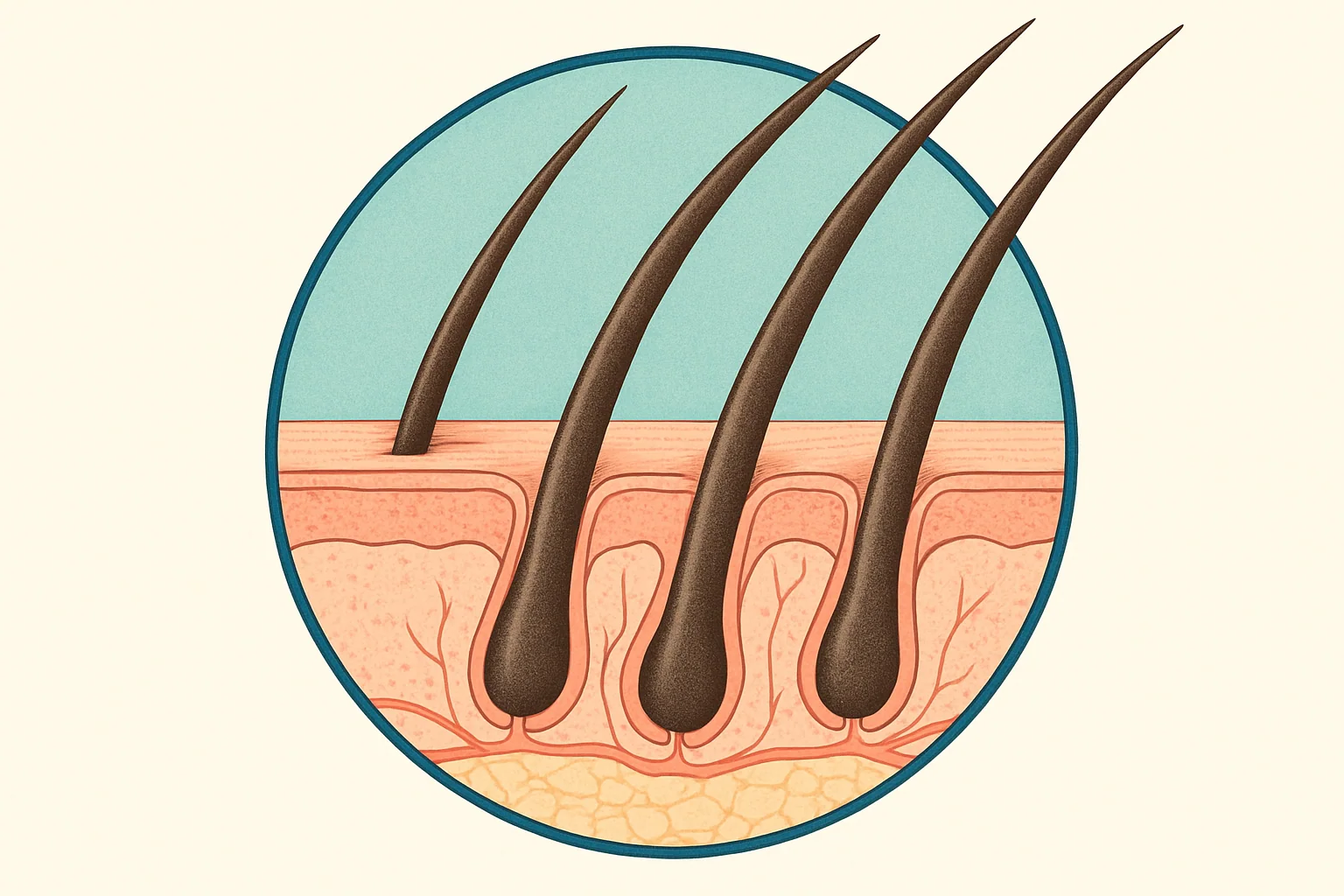
AGA affects up to 50% of men by age 50 and is driven by a hormone called dihydrotestosterone (DHT). DHT is a potent derivative of testosterone, produced when the enzyme 5-alpha reductase converts free testosterone in the scalp. Over time, DHT binds to androgen receptors in genetically susceptible hair follicles, causing them to progressively miniaturise — producing finer, shorter hair with each cycle until the follicle stops producing visible hair altogether.¹

This matters because a shampoo that doesn't address DHT or follicle health in some way is, at best, a cosmetic product that makes your hair look fuller. That's not nothing — but it's not what most people buying an "anti hair loss shampoo" are actually hoping for.

What the Evidence Says About Key Ingredients

Not all hair loss shampoos are created equal. Here's what the clinical literature says about the most commonly used active ingredients.

Ketoconazole

Ketoconazole is an antifungal agent, but its relevance to hair loss runs deeper than treating dandruff. A landmark study by Piérard-Franchimont et al. (1998) found that a 2% ketoconazole shampoo used regularly produced measurable increases in hair density and shaft diameter in men with AGA — results comparable, in some metrics, to 2% minoxidil lotion.² The proposed mechanism includes both antifungal action (reducing scalp inflammation that contributes to follicle stress) and mild DHT-inhibiting properties at the scalp level.

Evidence strength: Moderate. Multiple small trials support it; larger RCTs are needed.

Caffeine

Caffeine applied topically has shown the ability to penetrate the hair follicle and counteract the growth-suppressing effect of testosterone in vitro. Fischer et al. (2007) demonstrated that caffeine stimulated human hair follicle growth and significantly reduced testosterone-induced suppression of follicle elongation in cell cultures.³ Subsequent human studies using caffeine-based shampoos have shown modest improvements in hair shaft diameter and self-assessed density.⁴

Evidence strength: Promising. Mechanism is biologically plausible; human trial data is growing but not yet definitive.

Piroctone Olamine

Piroctone olamine is an antimicrobial active with anti-seborrheic properties increasingly studied as an AGA adjunct. Bussoletti et al. (2011) found that piroctone olamine formulations improved hair density and reduced hair loss in both male and female participants over a 24-week period.⁵ It's thought to work partly by reducing scalp inflammation and sebum dysregulation — both of which accelerate DHT-driven miniaturisation.

Evidence strength: Early but consistent. Often used in combination formulas.

Saw Palmetto (Serenoa Repens)

Saw palmetto is a plant-derived 5-alpha reductase inhibitor that works on a similar principle to finasteride, though with a gentler inhibitory profile. A two-year comparative study by Rossi et al. (2012) found that saw palmetto produced a 38% improvement in hair count — lower than finasteride's 68%, but with a notably cleaner side-effect profile.⁶ In topical shampoo form, bioavailability is limited compared to oral supplementation, but when formulated at meaningful concentrations, it may still offer scalp-level 5-alpha reductase inhibition.

Evidence strength: Moderate for oral supplementation; limited but plausible for topical use.

What Doesn't Work (or Barely Works)

Biotin shampoos dominate retail shelves but the clinical evidence for topical biotin on hair loss is essentially absent. Biotin deficiency can cause hair loss, but deficiency is rare in adults eating a normal diet — and biotin cannot meaningfully penetrate the follicle through the scalp when applied topically.⁷ Similarly, pure "thickening" shampoos using protein coating agents can make individual strands appear fuller but do nothing to address follicle health or DHT activity.

What Anti-Hair Loss Shampoos Can and Can't Do

Let's be clear about the limitations:

What a good hair loss shampoo can do:

  • Reduce scalp inflammation that accelerates follicle miniaturisation
  • Deliver mild DHT-inhibiting actives at the scalp level
  • Improve scalp microbiome balance, sebum regulation, and circulation
  • Slow the visible progression of thinning when used consistently
  • Complement systemic treatments (minoxidil, oral DHT blockers) for enhanced results

What no shampoo alone can do:

  • Regrow hair on follicles that have been dormant for years
  • Replace the efficacy of clinically proven oral treatments for moderate-to-severe AGA
  • Produce results equivalent to LLLT or procedural interventions

The critical insight: a shampoo is a topical, rinse-off product. Even actives with strong evidence only have minutes of scalp contact time per wash. This means concentration matters enormously — an underdosed ingredient that looks impressive on a label may deliver minimal actual benefit.

The Best Shampoo for Hair Loss in Men: What to Look For

When evaluating the best shampoo for hair loss men are dealing with — particularly DHT-driven pattern thinning — look for these criteria:

  1. At least one clinically studied active (ketoconazole, caffeine, piroctone olamine, saw palmetto extract)
  2. Appropriate active concentration — formulas that list actives last on the ingredient list are likely underdosed
  3. Scalp-first formulation — designed to dwell on the scalp rather than primarily condition the hair shaft
  4. No harsh sulphates or silicones that may strip or occlude follicles
  5. Paired approach — ideally part of a system that includes a leave-in serum or treatment for extended contact time

Consistency is non-negotiable. Most clinical trials showing measurable benefit ran for 24 weeks or longer. A shampoo used sporadically will not produce the cumulative anti-inflammatory and mild hormonal benefits it's designed to deliver.

How Noah Approaches Hair Loss Shampoo

Noah's AGA shampoo formulation is built around the evidence hierarchy above — combining scalp-active ingredients at therapeutic concentrations with a system designed for daily use. It's engineered as the base layer of a complete AGA protocol, not a standalone cure.

Used alone, it supports a healthier scalp environment that is less hostile to follicle function. Used alongside Noah's broader AGA treatment protocol — which can include topical minoxidil and oral DHT blockers prescribed by licensed physicians — it helps create the scalp conditions where those treatments can work best.


Frequently Asked Questions

Q: Can a hair loss shampoo stop hair loss completely? A: No shampoo alone can stop AGA completely if the underlying hormonal driver (DHT) isn't addressed systemically. However, shampoos with clinically active ingredients can slow visible progression and complement medical treatments.

Q: How long does it take for an anti-hair loss shampoo to show results? A: Meaningful changes in hair density typically require at least 12–24 weeks of consistent daily use. Early results (reduced shedding, improved scalp feel) may appear sooner.

Q: Is the best shampoo for hair loss in men different from women's formulas? A: AGA in men is primarily DHT-driven; female pattern hair loss has different hormonal dynamics. A shampoo with 5-alpha reductase inhibitors is most relevant for male pattern loss. Women may benefit more from anti-inflammatory and circulation-supporting actives.

Q: Can I use a hair loss shampoo with minoxidil? A: Yes — and it's often recommended. Using an anti-DHT shampoo before applying minoxidil can improve scalp condition and potentially improve absorption. Wait until your scalp is dry before applying topical minoxidil after shampooing.

Q: Are hair loss shampoos safe for daily use? A: Formulas designed for daily use should be sulphate-free and pH-balanced. Ketoconazole shampoos are often recommended 2–3 times per week rather than daily due to their drying potential; most other actives are suitable for daily application.


Ready to tackle hair loss with ingredients that have clinical backing? Explore Noah's AGA shampoo and complete treatment system at ofnoah.sg — Singapore's telehealth platform connecting you with licensed doctors who can build a personalised protocol around your specific pattern.


References

  1. Kaufman KD. "Androgens and alopecia." Mol Cell Endocrinol. 2002;198(1-2):89–95.
  2. Piérard-Franchimont C, et al. "Ketoconazole shampoo: effect of long-term use in androgenic alopecia." Dermatology. 1998;196(4):474–477.
  3. Fischer TW, et al. "Effect of caffeine and testosterone on the proliferation of human hair follicles in vitro." Int J Dermatol. 2007;46(1):27–35.
  4. Völker JM, et al. "Caffeine and its pharmacological benefits in the management of androgenetic alopecia." Skin Pharmacol Physiol. 2020;33(3):93–109.
  5. Bussoletti C, et al. "Cosmetic treatment with piroctone olamine for baldness and/or hair thinning." J Appl Cosmetol. 2011;29(1):1–9.
  6. Rossi A, et al. "Comparitive effectiveness of finasteride vs Serenoa repens in male androgenetic alopecia: a two-year study." Int J Immunopathol Pharmacol. 2012;25(4):1167–1173.
  7. Trüeb RM. "Serum biotin levels in women complaining of hair loss." Int J Trichology. 2016;8(2):73–77.


Find out what your BMI indicates

Your BMI indicates that you may be
Slider
BMI provides an estimate of weight classification. For a thorough analysis of your weight and medical options, arrange a teleconsult with a Noah doctor.

*Medical treatment may not be appropriate for you even if you have a high BMI
Your estimated weight loss in 1 year*
-
00
kg
-9%
90
kg
78
kg
99
81
63
Weight loss progress graph on transparent background showing treatment results
*In a 56-week trial with 3,731 non-diabetic overweight (BMI ≥27) or obese (BMI ≥30) participants, those who finished (1,812 patients) lost an average of 9.2% body weight with Saxenda, alongside diet and exercise.
No items found.
Written by our Editorial Team
Last updated
15/4/2026
disclaimer