Male hair loss affects roughly two in three men by age 50, and finasteride is one of the most clinically studied oral treatments available. For many men it works well — trial data consistently shows it slows or stops progression in the majority of users. But like every prescription medicine, finasteride carries a side-effect profile worth understanding before you swallow the first tablet.
Finasteride Side Effects: What Men Should Know Before Starting Treatment
Male hair loss affects roughly two in three men by age 50, and finasteride is one of the most clinically studied oral treatments available. For many men it works well — trial data consistently shows it slows or stops progression in the majority of users. But like every prescription medicine, finasteride carries a side-effect profile worth understanding before you swallow the first tablet.
This article explains the known risks clearly and honestly, drawing on peer-reviewed evidence, so you can have an informed conversation with a doctor before starting treatment.
What Is Finasteride and How Does It Work?
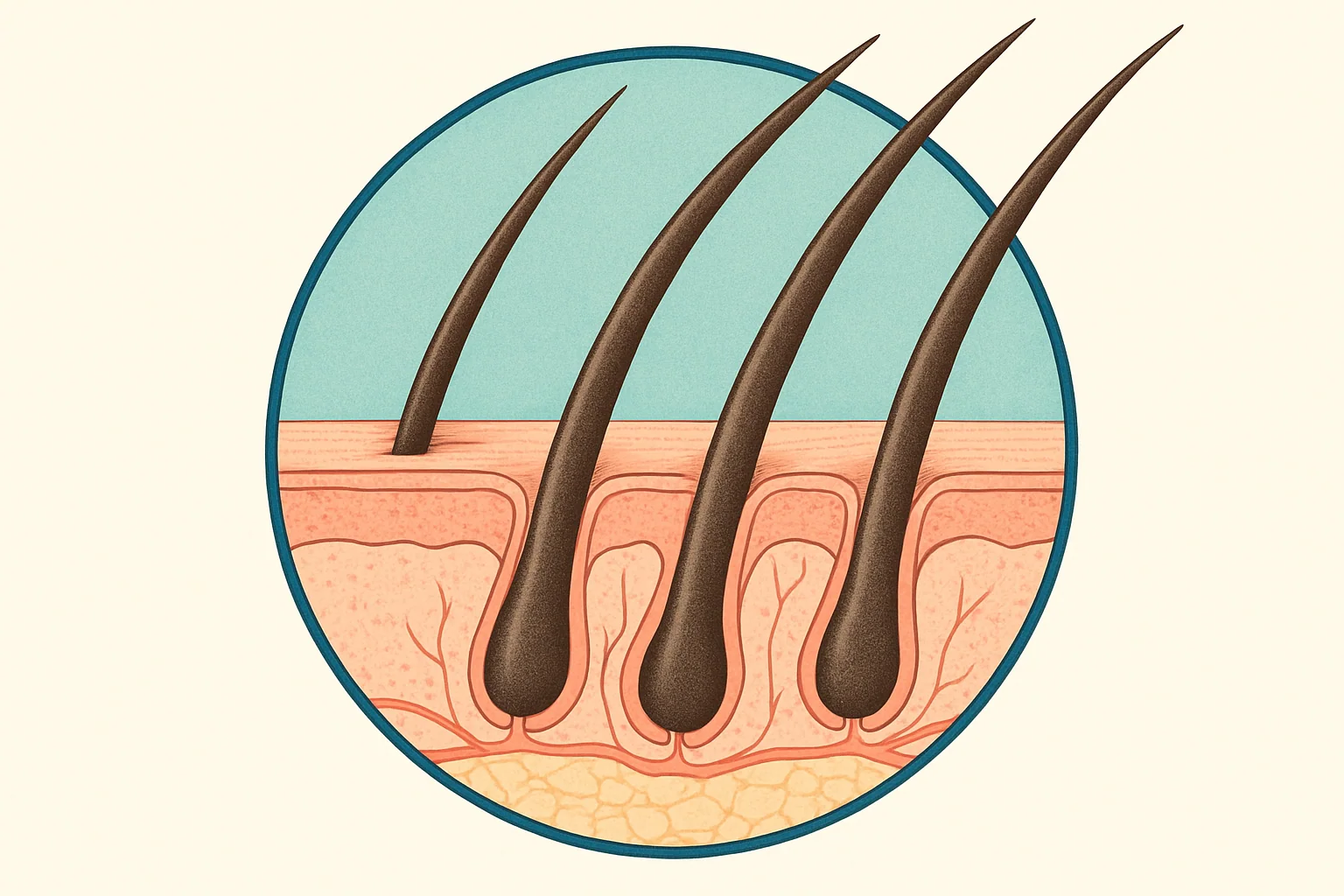
Finasteride is a 5-alpha reductase inhibitor. It works by blocking the enzyme that converts testosterone into dihydrotestosterone (DHT) — the androgen primarily responsible for miniaturising hair follicles in genetically susceptible men. At the 1 mg dose approved for male pattern hair loss (androgenetic alopecia, or AGA), finasteride reduces scalp DHT by approximately 60–70%.
Because DHT acts throughout the body — not only on the scalp — reducing it systemically is the mechanism behind both finasteride's benefits and its side effects.
The Most Commonly Reported Side Effects
Clinical trials, including the landmark Prostate Cancer Prevention Trial (PCPT) conducted by Thompson and colleagues (2003, New England Journal of Medicine), documented the following categories of adverse events in men taking 5 mg finasteride (the higher prostate dose):
Sexual side effects are the most discussed. These include:
- Decreased libido (reduced sex drive)
- Erectile dysfunction (difficulty achieving or maintaining an erection)
- Reduced ejaculate volume
- Ejaculatory dysfunction
In the PCPT data, these events were reported in a minority of participants, and many resolved after stopping the medication. At the lower 1 mg hair-loss dose, the incidence is generally reported as lower still — but not zero.
Breast tissue changes (gynaecomastia — tenderness or enlargement of breast tissue) are less common but documented. Any new breast lump or nipple discharge should be evaluated by a doctor promptly.
Mood-related effects are reported anecdotally and in some observational studies, including low mood and, in rare cases, depressive symptoms. The mechanism is not fully established; DHT plays a role in neurosteroid synthesis, and its suppression may affect some men's mood.
Post-Finasteride Syndrome: What the Research Says
The term post-finasteride syndrome (PFS) refers to a constellation of persistent sexual, neurological, and psychological symptoms that some men report continuing after they stop taking finasteride. This is not a widely accepted clinical diagnosis in mainstream urology, but it is the subject of ongoing research.
Dr Michael Irwig's 2012 study, published in the Journal of Sexual Medicine, examined a group of otherwise healthy young men who reported persistent sexual side effects for at least three months after discontinuing finasteride. The study found that a subset of men described sexual dysfunction, depressive symptoms, and cognitive difficulties that did not resolve on their own timeline.
The scientific debate around PFS continues. Potential mechanisms under investigation include persistent alterations in neurosteroid levels, changes in androgen receptor expression, and epigenetic factors. No definitive causal pathway has been established, and large-scale controlled trials in this area are limited.
What this means for you: PFS as described appears to affect a small proportion of users, and the majority of men who experience side effects find they resolve when they stop the medication. However, the existence of persistent cases is real and should be part of any honest risk conversation.
Who Is at Higher Risk of Side Effects?
There is no validated genetic or biomarker test that reliably predicts who will experience side effects. However, some patterns appear in the literature:
- Younger men who are especially sensitive to hormonal shifts may be more likely to notice mood or sexual changes.
- Men with pre-existing sexual dysfunction or anxiety may be at higher baseline risk.
- Nocebo effect — the phenomenon where expecting side effects increases the likelihood of experiencing them — has been documented in finasteride trials. In one well-known blinded study, men who were told they were taking finasteride reported significantly higher rates of sexual dysfunction than those given the same drug without disclosure.
This does not mean side effects are imaginary. It means context matters, and it underlines why a thorough pre-treatment discussion with a prescribing doctor is important.
How Doctors Monitor Finasteride Users
A responsible prescriber will typically:
- Take a baseline sexual health history before starting treatment, so any changes can be properly attributed and tracked.
- Review PSA (prostate-specific antigen) values — finasteride approximately halves PSA levels, so the baseline and any future PSA readings need to be interpreted accordingly.
- Schedule follow-up consultations — typically at 3 months and 12 months — to assess response and check for side effects.
- Document mood and energy — some clinics use validated questionnaires (IIEF, SHIM) to track sexual function objectively over time.
If side effects occur and are troublesome, stopping finasteride is the first step. In most cases, effects resolve within weeks to months. If they do not, a specialist referral — urologist, endocrinologist, or sexual health physician — is appropriate.
Finasteride vs Alternatives: Putting Risk in Context
It is worth noting that doing nothing also carries a risk: progressive hair loss can have real psychological consequences, including reduced self-confidence and quality of life. The relevant question is not "is finasteride risk-free?" (it is not) but "do the benefits outweigh the risks for this individual?"
Topical finasteride (applied directly to the scalp) has emerged as a lower-systemic-exposure alternative. Early evidence suggests it achieves meaningful DHT suppression at the scalp while reducing serum DHT levels less than the oral form — potentially a favourable profile for men concerned about systemic side effects. However, long-term comparative data is still accumulating.
Minoxidil (topical or oral low-dose) works through a different mechanism entirely and does not affect DHT. Its side-effect profile is distinct and does not include sexual dysfunction.
Combination therapy (finasteride + minoxidil) is the most studied multi-agent approach in AGA and may allow lower doses of each agent to achieve the same result — though this is a clinical judgement, not a self-prescribing decision.
Frequently Asked Questions
Q: Do finasteride side effects go away if I stop taking it?
A: For the majority of men, yes. Sexual side effects reported during treatment typically resolve within weeks to a few months after stopping. A smaller number of men — as documented by Irwig (2012) — report symptoms that persist longer, though the mechanism and prevalence of this outcome is still under investigation.
Q: Can I drink alcohol while taking finasteride?
A: There is no clinically significant drug-alcohol interaction documented with finasteride at hair-loss doses. However, alcohol itself can impair sexual function and sleep quality, which can confound side-effect assessment. Moderation is advisable.
Q: Does finasteride cause permanent infertility?
A: Finasteride can reduce ejaculate volume and in some cases affect sperm parameters. These effects are generally reversible after stopping the medication. Men planning to conceive should discuss the timing of any treatment with their doctor.
Q: Will finasteride affect my prostate cancer risk?
A: The PCPT (Thompson et al., 2003) found that 5 mg finasteride (the prostate dose, five times the hair-loss dose) reduced overall prostate cancer incidence by approximately 25%, though it was associated with a slightly higher rate of high-grade tumours in those who did develop cancer. This finding remains the subject of ongoing analysis. The hair-loss dose (1 mg) has a far smaller systemic effect and is not routinely considered a prostate cancer intervention.
Q: How long do I need to take finasteride to see results?
A: Hair growth cycles are slow. Most clinical trials observe meaningful results at 12 months, with some improvement visible at 6 months. Stopping early — before the medication has had time to act — is a common reason men conclude it "didn't work."
The Bottom Line
Finasteride is an effective treatment for male pattern hair loss with a decades-long clinical record. Its side-effect profile is real and deserves honest discussion — not dismissal, and not exaggeration. The data shows that most men tolerate it well; a meaningful minority experience side effects, most of which resolve on stopping; and a small number report persistent symptoms that remain an active area of research.
The right starting point is a consultation with a qualified doctor who will take your full medical and sexual health history, explain the evidence, and monitor you if you decide to proceed.
Reviewed your options and want a clinical opinion?
Noah connects you with licensed doctors in Singapore who specialise in male hair loss treatment. Consultations are conducted online, at your convenience — no waiting room required.
👉 Start your consultation at ofnoah.sg
This article is for informational purposes only and does not constitute medical advice. Always consult a qualified healthcare professional before starting, stopping, or changing any medication.
Reading about it is a good start.
Talking to a doctor is better. Answer a few questions online and a licensed Noah doctor will take it from there, privately.
Get started
Written by our Editorial Team
Last updated 20 Apr 2026