Minoxidil was first developed as an oral antihypertensive drug in the 1970s. Unexpected hair regrowth in patients on oral minoxidil led to the development of topical formulations for androgenetic alopecia (AGA), which received US FDA approval in 1988 for men and 1991 for women.¹
How Minoxidil Works (and Why Side Effects Happen)
Minoxidil was first developed as an oral antihypertensive drug in the 1970s. Unexpected hair regrowth in patients on oral minoxidil led to the development of topical formulations for androgenetic alopecia (AGA), which received US FDA approval in 1988 for men and 1991 for women.¹
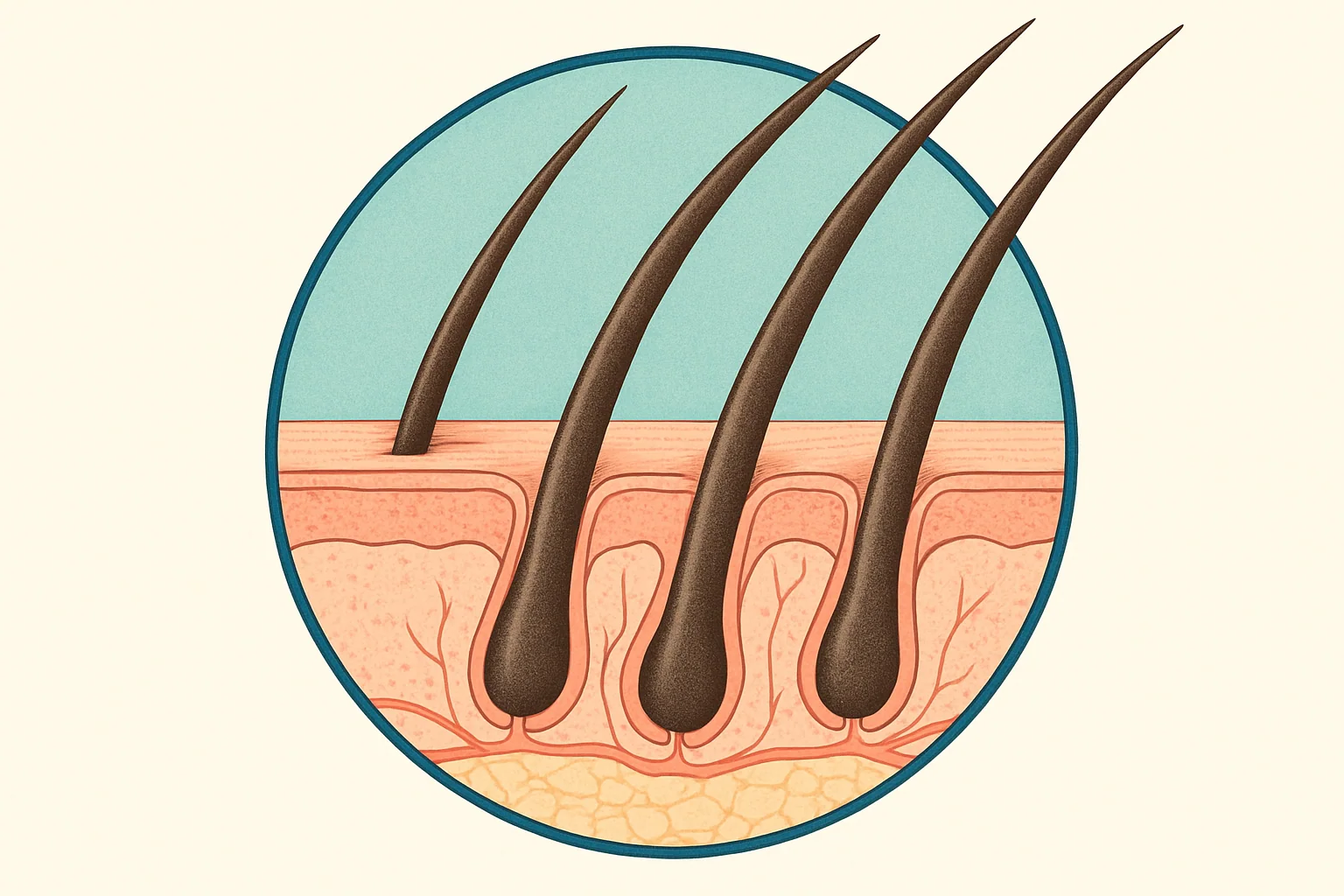
Topically applied, minoxidil is thought to act primarily as a potassium channel opener that widens blood vessels in the scalp, prolonging the anagen (growth) phase of the hair cycle and increasing follicle size.² Because the drug interferes with the hair cycle itself, some side effects are a direct consequence of how it works — not a sign that something has gone wrong.
Common Side Effects: What's Normal
1. Minoxidil Shedding (Initial Hair Loss)
This is the most alarming side effect for new users, and the most commonly misunderstood.
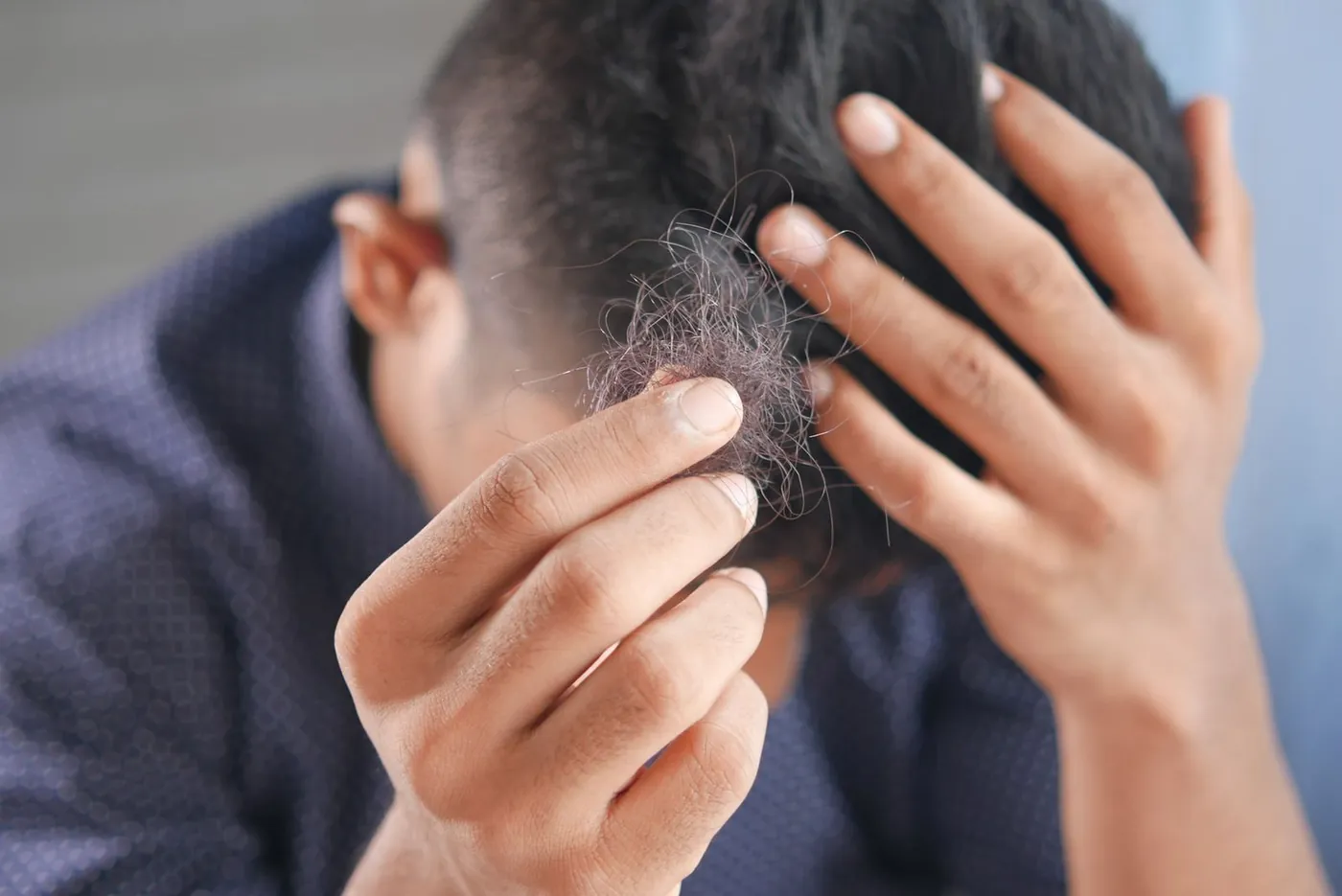
Within the first 2–8 weeks of starting minoxidil, many users experience a period of accelerated shedding known as telogen effluvium. Existing hairs that were already at the end of their resting phase are pushed out as new anagen hairs begin to grow underneath them.
This is temporary. Studies consistently show that initial shedding resolves within 1–3 months of continuous use, after which regrowth typically becomes visible.³ Stopping treatment at this stage — which many people do — forfeits the benefit just before it would appear.
What to do: Stay the course. If shedding is severe (handfuls per wash, bald patches widening rapidly), consult a doctor to rule out other causes.
2. Scalp Irritation, Itching, and Dryness
Scalp itch and flaking affect an estimated 7% of topical minoxidil users.⁴ In most cases, the culprit is propylene glycol (PG), a solvent used in many minoxidil formulations to improve absorption.
If irritation is your main complaint:
- Switch to a minoxidil foam or a PG-free solution
- Ensure you're applying to a dry scalp (wet skin can increase absorption and irritation)
- Use a gentle, sulphate-free shampoo
Contact dermatitis — a more pronounced redness, blistering, or burning — is less common but possible. If the reaction is severe or spreads beyond the scalp, stop application and see a doctor.
3. Facial or Body Hair Growth (Hypertrichosis)
Minoxidil's growth-stimulating effects aren't perfectly targeted. Some users notice increased hair growth on the forehead, temples, or upper cheeks — particularly with liquid formulations that run during sleep.⁵
This is more common in women and usually resolves if application technique is improved (apply to the crown or affected area only, avoid hairline application before bed). Unwanted facial hair typically diminishes within a few months of stopping treatment or correcting application method.
4. Scalp Flaking / Dandruff
Some users develop or notice worsening dandruff. This is often related to propylene glycol irritation or changes in scalp sebum production. A zinc pyrithione or ketoconazole shampoo used 2–3 times per week typically controls this without needing to stop minoxidil.
Less Common Side Effects: Keep an Eye On These
5. Headaches
Mild headaches in the first few weeks are reported by some users, likely due to low-level systemic absorption causing slight vasodilation. These typically resolve on their own. If persistent or severe, see a doctor.
6. Dizziness or Light-Headedness
Rare with topical minoxidil at standard concentrations (2% or 5%). If you experience dizziness, check whether you're applying more than the recommended dose (typically 1 mL twice daily for solution, half a capful for foam). More is not more effective — it only increases systemic absorption risk.
7. Fluid Retention / Swelling
Minoxidil's vasodilatory properties can, in rare cases, cause water retention — presenting as swelling in the hands, feet, or face. This is more commonly associated with oral minoxidil and very high topical doses. If swelling is new and unexplained, discontinue and seek medical review.
Serious Side Effects: When to Seek Medical Attention Immediately
8. Heart Palpitations or Rapid Heartbeat
Systemic absorption of topical minoxidil is generally low (approximately 1.4% of the applied dose reaches systemic circulation).⁶ However, in individuals with pre-existing cardiovascular conditions, even small amounts can affect heart rate.
Seek urgent care if you experience:
- A racing or irregular heartbeat (palpitations)
- Chest pain or tightness
- Shortness of breath at rest
These symptoms are uncommon with topical use at recommended doses, but they are the most serious potential side effect of minoxidil and should never be dismissed.
9. Sudden or Severe Allergic Reaction
Hives, widespread rash, swelling of the face, lips, or throat, or difficulty breathing are signs of a systemic allergic reaction. Stop using the product immediately and call emergency services.
Is Minoxidil Safe Long-Term?
Topical minoxidil has one of the longest safety records of any hair loss treatment. Clinical use spans over 35 years, and multiple systematic reviews and meta-analyses support its efficacy and tolerability for both men and women with AGA.⁷·⁸
The key caveats:
- Continuous use is required. Hair regrowth gained with minoxidil typically reverses within 3–6 months of stopping.
- Pre-existing cardiovascular conditions require doctor clearance before starting.
- Pregnancy and breastfeeding are absolute contraindications — minoxidil is teratogenic in animal studies and its safety in human pregnancy is not established.⁹
- Children under 18 should not use minoxidil without medical supervision.
Who Should Consult a Doctor Before Starting?
You should speak to a doctor before beginning minoxidil if you:
- Have a history of heart disease, low blood pressure, or kidney disease
- Are pregnant, planning to become pregnant, or breastfeeding
- Are currently taking antihypertensive medications
- Experience sudden, patchy, or rapidly progressing hair loss (which may indicate alopecia areata or another condition requiring different treatment)
AEO FAQ — People Also Ask
Q: Does minoxidil shedding mean it's not working? A: No. Initial shedding (weeks 2–8) is a normal part of how minoxidil works — resting hairs exit to make way for new growth. It typically stops within 3 months. Discontinuing during this phase is the most common reason people don't see results.
Q: Can minoxidil cause permanent hair loss? A: No. Minoxidil does not cause permanent hair loss. The shedding phase is temporary. Any hair lost during this period grows back as part of the treatment's normal cycle.
Q: How long before minoxidil side effects go away? A: Most side effects (shedding, scalp irritation, headache) resolve within 4–12 weeks of continued use. If they persist or worsen, consult a doctor.
Q: Can I use minoxidil every day? A: Yes — twice daily application is the standard recommended dose for most formulations. Once-daily application has also shown efficacy in some studies, particularly for foam formulations.
Q: Is 5% minoxidil safer than 2%? A: Both concentrations have a well-established safety profile. 5% is more effective and approved for men; 2% is the standard for women, though 5% is used off-label in women under medical supervision. Higher concentration means slightly more systemic absorption risk.
Q: Can I use minoxidil if I have high blood pressure? A: You should consult your doctor first. Minoxidil was originally a blood pressure medication, and although topical absorption is low, it can interact with antihypertensive medications.
The Bottom Line
Most minoxidil side effects are mild, temporary, and manageable. The initial shedding phase is the hardest part — and it's also the most common reason people quit too early. Understanding that shedding is part of the process, not evidence that treatment is failing, is one of the most important things you can know before you start.
For serious symptoms — palpitations, chest pain, severe swelling — stop treatment and seek medical care.
References
- Olsen EA, Dunlap FE, Funicella T, et al. A randomized clinical trial of 5% topical minoxidil versus 2% topical minoxidil and placebo in the treatment of androgenetic alopecia in men. J Am Acad Dermatol. 2002;47(3):377–385.
- Messenger AG, Rundegren J. Minoxidil: mechanisms of action on hair growth. Br J Dermatol. 2004;150(2):186–194.
- Blumeyer A, Tosti A, Messenger A, et al. Evidence-based (S3) guideline for the treatment of androgenetic alopecia in women and in men. J Dtsch Dermatol Ges. 2011;9(Suppl 6):S1–S57.
- Rietschel RL, Duncan SH. Safety and efficacy of topical minoxidil in the management of androgenetic alopecia. J Am Acad Dermatol. 1987;16(3 Pt 2):677–685.
- Lucky AW, Piacquadio DJ, Ditre CM, et al. A randomized, placebo-controlled trial of 5% and 2% topical minoxidil solutions in the treatment of female pattern hair loss. J Am Acad Dermatol. 2004;50(4):541–553.
- Franz TJ. Percutaneous absorption of minoxidil in man. Arch Dermatol. 1985;121(2):203–206.
- van Zuuren EJ, Fedorowicz Z, Schoones J. Interventions for female pattern hair loss. Cochrane Database Syst Rev. 2016;(5):CD007628.
- Gupta AK, Mays RR, Dotzert MS, et al. Efficacy of non-surgical treatments for androgenetic alopecia: a systematic review and network meta-analysis. J Eur Acad Dermatol Venereol. 2018;32(12):2112–2125.
- Australian Prescriber. Minoxidil. TGA-approved product information. Updated 2022.
Experiencing hair loss and not sure where to start? Noah's doctors assess your hair loss online and recommend clinically backed treatment — including minoxidil where appropriate — tailored to your pattern and health profile.
Start your hair assessment at ofnoah.sg →
This article is for informational purposes only and does not constitute medical advice. Consult a licensed healthcare professional before starting any hair loss treatment.
Reading about it is a good start.
Talking to a doctor is better. Answer a few questions online and a licensed Noah doctor will take it from there, privately.
Get started
Written by our Editorial Team
Last updated 20 Apr 2026