Creatine is one of the most widely used sports supplements in the world — and one of the most misunderstood when it comes to hair. If you've heard that creatine causes hair loss, you're not alone. But the science behind this claim is more nuanced than the gym-floor rumour suggests.
Does Creatine Cause Hair Loss? What the Evidence Actually Says
Creatine is one of the most widely used sports supplements in the world — and one of the most misunderstood when it comes to hair. If you've heard that creatine causes hair loss, you're not alone. But the science behind this claim is more nuanced than the gym-floor rumour suggests.
The DHT Theory: Where the Concern Comes From
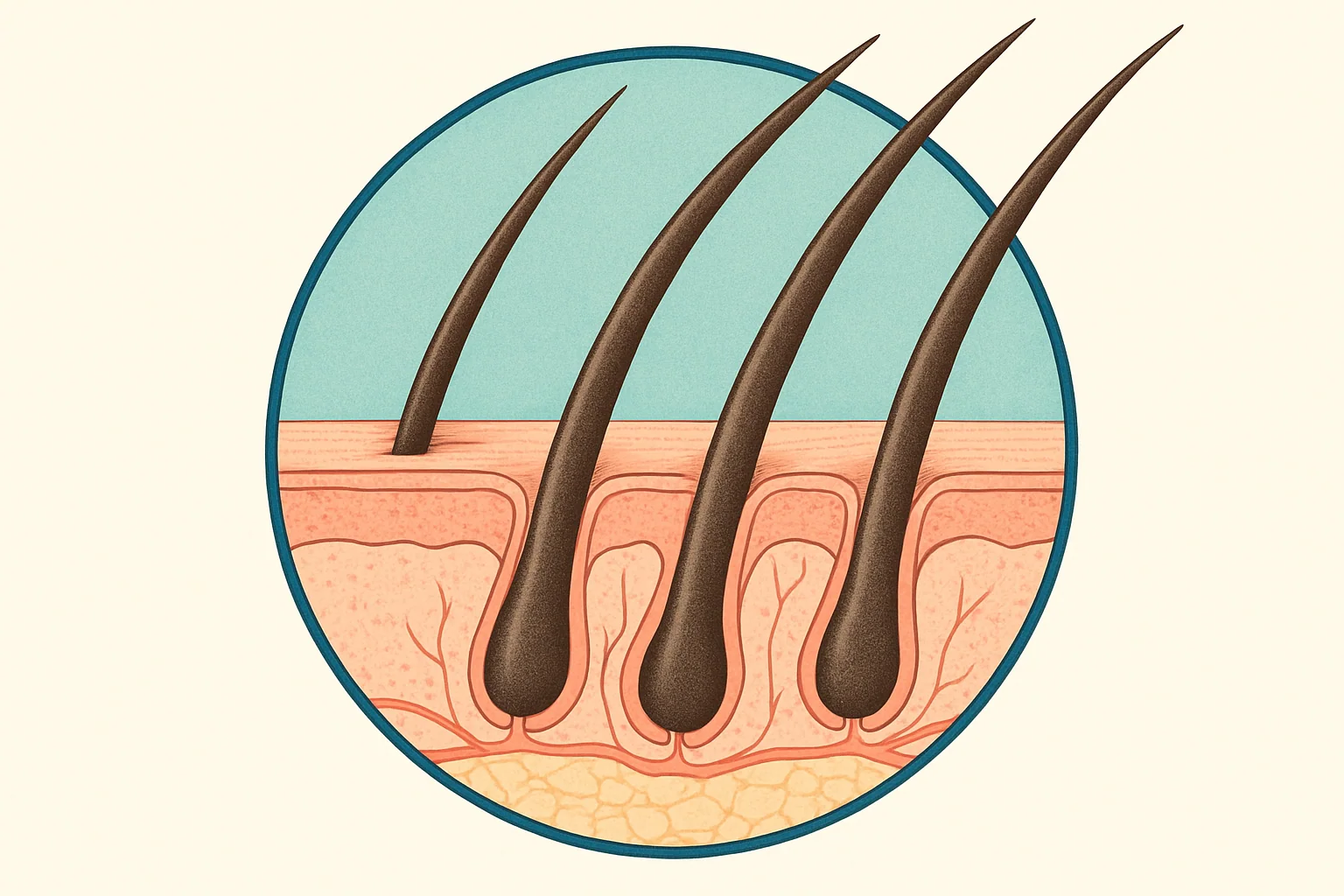
The link between creatine and hair loss centres on dihydrotestosterone, or DHT. DHT is a potent androgen derived from testosterone, and it plays a central role in male-pattern hair loss (androgenetic alopecia). In men who are genetically predisposed, hair follicles are sensitive to DHT — over time, DHT causes these follicles to miniaturise, producing progressively finer and shorter hairs until they stop growing altogether.
The theory, then, is straightforward: if creatine increases DHT, it might accelerate hair loss in susceptible men.
What the Research Actually Says
The DHT-creatine connection originates primarily from a single study published in 2009 in the Clinical Journal of Sport Medicine. Researchers followed 20 male college rugby players who supplemented with creatine over three weeks. DHT levels rose by approximately 56% during the loading phase and remained around 40% above baseline during the maintenance phase.
Notably, total testosterone levels did not change significantly. The ratio of DHT to testosterone increased — suggesting creatine may influence the conversion pathway from testosterone to DHT, rather than simply raising androgens overall.
However, several important limitations apply:
- The study involved just 20 participants — a very small sample
- It measured DHT levels only, not actual hair loss
- Higher DHT does not automatically cause hair loss; genetic predisposition is the critical variable
- No subsequent controlled study has replicated these exact DHT findings
- No clinical trial has ever directly demonstrated that creatine supplementation causes hair loss
In short: the evidence is limited, indirect, and insufficient to draw firm conclusions. The claim that "creatine causes hair loss" overstates what one small study actually measured.
Who Might Be at Greater Risk?
If you have a strong family history of androgenetic alopecia — hair loss running on either or both sides of your family — any factor that elevates DHT could theoretically hasten the process. This may include creatine supplementation, though the quantified risk remains unclear.
Indicators of genetic predisposition include:
- Male-pattern baldness in your father, grandfather, or maternal uncles
- Early hairline recession or thinning at the crown before your 30s
- Visible miniaturisation of hair follicles on scalp examination
Even in these cases, creatine is one of many potential contributing factors — not a guaranteed trigger.
Practical Advice
If you are supplementing with creatine and concerned about your hair, a measured approach is reasonable:
- Assess your family history. A strong genetic predisposition to hair loss is the most meaningful risk factor — more so than any supplement.
- Monitor your hairline. If you notice increased shedding or thinning after starting creatine, keep a record and raise it with a doctor.
- Weigh the evidence-based benefits. Creatine has strong scientific support for improving athletic performance and muscle strength. If you decide to continue, this should be part of your consideration.
- Seek a professional assessment. A scalp examination and hormone panel can give you a clearer picture of your individual risk and baseline.
The Bottom Line
The creatine-hair loss link is based on limited, indirect evidence — principally one small study that measured DHT levels, not hair loss itself. The most important determinants of hair loss remain genetics, age, and individual hormone sensitivity.
If you are experiencing hair thinning or shedding, or want to understand your personal risk before or during creatine use, a consultation with a doctor is the most reliable next step.
Concerned about hair loss? Book a hair loss consultation at Noah — speak with a licensed doctor who can assess your scalp, review your history, and discuss treatment options suited to you.
Medically reviewed by Dr. Kevin Chua, MBBS. This article is for informational purposes only and does not constitute medical advice. Please consult a qualified healthcare professional for personalised guidance.
Reading about it is a good start.
Talking to a doctor is better. Answer a few questions online and a licensed Noah doctor will take it from there, privately.
Get started
Written by our Editorial Team
Last updated 20 Apr 2026