Everything Singapore men need to know about androgenetic alopecia (AGA) — causes, proven treatments, finasteride, minoxidil, and how to get started with a licensed doctor online.
Hair Loss Treatment Singapore: The Complete AGA Guide for Men
Hair loss affects approximately 50% of men in Singapore by the age of 50 — yet most wait years before seeking treatment. By then, significant follicle miniaturisation has already occurred. The good news: androgenetic alopecia (AGA), the most common cause of male hair loss, is well understood, well studied, and highly treatable when caught early.
This guide covers everything you need to know — from what's actually happening to your follicles, to the evidence behind every major treatment option, to how Singapore men can access doctor-supervised care conveniently and affordably.
What Is Androgenetic Alopecia (AGA)?
Androgenetic alopecia — commonly called male pattern baldness — is a hormonal and genetic condition that causes progressive hair follicle miniaturisation. It's the most prevalent form of hair loss in men worldwide, and Singapore is no exception.
How AGA Works
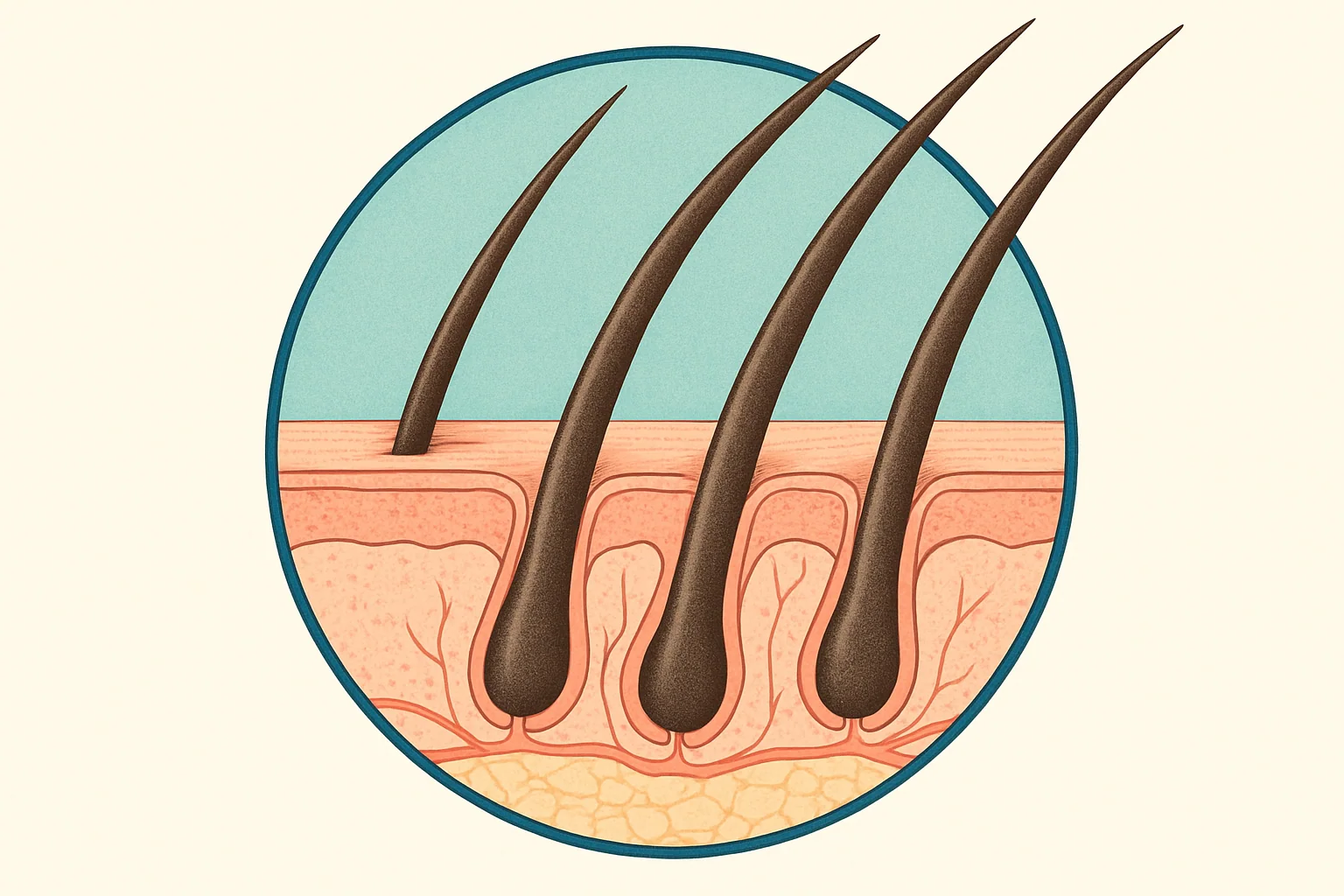
The key driver is dihydrotestosterone (DHT), a potent androgen derived from testosterone via the enzyme 5-alpha reductase. In men genetically predisposed to AGA, hair follicles on the scalp are sensitive to DHT. Over time, DHT binds to follicle receptors and progressively shortens the hair growth cycle (anagen phase), causing follicles to produce thinner, shorter, more pigment-free hairs — until they eventually stop producing visible hair altogether.
This process is gradual and patterned, typically following the Norwood-Hamilton scale:
- Type I–II: Minimal recession at the temples
- Type III: More pronounced temple recession; early vertex thinning
- Type IV–V: Significant crown and frontal thinning
- Type VI–VII: Advanced loss; only sides and back remain
Is AGA Genetic?
Yes — but not exclusively from your father's side. AGA is polygenic, meaning multiple genes across both maternal and paternal lineages contribute. Having a father or maternal grandfather with baldness increases your risk, but the condition is complex enough that family history alone is not fully predictive.
Who Gets AGA in Singapore?
AGA affects men across all ethnicities in Singapore — Chinese, Malay, Indian, and others — though prevalence and age of onset can vary. Studies suggest East Asian men may experience slightly later onset than Caucasian men on average, but this does not mean the condition is less treatable. Regardless of ethnicity, the underlying biology is identical: DHT, genetically sensitive follicles, and progressive miniaturisation.
Early Signs of Hair Loss: When Should You Act?
One of the most common mistakes men make is waiting until hair loss is visually obvious before seeking help. By that point, many follicles may be permanently dormant. The ideal time to start treatment is at the first signs.
Warning Signs to Watch For
- Widening part line — a subtle but consistent early indicator
- More hair in the shower or on your pillow — shedding of 100+ hairs/day consistently
- Temple recession — the hairline creeping back at the corners
- Scalp visibility at the crown — when viewed under direct lighting or in photos
- Finer, lighter hairs — miniaturised hairs replacing terminal hairs in thinning areas
The Myth of "Normal" Shedding
Some shedding is normal — 50 to 100 hairs per day is typical. But if you're noticing consistent, progressive thinning in a pattern (rather than diffuse all-over loss), it's worth getting assessed. A licensed doctor can differentiate AGA from other causes like telogen effluvium, alopecia areata, or nutritional deficiency.
Proven Hair Loss Treatments Available in Singapore
1. Finasteride — The Gold Standard Oral Treatment
Finasteride is a 5-alpha reductase inhibitor that works by blocking the conversion of testosterone to DHT. By reducing scalp DHT levels by approximately 60–70%, finasteride directly addresses the root hormonal cause of AGA.
The evidence is strong. Multiple large randomised controlled trials have demonstrated that finasteride:
- Halts further hair loss in the majority of men
- Promotes measurable regrowth in a significant proportion of users
- Shows continued benefit with long-term use
In Singapore, finasteride is a prescription-only medication. It must be prescribed by a registered Singapore Medical Council (SMC)-licensed physician following a proper medical assessment.
How it's taken: Typically 1mg daily (the approved dose for AGA). Some doctors may prescribe 0.5mg as an alternative dosing approach depending on individual assessment.
When to expect results: Finasteride works gradually. Most men see stabilisation within 3–6 months and visible improvement by 12 months. It requires ongoing use — stopping treatment typically results in resumed hair loss within 6–12 months.
Side effects: Sexual side effects (reduced libido, erectile dysfunction) are reported in a minority of men (estimated 1–2% in clinical trials) and are generally reversible upon stopping. Any concerns should be discussed candidly with your prescribing doctor before starting.
Important: Finasteride is not appropriate for women of childbearing potential and must not be handled by pregnant women. Your doctor will screen for contraindications during consultation.
Speak to a licensed doctor about finasteride at Noah →
2. Minoxidil — The Proven Topical (and Oral) Option
Minoxidil is the most widely used hair loss treatment in the world. Originally developed as an oral blood pressure medication, it was discovered to have a potent side effect: hair growth. Topical minoxidil is now available over the counter in Singapore; oral minoxidil requires a prescription.
How it works: Minoxidil is a vasodilator and potassium channel opener. It prolongs the anagen (growth) phase of hair follicles and increases follicle size. Unlike finasteride, it does not address DHT directly — it acts on the follicle growth cycle itself.
Forms available:
- Topical 2% and 5% solutions/foams — Applied directly to the scalp once or twice daily
- Oral low-dose minoxidil (OLAM) — Growing in clinical evidence; typically prescribed at 0.25mg–1.25mg daily; requires physician oversight due to systemic effects
What the evidence shows: Topical minoxidil has decades of robust clinical evidence supporting its efficacy in AGA. Combined with finasteride, the results are generally superior to either treatment alone.
Side effects: Topical: Scalp irritation, dryness; some users experience initial shedding (telogen effluvium) in the first 4–8 weeks, which typically resolves. Oral: Fluid retention, increased body hair growth — doctor monitoring recommended.
Learn more about minoxidil options at Noah →
3. Combination Therapy — Better Together
Clinical evidence and real-world practice consistently show that finasteride + minoxidil together outperforms either alone. Finasteride targets the hormonal driver (DHT) while minoxidil stimulates follicle activity — they work on complementary mechanisms, making combination therapy the current standard of care in most hair loss medicine settings.
Noah's approach centres on personalised treatment plans that may incorporate both, depending on your individual assessment and medical history.
4. Other Treatments Worth Knowing About
Ketoconazole Shampoo
Ketoconazole is an antifungal with mild anti-androgenic properties. Some studies suggest regular use of 1–2% ketoconazole shampoo can be a useful adjunct to primary treatments. It's not a standalone solution but may complement a broader regimen.
Platelet-Rich Plasma (PRP)
PRP involves drawing a patient's own blood, concentrating the platelet-rich portion, and injecting it into the scalp. Evidence is promising but still emerging — it's generally viewed as an adjunct rather than primary treatment. Requires in-clinic sessions and is not available via telemedicine.
Hair Transplant Surgery
For men with established hair loss who have exhausted or are not suited to medical treatment, hair transplant surgery (FUT or FUE) can restore hair in bald areas. However, surgery does not prevent ongoing loss in non-transplanted areas — medical treatment typically continues post-transplant. Surgery is a significant investment and requires thorough consultation with a specialist.
Low-Level Laser Therapy (LLLT)
Devices like laser combs and helmets use low-level laser energy to stimulate follicles. Evidence is moderate; they are FDA-cleared as Class II devices in the US. May suit men who cannot tolerate medications, as an adjunct.
How to Get a Hair Loss Consultation in Singapore
Traditional vs. Online Consultation
Historically, accessing hair loss treatment in Singapore meant booking a GP or dermatologist appointment — often with a wait, a commute, and some awkwardness. Today, licensed online medical platforms enable men to consult a Singapore-registered doctor from their phone or laptop, receive a prescription if appropriate, and have medication delivered discreetly.
This model is particularly well-suited to AGA because:
- Diagnosis is primarily clinical and history-based — a skilled doctor can assess hair loss pattern and history digitally
- Treatments like finasteride are long-term — regular in-clinic visits for a stable condition are inconvenient
- Privacy matters — many men prefer a discreet channel
What to Expect at a Noah Consultation
Noah connects you with Singapore-registered doctors via an asynchronous online consultation. You'll be asked about:
- Duration and pattern of hair loss
- Family history
- Current medications
- Medical history (relevant conditions, contraindications)
- Photos of your current hair and scalp
The doctor reviews your submission and, if medically appropriate, issues a prescription. Medication is dispensed by a licensed pharmacy and delivered to your door in discreet packaging.
All consultations are conducted under full SMC framework compliance — proper clinical assessment before any prescription, physician accountability, and patient safety as the primary concern.
Start your hair loss consultation at Noah →
Understanding SMC Compliance in Hair Loss Treatment
The Singapore Medical Council sets the ethical and clinical standards for all medical practice in Singapore, including telemedicine. When choosing a hair loss treatment provider, verify:
- All prescribing doctors are SMC-registered — Check the SMC online register if in doubt
- Consultation precedes prescription — No legitimate platform issues prescriptions without a proper medical assessment
- No guaranteed outcome claims — Be wary of providers promising specific results; ethical practice acknowledges individual variability
- Informed consent — You should be made aware of potential side effects and alternatives
Noah is built on these principles. Every prescription is issued by a Singapore-registered doctor following a genuine clinical assessment.
Frequently Asked Questions About Hair Loss Treatment in Singapore
Is finasteride safe for long-term use?
Finasteride has been used clinically for AGA since the 1990s and has a well-established long-term safety profile documented in decades of post-market surveillance. It is considered safe for most healthy adult men. Side effects, when they occur, are typically reversible upon cessation. Discuss your specific health profile with your doctor.
Can I get finasteride without a prescription in Singapore?
No. Finasteride is a prescription-only medication in Singapore under HSA (Health Sciences Authority) regulations. Any platform offering it without a proper medical consultation is operating outside regulatory requirements and should be avoided.
How long does hair loss treatment take to work?
Both finasteride and minoxidil require patience. Most users see stabilisation (stopping further loss) within 3–6 months. Visible regrowth, if it occurs, typically becomes apparent at 6–12 months of consistent use. Photography at baseline is recommended to track progress objectively.
Will my hair loss come back if I stop treatment?
Yes. AGA treatments are suppressive, not curative. Finasteride and minoxidil address the condition while in use; stopping treatment typically leads to resumed hair loss within 6–12 months as DHT levels return to baseline and follicle miniaturisation resumes.
What if I'm experiencing diffuse hair loss, not a typical pattern?
Diffuse thinning can be AGA, but it can also indicate telogen effluvium (stress/illness-triggered shedding), nutritional deficiency (iron, zinc, vitamin D, biotin), thyroid dysfunction, or other conditions. A doctor's assessment is important to identify the correct cause before treatment.
Is hair loss treatment covered by insurance in Singapore?
AGA treatment is generally considered cosmetic/elective and is not covered by MediShield Life or most insurance plans. Some employer healthcare plans may cover related consultations — check your policy. Noah's consultation and treatment costs are transparent and affordable relative to in-clinic alternatives.
Can younger men (under 25) use finasteride?
Finasteride can be prescribed to adult men of any age, but the decision is made on a case-by-case basis by a doctor. Very young men with early-onset AGA may benefit from early intervention; the doctor will weigh individual factors, family history, and informed consent to side effect profiles.
Does diet or stress cause hair loss?
Diet and stress can contribute to hair shedding (telogen effluvium) but are not the primary cause of AGA. However, severe nutritional deficiency or prolonged chronic stress can worsen the appearance of AGA and impair response to treatment. Maintaining good general health supports treatment efficacy.
The Noah Approach: Doctor-Led, Convenient, Discreet
Noah was built for men in Singapore who want evidence-based hair loss treatment without the barriers — no clinic queues, no awkward waiting rooms, no lengthy waits for appointments.
Every Noah patient is seen by a Singapore Medical Council-registered doctor. Every prescription is clinically appropriate. Every delivery is discreet.
If you're noticing early signs of hair loss, the single most impactful thing you can do is start early. The follicles you save now are far easier to preserve than they are to recover once dormant.
Get started with Noah's hair loss treatment →
Summary: Key Takeaways for Singapore Men
- AGA is the most common cause of male hair loss — driven by DHT and genetics, not lifestyle alone
- Early treatment is significantly more effective than waiting for advanced thinning
- Finasteride and minoxidil are the two evidence-backed first-line treatments — combination therapy is the current standard of care
- Finasteride requires a prescription from an SMC-licensed doctor in Singapore
- Online consultation via Noah enables convenient, private, doctor-supervised access to treatment
- Results take time — 6–12 months to fully assess; consistent daily use is essential
- Stopping treatment reverses gains — commit to long-term management if starting
References
- Kaufman KD, et al. Finasteride in the treatment of men with androgenetic alopecia. Journal of the American Academy of Dermatology. 1998;39(4):578–589.
- Olsen EA, et al. The importance of dual 5α-reductase inhibition in the treatment of male pattern hair loss. Journal of the American Academy of Dermatology. 2006;55(6):1014–1023.
- Sinclair R, et al. Treatment of male androgenetic alopecia with 1 mg daily finasteride. Journal of the American Academy of Dermatology. 2001;44(4):658–665.
- Suchonwanit P, et al. Minoxidil and its use in hair disorders: a review. Drug Design, Development and Therapy. 2019;13:2777–2786.
- Westgate GE, et al. Understanding hair loss due to alopecia areata and related conditions. Expert Opinion on Pharmacotherapy. 2017;18(10):1039–1048.
- Singapore Academy of Medicine / Singapore Dermatological Society. Clinical guidance on androgenetic alopecia management. Reviewed 2022.
This article is for educational purposes only and does not constitute medical advice. Consult a Singapore-registered physician to discuss your individual situation before starting any treatment.
Reading about it is a good start.
Talking to a doctor is better. Answer a few questions online and a licensed Noah doctor will take it from there, privately.
Get started
Written by our Editorial Team
Last updated 20 Apr 2026