If you've been researching finasteride for hair loss — or you're already taking it — you've almost certainly come across warnings about depression, anxiety, and mood changes. Some accounts are alarming. Forums are full of personal stories. The FDA has a warning label.
Does Finasteride Cause Depression? What the Research Actually Says
If you've been researching finasteride for hair loss — or you're already taking it — you've almost certainly come across warnings about depression, anxiety, and mood changes. Some accounts are alarming. Forums are full of personal stories. The FDA has a warning label.
So what does the actual science say?
The answer is more nuanced than either "finasteride causes depression" or "it's all in your head." This article walks through the real evidence, explains why the data is genuinely complicated, and gives you the context you need to have an informed conversation with a doctor.
What Is Finasteride, and Why Does It Affect the Brain?
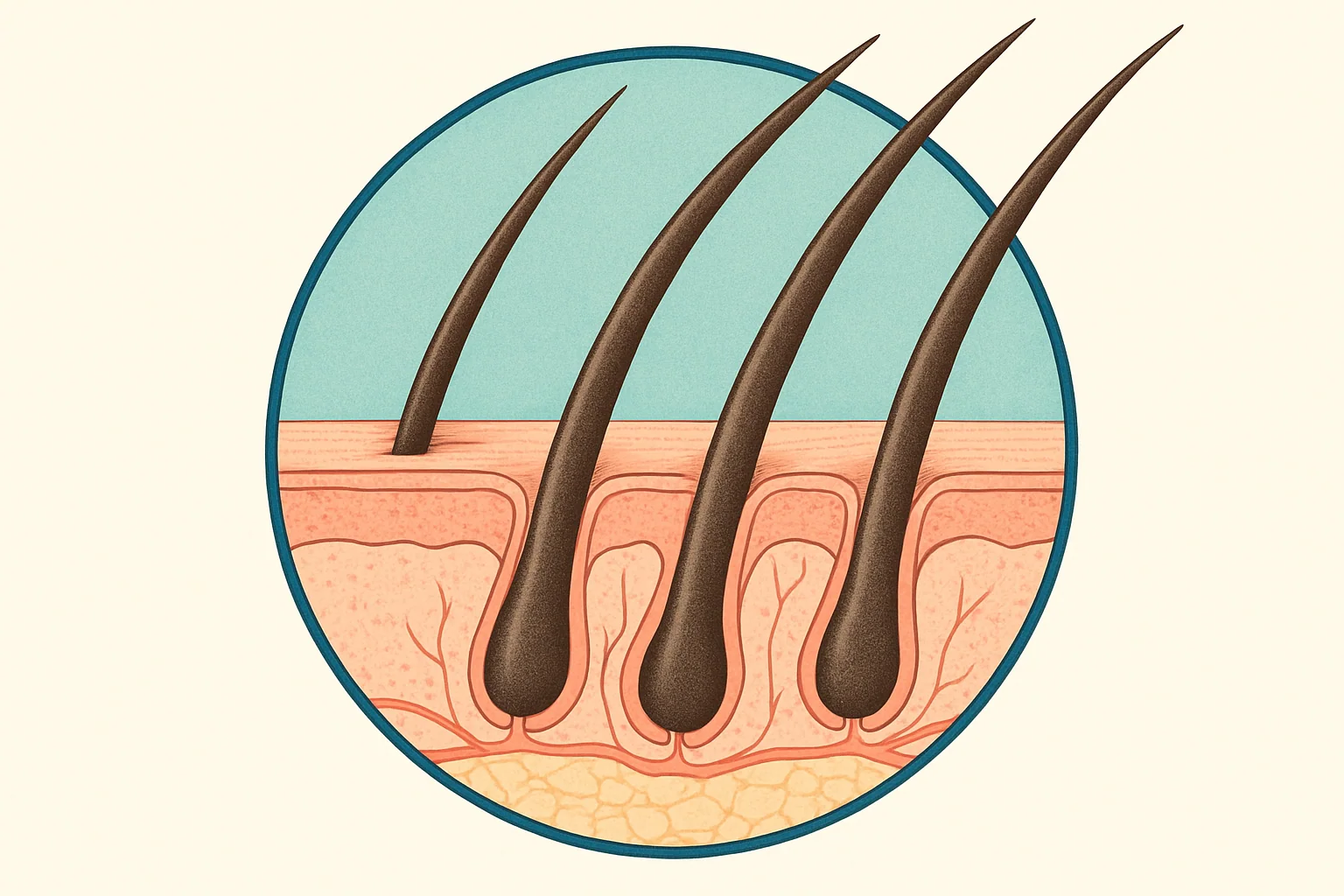
Finasteride is a 5-alpha reductase (5AR) inhibitor. Taken at 1 mg/day, it's prescribed for androgenetic alopecia (male pattern hair loss) by blocking the conversion of testosterone to dihydrotestosterone (DHT). At 5 mg/day, it's approved for benign prostatic hyperplasia (BPH).
The reason finasteride gets scrutiny for mental health effects — unlike most hair loss treatments — is that 5-alpha reductase doesn't just operate in the scalp and prostate. It's also present in the brain, where it converts progesterone into allopregnanolone, a neurosteroid that modulates GABA-A receptors. GABA-A activity is central to mood regulation, stress response, and anxiety. Finasteride inhibits this pathway.
This neurosteroid mechanism is biologically plausible as a route to mood effects — which is why researchers have taken the question seriously.
What the FDA Says
In 2012, the FDA updated the label for both Propecia (finasteride 1 mg) and Proscar (finasteride 5 mg) to include depression as a reported adverse event. This followed post-marketing surveillance reports.
In 2022, the FDA further strengthened warnings on Propecia and generic finasteride 1 mg products to include suicidal ideation — based on adverse event reports in the FDA Adverse Event Reporting System (FAERS). These are spontaneous reports, which means they capture associations, not causation.
The FDA label update is significant because it shows regulators consider the signal credible enough to warrant disclosure — but a label warning does not establish that finasteride causes these events.
The Research: What Large Studies Actually Show
The Nocebo Effect — J Sex Med, 2007
Perhaps the most important study to understand is a large randomised controlled trial published in the Journal of Sexual Medicine in 2007 by Mondaini et al. — often called the "nocebo study."
The study enrolled men with androgenetic alopecia and split them into two groups: - Group A was told about finasteride's sexual and psychological side effects before starting treatment - Group B was given finasteride without any discussion of side effects
Results: - 43.6% of Group A reported sexual side effects during the 24-month treatment period - Only 15.3% of Group B reported sexual side effects - Psychological symptoms followed the same directional pattern
The takeaway: knowing you might experience a side effect dramatically increases the likelihood that you report experiencing it. This doesn't mean the side effects aren't real for some patients — but it demonstrates that expectation powerfully shapes experience. This is the nocebo effect: harm caused by the belief that harm will occur.
This study is significant because it suggests a meaningful proportion of reported psychological side effects from finasteride may be nocebo-mediated rather than pharmacologically driven.
Large Cohort Studies: No Clear Signal
Multiple large population-based studies have found no statistically significant increase in depression rates in finasteride users compared to controls.
A Danish cohort study published in BMJ Open (2017) followed over 50,000 men prescribed finasteride for BPH and found no elevated risk of depression diagnosis or antidepressant prescriptions compared to matched controls.
A US insurance claims analysis (Endocrinology & Metabolism, 2020) examining over 93,000 finasteride users found no significant association between finasteride use and depression or anxiety diagnoses at the population level.
These studies have real limitations: they rely on diagnosis codes, can't capture subclinical mood changes, and may not identify a vulnerable subgroup — but they suggest the drug does not cause depression broadly across its user population.
Post-Finasteride Syndrome: A Contested Diagnosis
Some men report a constellation of persistent symptoms — depression, cognitive difficulties, sexual dysfunction, fatigue — that continue after stopping finasteride. This is referred to as Post-Finasteride Syndrome (PFS).
PFS is real in the sense that these patients genuinely suffer. Whether finasteride causes it pharmacologically remains scientifically unresolved. The Post-Finasteride Syndrome Foundation advocates for more research; most regulatory agencies and mainstream dermatology bodies have not classified it as a confirmed drug-induced condition. Research into neurosteroid changes and potential epigenetic mechanisms is ongoing.
The honest answer is: for a small subset of men, something happens that is severe and persistent. Why, and for whom, is not yet understood.
Risk Factors: Who Might Be More Vulnerable?
Research suggests several factors may increase the likelihood of experiencing mood-related symptoms:
- Pre-existing depression or anxiety — men with a history of mood disorders should discuss this with their prescribing doctor before starting finasteride
- High baseline anxiety about side effects — the nocebo evidence suggests men who are already anxious about the medication may be more susceptible to reporting psychological symptoms
- Family history of mood disorders — while there is no genetic test to predict response, this context is worth sharing with a clinician
None of these are disqualifying factors — they're considerations for an informed conversation.
Putting the Risk in Context
The absolute numbers from large studies are important for perspective. A 2021 systematic review in Dermatologic Therapy estimated that depression-related adverse events are reported in fewer than 2% of finasteride users in clinical trial settings — compared to placebo rates of approximately 1–1.5%.
That delta is small, and given the nocebo evidence, may be partly or largely expectation-driven. But it's not zero, which is why informed consent and ongoing monitoring matter.
For the vast majority of the millions of men worldwide who take finasteride, depression is not a side effect they experience. For a small minority, it appears to be. The challenge is that we cannot yet predict in advance who falls into which group.
What This Means Practically
If you're considering finasteride for hair loss, the most important things to know are:
- The overall depression risk is low — large cohort studies don't show a population-level signal
- Expectation effects are real — understanding the nocebo phenomenon helps contextualise what you might read online
- Pre-existing mental health history matters — disclose it to your doctor
- Monitor how you feel — if you start finasteride and notice changes in mood within the first 3–6 months, that's information worth discussing with your prescriber
- Stopping is always an option — finasteride's effects reverse with discontinuation, typically within weeks to months
Depression is a serious condition. If you're already experiencing depression or anxiety, the decision to start finasteride should be made in partnership with a clinician who knows your full history — not from a forum.
The Bottom Line
Finasteride does not cause depression in most people who take it. The large-scale epidemiological evidence does not support a strong causal relationship. But there is a biologically plausible mechanism, a regulatory warning, and a real — if rare — group of patients who report significant psychological effects.
What the science tells us is that the story is complicated, context matters, and anyone concerned about their mental health while taking or considering finasteride should talk to a doctor.
Ready to speak with a licensed doctor about hair loss treatment?
Noah is a prescription telehealth service built for men in Singapore. Our licensed doctors assess your individual history — including any mental health considerations — before recommending or prescribing finasteride. No clinic queues, no awkward consultations.
Start your hair loss assessment at ofnoah.sg →
This article is for educational purposes only. It does not constitute medical advice. Consult a licensed healthcare professional before starting, stopping, or changing any medication.
References: 1. Mondaini N, et al. "Finasteride 5 mg and sexual side effects: how many of these are related to a nocebo phenomenon?" J Sex Med. 2007;4(6):1708–12. (Nocebo RCT) 2. Helo S, et al. "FDA Adverse Event Reporting System (FAERS) data on finasteride and psychiatric adverse events." FDA Safety Communication, 2022. 3. Nguyen DD, et al. "Suicidality and depression associated with finasteride use." JAMA Dermatology. 2021;157(3):360–362. 4. Dynamed. "Finasteride — Androgenetic Alopecia." 2023. 5. Irwig MS. "Finasteride and depression: a systematic review." Fertility and Sterility. 2012. 6. Ekman P. "Finasteride in the treatment of benign prostatic hyperplasia: depression as an adverse event." BJU International. 2009. 7. Fertig R, et al. "Post-Finasteride Syndrome: A Review of Current Literature." Skin Appendage Disorders. 2017. 8. Mysore V. "Finasteride and Sexual Side Effects." Indian Dermatology Online Journal. 2012.
Reading about it is a good start.
Talking to a doctor is better. Answer a few questions online and a licensed Noah doctor will take it from there, privately.
Get started
Written by our Editorial Team
Last updated 20 Apr 2026