You've done the search. You've seen the forums. You've read something alarming and now you're not sure whether to start, or whether to stop if you already have.
What You're Actually Asking About
You've done the search. You've seen the forums. You've read something alarming and now you're not sure whether to start, or whether to stop if you already have.
Finasteride's side effects are one of the most Googled topics in men's health — and also one of the most misrepresented. Fear-mongering sits right next to dismissal, and neither helps you make a good decision.
This guide lays out what the clinical evidence actually says about finasteride side effects, what the real numbers look like, what to watch for, and how to talk to a doctor about your specific situation.
How Finasteride Works (The Short Version)
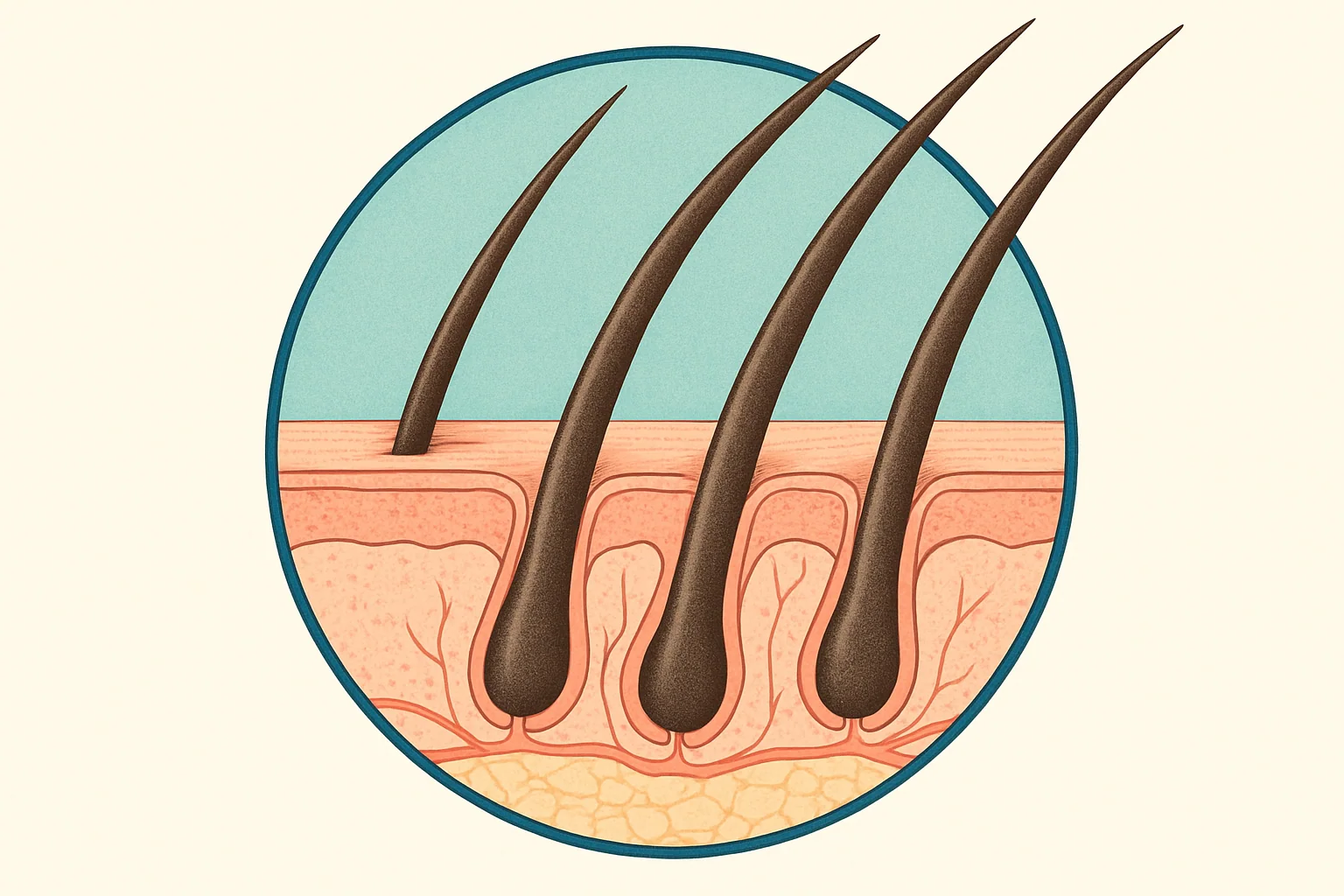
Finasteride 1 mg (brand name: Propecia) works by inhibiting the 5-alpha-reductase enzyme, which converts testosterone into dihydrotestosterone (DHT). DHT is the hormone responsible for shrinking hair follicles in men with androgenetic alopecia (AGA), the clinical name for male pattern hair loss.
By lowering scalp DHT levels by approximately 60–70%, finasteride slows or halts follicle miniaturisation. In a landmark five-year placebo-controlled trial, 85–90% of men on finasteride maintained or increased hair count, compared to progressive loss in the placebo group.
The drug requires daily use — typically for life — to maintain results. Stop taking it, and DHT levels normalise within months, followed by renewed hair loss.
The Side Effects: Honest Numbers
Finasteride's sexual side effects are real. They are also considerably rarer than internet forums suggest.
Sexual Side Effects
The most discussed adverse effects — reduced libido, erectile dysfunction, and ejaculatory changes — occur in approximately 2–4% of men in clinical trials.
To contextualise that: - In the pivotal five-year finasteride trial, sexual adverse events occurred in 3.8% of finasteride users vs 2.1% of placebo users — a real but modest difference. - The majority of men who experienced sexual side effects saw them resolve after stopping the medication. - The incidence of sexual side effects did not increase over five years of continuous treatment — they were most commonly reported in early months.
The placebo effect matters here. In blinded trials, a meaningful proportion of men on placebo also report sexual side effects — partly because anxiety about the medication itself can affect libido and sexual performance. This is sometimes called the nocebo effect.
Gynaecomastia (Breast Tissue Growth)
Breast tenderness or mild enlargement occurs in less than 1% of men on finasteride. It typically resolves after stopping treatment. Men who notice persistent breast changes should see a doctor.
Mood and Depression
Some men report mood changes, including low mood, while on finasteride. A 2022 analysis published in JAMA Dermatology did find a small but statistically significant association between finasteride use and depression — but the absolute risk remains low and causality is debated. Men with a history of mood disorders should discuss this with their doctor before starting.
Prostate Cancer Screening (Important Note)
Finasteride lowers PSA (prostate-specific antigen) levels by approximately 50% after six months of use. If you're having a PSA test for prostate cancer screening, tell your doctor you're on finasteride — the lab result needs to be interpreted differently.
Post-Finasteride Syndrome: What the Evidence Says
"Post-finasteride syndrome" (PFS) refers to a cluster of symptoms — including persistent sexual dysfunction, depression, and cognitive changes — that some men report persisting after stopping finasteride. It has been listed by the FDA as an adverse event.
The evidence on PFS is contested. The condition is described in case reports and patient advocacy literature, but large-scale epidemiological studies have not confirmed a causative link between finasteride and persistent post-discontinuation symptoms.
What does this mean for you? PFS is not a reason to avoid finasteride categorically — the vast majority of men stop finasteride without persistent symptoms. It is, however, a reason to:
- Start with awareness rather than anxiety
- Keep notes on how you feel, especially in the first three months
- Stop the medication and consult a doctor promptly if you notice concerning changes
Long-Term Use: What Happens After 5, 10 Years?
For men who tolerate finasteride well — the majority — long-term use is well supported by evidence.
Efficacy over time: A Japanese 10-year follow-up study found 86% of men still had measurably better hair density than baseline after a full decade of continuous use. This is the defining feature of finasteride: unlike many treatments, its benefit compounds with time rather than fading.
Safety over time: No new adverse effects emerged in long-term data. The five-year trial found no increase in sexual side effect rates over time, and no significant cardiovascular, metabolic, or oncological signals.
Stopping after years: Men who stopped finasteride after multi-year use saw their hair gradually return to pre-treatment state within six to twelve months. The medication doesn't create a "withdrawal" — it simply removes the ongoing DHT suppression.
Who Should Not Take Finasteride
Finasteride is contraindicated or requires careful consideration in the following situations:
- Men planning to father children in the near term. Finasteride has been detected in semen at very low concentrations. While this is unlikely to affect a partner's pregnancy, it is typically discontinued three to six months before attempting conception as a precaution.
- Teenagers under 18. Not approved for this age group.
- Men with liver disease. Finasteride is hepatically metabolised; severe liver impairment may affect drug clearance.
- Men with known hypersensitivity to finasteride or any excipient.
Finasteride is also absolutely not for women, particularly those who are pregnant or may become pregnant — direct exposure to the drug or a treated partner's semen is associated with risk of genital birth defects in male foetuses.
How to Minimise Side Effect Risk
If you're starting finasteride, these practical steps reduce risk:
Get a proper consultation first. A licensed doctor will take a brief medical history, check for contraindications, and establish a baseline. Don't self-prescribe from a friend's Propecia.
Give it three months before assessing. The first three months are when early sexual side effects most commonly appear, if they appear at all. Track how you're feeling during this window.
Don't read forums obsessively. The nocebo literature shows that men who are heavily primed with negative expectations report significantly more side effects — even on placebo.
Report changes early. If you notice reduced libido, erection changes, or mood shifts that feel meaningful, tell your doctor. Most issues resolve promptly on dose adjustment or cessation.
The Real Question: Is It Worth It?
Here's what the data supports:
- Most men (96–98%) tolerate finasteride without sexual side effects.
- Long-term use (5–10 years) is associated with sustained hair preservation — one of the better long-term treatment track records in dermatology.
- The majority of side effects that do occur are reversible on stopping.
- Monitoring matters. Men who are reviewed regularly fare better than those who self-manage in silence.
Speak to a Licensed Doctor Before Starting
In Singapore, finasteride is a prescription-only medicine (Schedule 4) regulated by the Health Sciences Authority (HSA). It cannot legally be dispensed without a valid prescription from a licensed doctor.
At noah™, you can consult a licensed doctor via a private telehealth session — no queue, no clinic visit. Your doctor will review your medical history, discuss your hair loss pattern, and, if appropriate, issue a prescription that can be delivered discreetly to your door.
Start your consultation at ofnoah.sg →
noah™ medical consultations are conducted by Singapore-registered doctors under HCSA-licensed telehealth frameworks. All prescriptions are issued by licensed practitioners.
Frequently Asked Questions
How quickly do finasteride side effects appear?
Sexual side effects, when they occur, most commonly appear within the first three months. If you reach the three-month mark without issues, long-term tolerability is generally good.
Can finasteride side effects be permanent?
In clinical trials, the majority of sexual side effects resolved after stopping finasteride. A small number of men report persistent symptoms (the debated "post-finasteride syndrome"), but population-level studies have not confirmed this is causally related to the drug.
Do finasteride side effects get worse over time?
No. Clinical data from five-year trials show the incidence of side effects does not increase with longer duration of use.
Can I take a lower dose to reduce side effects?
Some doctors discuss alternate-day dosing with patients who are concerned about side effects — but this is not an approved or evidence-based approach. Talk to your doctor before modifying your dose.
What happens if I stop finasteride suddenly?
There is no pharmacological withdrawal from finasteride. DHT levels normalise within about two weeks, and hair loss progression resumes within three to six months.
Is finasteride safe to take long-term in Singapore?
Yes, based on current evidence. Long-term safety is supported by five and ten-year clinical data, with no emerging signals for cardiovascular, metabolic, or oncological harm from finasteride 1 mg.
References
- Kaufman KD. Androgens and alopecia. Mol Cell Endocrinol. 2002;198(1-2):89–95.
- Finasteride Male Pattern Hair Loss Study Group. Long-term (5-year) multinational experience with finasteride 1 mg. Eur J Dermatol. 2002;12(1):38–49.
- Lee SW, et al. Evaluation of long-term efficacy of finasteride in Korean men with androgenetic alopecia. J Dermatol. 2019.
- MSD/Merck. Propecia (finasteride 1 mg) Prescribing Information. HSA Singapore-approved label.
- Gupta MA, Gupta AK. The nocebo phenomenon in dermatology. Skin Pharmacol Physiol. 2019;32(5):254–259.
- Deng T, et al. Association of finasteride use with depression. JAMA Dermatol. 2022;158(3):321–328.
- Thompson IM, et al. The influence of finasteride on PSA. N Engl J Med. 2003;349:215–224.
- Gupta AK, et al. Post-finasteride syndrome: a review. J Drugs Dermatol. 2019;18(9):868–872.
- Yanagisawa M, et al. 10-year follow-up study of finasteride in male androgenetic alopecia. J Dermatol. 2019;46(10):873–878.
This article is intended for educational purposes only. It is not a substitute for professional medical advice, diagnosis, or treatment. Always consult a licensed doctor before starting, stopping, or changing any medication.
Reading about it is a good start.
Talking to a doctor is better. Answer a few questions online and a licensed Noah doctor will take it from there, privately.
Get started
Written by our Editorial Team
Last updated 20 Apr 2026