Weight Management
April 20, 2026
·
4 min read
read
Weight Regain After GLP-1 Medications: What the Science Says and How to Prevent It


Medically reviewed by Dr. Kevin Chua, Medical Director
For a comprehensive guide to medical weight loss in Singapore, see our complete guide.
Last medically reviewed: April 15, 2026
Medically reviewed by Dr. Kevin Chua, Medical Director
Disclaimer: This article provides general medical information and is not a substitute for professional medical advice.
"What happens when I stop?" is one of the most common questions about GLP-1 weight loss medications — and the answer requires honesty. Clinical data shows that most people regain a significant portion of lost weight after stopping medication1. Understanding why this happens and what strategies can mitigate it is essential for anyone considering or currently on medical weight loss treatment.
The evidence on weight regain after GLP-1 discontinuation is clear and consistent. Understanding this data helps set realistic expectations and plan a long-term strategy.
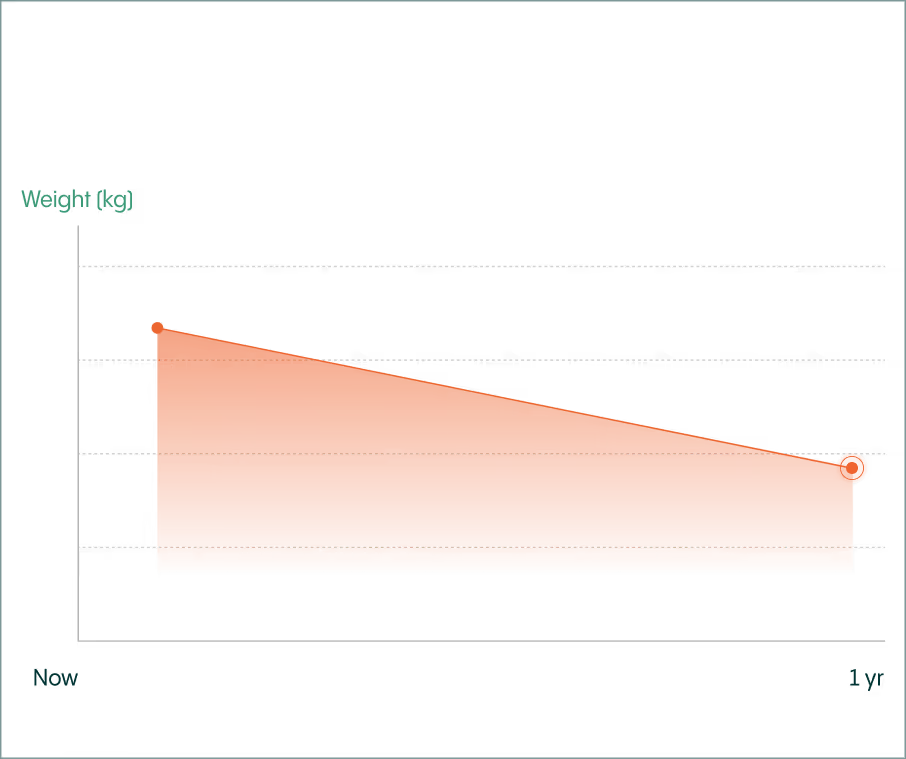
In the STEP 1 trial extension, participants who stopped semaglutide 2.4 mg after 68 weeks regained approximately two-thirds of their lost weight over the following year1. Participants who continued on medication maintained their weight loss.
Weight regain isn't a personal failure — it's biology. The body has evolved powerful mechanisms to defend against weight loss:
Obesity, like diabetes or hypertension, is a chronic condition that often requires ongoing treatment. Just as stopping blood pressure medication typically results in blood pressure rising again, stopping weight loss medication typically results in weight regain.
Given the chronic nature of obesity, several approaches exist for long-term weight management after initial GLP-1 treatment.
The most effective strategy for maintaining weight loss is continued medication use. Long-term data (2+ years) shows sustained efficacy and safety with ongoing GLP-1 treatment.
Considerations: - Ongoing cost commitment - Long-term safety data continues to accumulate (positive so far) - May be able to maintain on a lower dose than the initial weight loss dose
Some men can maintain their weight loss on a lower dose than what was needed to achieve it. This reduces both side effects and cost.
Approach: - Gradual dose reduction after reaching target weight - Close monitoring — if weight starts to increase, return to the effective dose - Not all men can successfully reduce dose; individual response varies
For men who choose to stop medication, intensive lifestyle support is critical:
The medication period is an opportunity to establish habits that can support weight maintenance even if medication is eventually reduced or stopped.
GLP-1 medications reduce the internal resistance to behaviour change. When hunger is reduced and cravings are manageable, it's easier to: - Learn what appropriate portions look like - Discover healthier foods you enjoy - Build an exercise routine without feeling depleted - Practice saying no to excessive eating
These habits may partially persist after medication discontinuation, even if appetite returns — but they can't fully replace the pharmacological appetite suppression.
If you've stopped medication and notice weight regain, early intervention is better than waiting. Consider restarting if:
There's no failure in restarting — it's the appropriate clinical response to a chronic condition.
GLP-1 receptor agonist medications for weight management in Singapore typically cost SGD $200–500 per month depending on the specific medication and dosage. Costs vary by provider and whether branded or biosimilar options are available. noah™ offers structured weight loss plans with doctor oversight.
Prices are approximate and may vary. Updated April 2026.
Most people regain some weight, but the amount varies. Some maintain a portion of their weight loss through sustained lifestyle changes. The average is about two-thirds regain over 12 months, but individual results vary widely.
This is not a well-studied approach. The most evidence-supported strategies are either continuous treatment or planned dose reduction with monitoring. Your doctor can help you find the right approach.
For many patients, yes. Current evidence supports long-term use for weight maintenance, similar to how we treat other chronic conditions. The decision depends on your individual health profile, response, and preferences.
Yes. GLP-1 medications remain effective upon re-initiation. You'll need to go through dose titration again, but the weight loss effect returns.
noah™ provides ongoing medical oversight, regular check-ins, dose optimisation, and lifestyle guidance throughout your weight management journey — whether that's active weight loss, maintenance, dose reduction, or re-initiation.
→ Return to pillar: Complete Guide to Medical Weight Loss in Singapore
This article is for informational purposes only and does not constitute medical advice. Always consult a licensed doctor before starting any treatment.

Articles featured on Noah are for informational purposes only and should not be constituted as medical advice, diagnosis or treatment. If you have any medical questions or concerns, please talk to your healthcare provider.