Weight Management
April 20, 2026
·
9 min read
read
The Complete Guide to Medical Weight Loss in Singapore: GLP-1 Medications, Costs & Online Treatment


Medically reviewed by Dr. Kevin Chua, Medical Director Last updated: April 2026
Medically reviewed by Dr. Kevin Chua, Medical Director Last updated: April 2026
About the reviewer Dr. Kevin Chua — Medical Director, noah™. Dr. Chua oversees clinical governance and ensures all treatment plans meet Singapore medical standards.
Medical weight loss has been transformed by GLP-1 receptor agonists — a class of medications that produce significant, sustained weight loss in clinical trials. Medications like semaglutide (Ozempic, Wegovy, Rybelsus) and tirzepatide (Mounjaro) have changed the treatment landscape, making meaningful weight loss achievable for men who have struggled with diet and exercise alone. This guide covers everything Singaporean men need to know about medical weight loss options.
Medical weight loss refers to the use of prescription medications, under medical supervision, to achieve and maintain weight loss. Unlike fad diets or over-the-counter supplements, medical weight loss is evidence-based, clinically supervised, and produces measurable results.
The field has been revolutionised by GLP-1 receptor agonists — medications originally developed for Type 2 diabetes that were found to produce significant weight loss as a beneficial side effect. Dedicated weight loss formulations (higher doses of the same active ingredients) have since been developed and approved.
Obesity is a chronic medical condition driven by complex interactions between genetics, hormones, environment, and behaviour. The body has powerful hormonal systems that resist weight loss and promote weight regain — this is why dieting alone fails for the majority of people long-term.
GLP-1 medications work with these hormonal systems rather than against them, reducing hunger and increasing satiety at a physiological level. This is not about willpower — it's about biology.
GLP-1 (glucagon-like peptide-1) is a naturally occurring hormone produced in the gut after eating. It plays several roles in metabolism and appetite regulation.
GLP-1 receptor agonists mimic the natural GLP-1 hormone but with a much longer duration of action. They work through multiple mechanisms:
The net effect: you feel less hungry, get full sooner, and are less driven by food cravings — making it significantly easier to maintain a caloric deficit.
Tirzepatide (Mounjaro) is a dual GLP-1/GIP receptor agonist — it activates both GLP-1 and GIP (glucose-dependent insulinotropic polypeptide) receptors. This dual mechanism appears to produce greater weight loss than GLP-1 agonists alone in head-to-head trials1.
Several GLP-1 medications are available or becoming available in Singapore. Here's how they compare.
| Medication | Brand Name | Route | Frequency | Avg Weight Loss | HSA Status |
|---|---|---|---|---|---|
| Semaglutide 2.4 mg | Wegovy | Injection | Weekly | ~15% body weight | Registered |
| Semaglutide 1.0 mg | Ozempic | Injection | Weekly | ~10% body weight | Registered (diabetes indication) |
| Semaglutide oral | Rybelsus | Oral tablet | Daily | ~8-10% body weight | Registered |
| Tirzepatide | Mounjaro | Injection | Weekly | ~18-22% body weight | Registered |
Weight loss percentages from clinical trials (STEP, SURMOUNT programmes). Individual results vary.21
Semaglutide is the most widely studied GLP-1 for weight management. The STEP clinical trial programme demonstrated:
Tirzepatide has shown the highest weight loss in clinical trials:
Rybelsus (oral semaglutide) offers a needle-free option, though with somewhat lower efficacy than injectable semaglutide at maximum weight loss doses. It must be taken on an empty stomach with a small sip of water, and you must wait 30 minutes before eating.
→ Read more: Rybelsus vs Ozempic (SG-N-WL-01)
Medical weight loss treatment is appropriate for adults who meet specific clinical criteria, ensuring that medication is used where it provides meaningful health benefit.
Singapore uses Asian-adjusted BMI cut-offs:
| Classification | BMI (Asian) |
|---|---|
| Normal weight | 18.5–22.9 |
| Overweight | 23.0–27.4 |
| Obese | ≥27.5 |
This means many Singaporean men who would be classified as "merely overweight" by global standards are actually at the obesity threshold by Asian criteria — and may qualify for medical weight loss treatment.
noah™ provides MOH-compliant online access to medical weight loss treatment, combining doctor oversight with convenient home delivery.
GLP-1 medications represent a significant investment. Understanding the cost landscape helps you plan appropriately.
| Medication | Monthly Cost (Approximate) |
|---|---|
| Ozempic (semaglutide 1.0 mg injectable) | S$350–500 |
| Wegovy (semaglutide 2.4 mg injectable) | S$500–700 |
| Rybelsus (oral semaglutide) | S$300–450 |
| Mounjaro (tirzepatide) | S$400–600 |
Prices vary by provider and dose. noah™ pricing may differ. Updated April 2026.
GLP-1 medications are biologic or complex pharmaceutical products with significant R&D investment. Generic competition is limited (especially for injectables). As more products enter the market, prices are expected to decrease gradually.
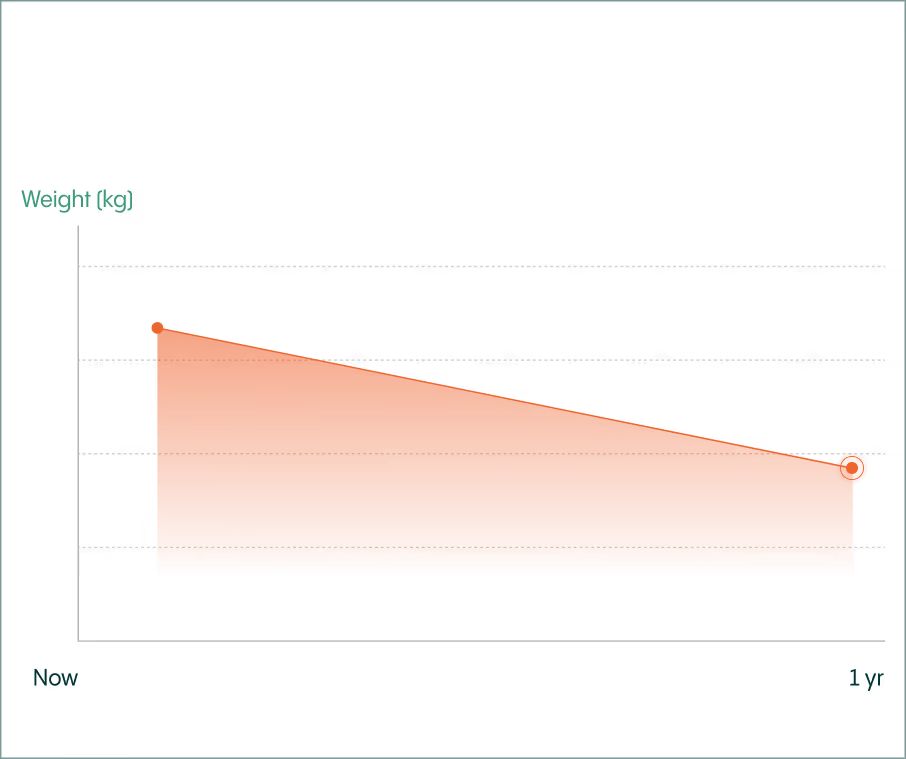
GLP-1 medications work gradually. Understanding the typical timeline helps set realistic expectations and maintain motivation.
| Week | What to Expect |
|---|---|
| 1–2 | Reduced appetite; some may experience nausea |
| 2–4 | Early weight loss (1–2 kg); appetite notably reduced |
| 4–8 | Consistent weekly weight loss (0.5–1 kg/week) |
| 8–16 | Dose increases as tolerated; continued weight loss |
| 16–24 | Approaching half of expected total weight loss |
| 24–52 | Continued weight loss; approaching maximum effect |
| 52+ | Weight maintenance phase; continued medication recommended |
Based on clinical trials:
For an 85 kg man, this means: - Semaglutide: ~12.8 kg loss → 72.2 kg - Tirzepatide: ~17.9 kg loss → 67.1 kg
Individual results vary. Some men lose more, some less.
GLP-1 medications have a well-characterised side effect profile. Most side effects are gastrointestinal and improve over time, but understanding them helps you prepare.
→ Read more: GLP-1 Side Effects Guide (SG-N-WL-04)
Medication alone produces significant results, but combining it with lifestyle changes maximises outcomes and supports long-term weight maintenance.
No. Obesity is a chronic medical condition with hormonal, genetic, and environmental drivers. Using medication to treat it is no different from using medication to treat hypertension or diabetes. You wouldn't call insulin "cheating" for diabetics.
Clinical data suggests that weight regain does occur after discontinuation in many patients3. This is consistent with obesity being a chronic condition requiring ongoing management. Your doctor will help you develop a long-term strategy.
Medical weight loss is designed for individuals who meet clinical criteria (BMI ≥27.5 Asian cut-off, or ≥25 with comorbidities). Using these medications for cosmetic weight loss in healthy-weight individuals is not recommended and may not be prescribed.
Same active ingredient (semaglutide), same manufacturer (Novo Nordisk). Ozempic is approved for Type 2 diabetes (max 1.0 mg/week); Wegovy is approved for weight management (max 2.4 mg/week). The weight loss dose is higher.
The longest clinical trial data (STEP extensions, SELECT trial) show maintained efficacy and safety over 2+ years. Semaglutide has also demonstrated cardiovascular benefits in the SELECT trial (reduced risk of major cardiovascular events)3. Long-term registry data continues to accumulate.
Moderate alcohol is generally compatible, but be aware that: (a) alcohol is calorie-dense and may undermine weight loss goals; (b) GLP-1 medications may change your alcohol tolerance; (c) heavy drinking increases pancreatitis risk.
Some GPs are comfortable prescribing GLP-1 medications; others may refer to an endocrinologist. noah™ provides convenient online access with doctors experienced in medical weight loss management.
GLP-1 medications are started at low doses and gradually increased over weeks to months. noah™ provides a structured titration schedule, regular check-ins, and dose adjustments based on your response and tolerability.
Discuss all supplements with your doctor. Most over-the-counter weight loss supplements have no proven efficacy and may interact with prescription medications. GLP-1 agonists are effective on their own — additional supplements are generally unnecessary.
GLP-1 medication supply has been constrained globally. noah™ monitors supply proactively and communicates alternatives if your medication is temporarily unavailable. Options may include switching between brands/formulations under medical guidance.
This article is for informational purposes only and does not constitute medical advice. GLP-1 medications are prescription-only in Singapore. Always consult a licensed doctor before starting any treatment. noah™ consultations are conducted by SMC-registered doctors in accordance with MOH telemedicine guidelines.
© 2026 noah™ — A brand of Ordinary Folk Pte. Ltd.
Jastreboff AM, Aronne LJ, Ahmad NN, et al. Tirzepatide once weekly for the treatment of obesity. N Engl J Med. 2022;387(3):205-216. PMID: 35658024 ↩↩↩↩
Wilding JPH, Batterham RL, Calanna S, et al. Once-weekly semaglutide in adults with overweight or obesity. N Engl J Med. 2021;384(11):989-1002. PMID: 33567185 ↩↩↩↩
Rubino D, Abrahamsson N, Davies M, et al. Effect of continued weekly subcutaneous semaglutide vs placebo on weight loss maintenance. JAMA. 2021;325(14):1414-1425. PMID: 29617641 ↩↩
Davies MJ, Bergenstal R, Bode B, et al. Efficacy of liraglutide for weight loss among patients with type 2 diabetes. JAMA. 2015;314(7):687-699. PMID: 26132939 ↩

Articles featured on Noah are for informational purposes only and should not be constituted as medical advice, diagnosis or treatment. If you have any medical questions or concerns, please talk to your healthcare provider.