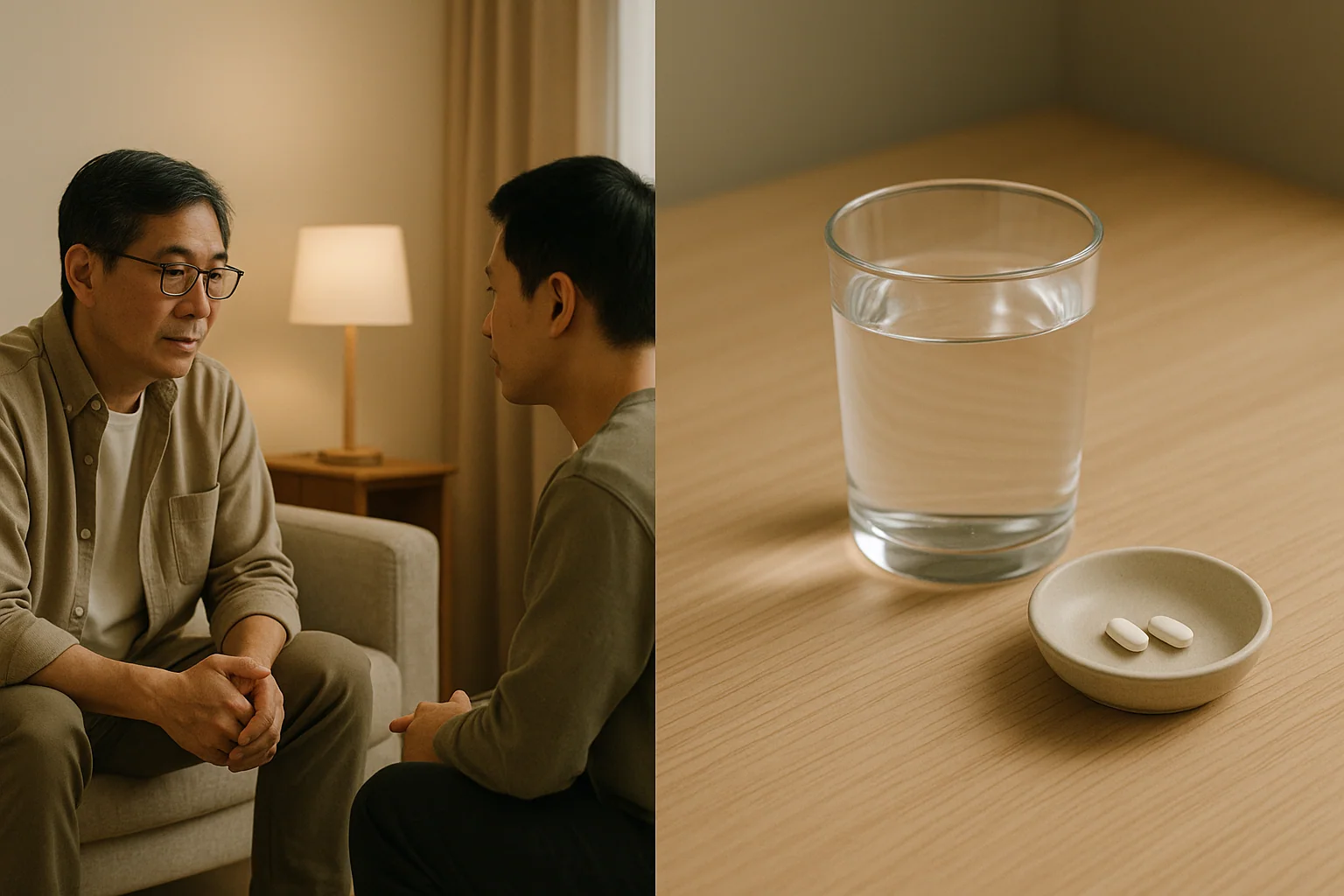
When men start to consider getting support for their mental health, a common question is whether they need therapy, medication, or something else. It's a fair question — and the honest answer is that it depends on the individual. At Noah, we think a clear, non-judgemental framing helps, while emphasising that the right path is best worked out with a doctor rather than guessed at.
This article is general education, not medical advice. A licensed Singapore doctor can help you understand your options.
Two Broad Approaches
Therapy and medication are two recognised approaches to supporting mental health, and they work in different ways. Talking therapy involves working with a professional to understand and address difficulties, develop strategies, and build skills. Medication, where appropriate, is a medical treatment a doctor may consider for certain conditions. They aren't opposites or rivals — they're different tools, and for many people the question isn't strictly "either/or".
It's Not Always One or the Other
A useful thing to understand is that therapy and medication aren't mutually exclusive. Depending on the situation, a doctor might consider one, the other, or a combination. What's appropriate depends on the individual — the nature and severity of what's going on, personal preferences, and circumstances. This is exactly why the decision is best made with a professional who can assess your situation, rather than picking based on assumptions or what worked for someone else.
How to Think About It
Rather than trying to self-prescribe a path, it can help to focus on a few questions a doctor will explore with you:
- What are you experiencing, and how long has it lasted?
- How is it affecting your daily life?
- What are your preferences and concerns?
- What's the fuller picture of your health and circumstances?
These shape what's appropriate. The goal is a tailored approach, not a default. A doctor brings the clinical judgement to match the approach to you.
Letting Go of the Pressure to Choose
Some men feel they need to decide upfront whether they want therapy or medication before reaching out — and that pressure can itself be a barrier. You don't have to have it figured out in advance. The point of speaking to a doctor is to work it out together. Reaching out is the step; the right approach gets decided through assessment, not before it.
Letting Go of the Pressure to Choose
Some men feel they need to decide upfront whether they want therapy or medication before reaching out — and that pressure can itself be a barrier. You don't have to have it figured out in advance. The point of speaking to a doctor is to work it out together. Reaching out is the step; the right approach gets decided through assessment, not before it. Releasing yourself from the need to choose beforehand can make it much easier to take that first step, since you're no longer waiting to feel certain about something a professional can help clarify.
A Tailored Approach, Not a Default
What's appropriate depends on the nature and severity of what's going on, your preferences, and your circumstances — which is why a professional's input matters. Rather than defaulting to one route, a doctor matches the approach to you, and that might be therapy, medication, lifestyle changes, or a combination. This individualised approach is more useful than picking based on assumptions or what worked for someone else. The goal is something tailored to your situation, arrived at through a proper conversation rather than guessed at in advance.
When to Speak to a Doctor
It's worth speaking to a licensed doctor if low mood, anxiety, stress, or other concerns have been weighing on you, if they're affecting your daily life, or if you simply want to understand your options. You don't need to be in crisis, and you don't need to have chosen an approach beforehand.
A doctor can assess your situation and discuss what's appropriate — which might be therapy, medication, lifestyle approaches, or a combination, always decided together. If distress ever feels overwhelming or you have thoughts of self-harm, seek urgent professional help promptly.
Speak to a Licensed Doctor on Noah
If you're unsure what kind of support you need, a doctor can help you work it out. Noah connects you with MOH-licensed Singapore doctors through discreet, confidential online consultations. Start a consultation to talk it through.
This article is for general education and is not medical advice. A consultation with a licensed doctor is required before any treatment.
Reading about it is a good start.
Talking to a doctor is better. Answer a few questions online and a licensed Noah doctor will take it from there, privately.
Get started
Written by our Editorial Team
Last updated 11 Jun 2026