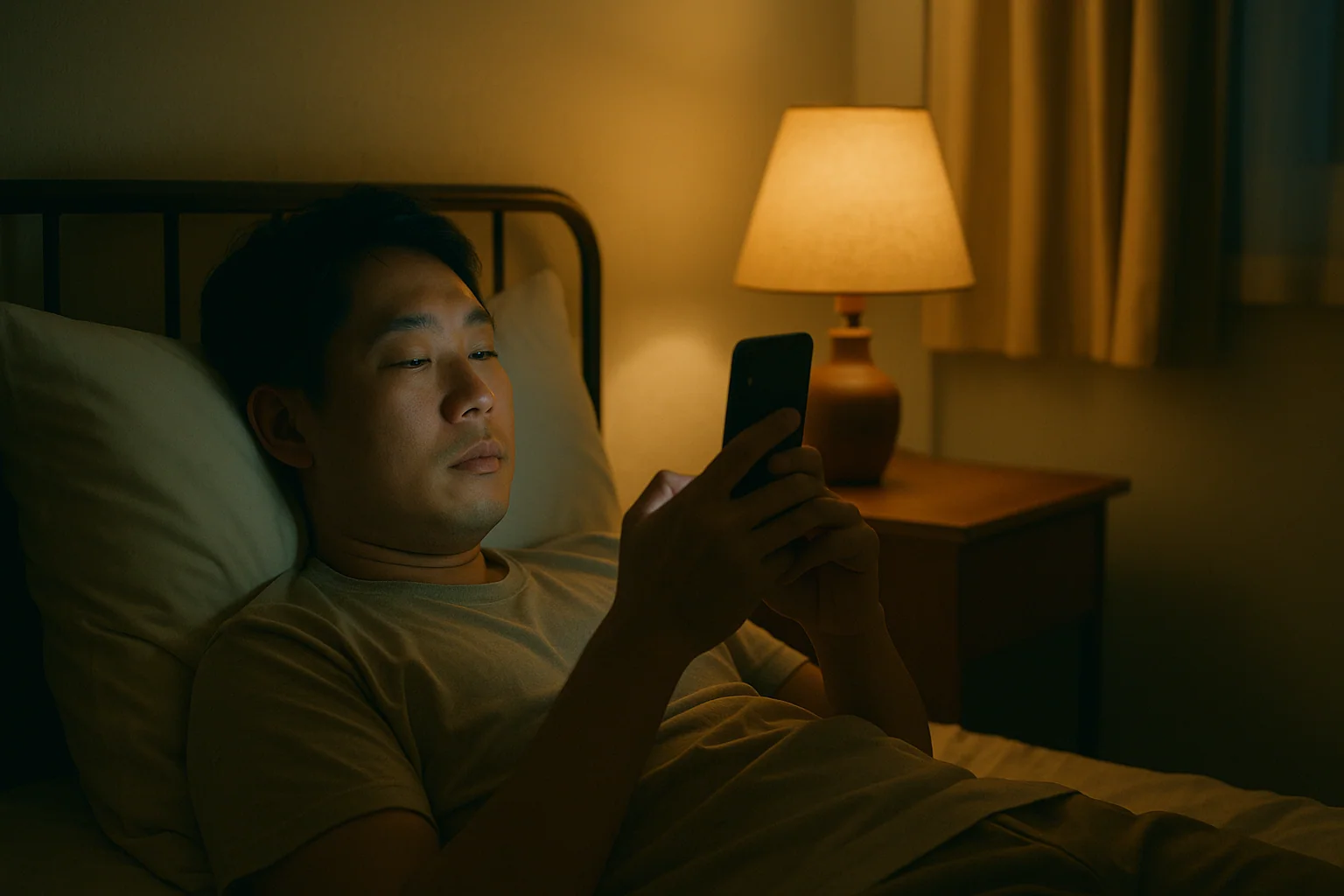
You pick up your phone for a minute and surface half an hour later, vaguely tense and not sure why. For a lot of men, this is a daily ritual — and it may be doing more to your mood than you realise. At Noah, we think it's worth looking honestly at how doomscrolling and heavy phone use interact with anxiety, because small changes here are within reach and can genuinely help.
This article is general education, not medical advice. A licensed Singapore doctor can help you assess your own situation.
What Doomscrolling Does to the Mind
Doomscrolling — compulsively consuming a stream of negative or alarming content — keeps your attention locked onto threats, real or amplified. Your nervous system isn't great at distinguishing a genuine danger from one on a screen, so a feed full of bad news, conflict, and comparison can keep you in a low-grade state of alert. Over time, that constant input can leave you feeling more anxious, irritable, or unsettled without an obvious cause.
The design of many apps reinforces the habit: endless feeds and notifications are built to hold attention, which can make it hard to stop even when it isn't making you feel good.
How Phone Use Feeds Anxiety
Beyond the content itself, the way we use phones can affect anxiety in several ways:
- Constant stimulation: a mind that's always being fed rarely gets to settle.
- Comparison: curated highlights from others can quietly erode how you feel about your own life.
- Sleep disruption: screens and stimulating content late at night can interfere with sleep, which is closely tied to anxiety.
- Fragmented attention: frequent switching can make it harder to focus and feel calm.
None of this means phones are inherently bad. It means how and when you use them matters, especially if you're prone to anxiety.
The Sleep Connection
One of the most practical issues is sleep. Scrolling in bed delays sleep, exposes you to stimulating content when you're trying to wind down, and can shorten the rest you get. Because poor sleep and anxiety reinforce each other, the bedroom is often the highest-value place to change phone habits. Many men notice a real difference simply by keeping the phone out of reach at night.
Practical Changes That May Help
You don't need to quit your phone to feel better. Some general adjustments that may help:
- Set boundaries around news and social media, especially first thing and last thing
- Keep the phone out of the bedroom, or at least off the bed
- Use built-in screen-time tools to notice and limit heavy use
- Replace some scrolling with offline activities that genuinely relax you
- Notice how you feel before and after long sessions
Treat these as experiments. If your mood and sleep improve, that's useful information.
Treat Changes as Experiments
You don't need to quit your phone to feel better. Treating adjustments as experiments — setting boundaries around news and social media, keeping the phone out of the bedroom, using built-in screen-time tools, and replacing some scrolling with offline activities — lets you see what actually helps. Notice how you feel before and after long sessions. If your mood and sleep improve when you cut back, that's useful information. This experimental approach is less daunting than an all-or-nothing ban, and it puts you in control of how technology fits into your life rather than the other way round.
When Phone Habits Aren't the Whole Story
Phone use is one factor, but it isn't always the whole picture. If you cut back on doomscrolling and anxiety persists, that's a sign the cause may lie elsewhere and is worth exploring properly. Anxiety can have many contributors, and screen habits are just one. Adjusting them is a sensible, accessible place to start, but it shouldn't be the end of the inquiry if symptoms continue. A doctor can help you look at the fuller picture, considering other factors alongside how you use your phone.
When to Speak to a Doctor
It's worth speaking to a licensed doctor if anxiety has persisted for several weeks, if it's affecting your sleep, focus, or relationships, or if cutting back on screens hasn't helped. Phone habits are one factor, but persistent anxiety deserves proper assessment.
A doctor can evaluate what's going on, consider other contributors, and discuss options — which might include lifestyle strategies, talking therapy, or other support, always decided together. If distress ever feels overwhelming or you have thoughts of self-harm, seek urgent professional help promptly.
Speak to a Licensed Doctor on Noah
If anxiety has been building and your phone might be part of it, a doctor can help you look at the whole picture. Noah connects you with MOH-licensed Singapore doctors through discreet, confidential online consultations. Start a consultation to talk it through.
This article is for general education and is not medical advice. A consultation with a licensed doctor is required before any treatment.
Reading about it is a good start.
Talking to a doctor is better. Answer a few questions online and a licensed Noah doctor will take it from there, privately.
Get started
Written by our Editorial Team
Last updated 11 Jun 2026