Erectile Dysfunction
April 16, 2026
·
6 min read
read
Lifestyle Changes That Improve Erectile Dysfunction: Evidence-Based Guide for Singapore Men


Medically reviewed by Dr. Kevin Chua, Medical Director
Medically reviewed by Dr. Kevin Chua, Medical Director
Disclaimer: This article provides general medical information and is not a substitute for professional medical advice.
Medication is often the fastest solution for ED — but lifestyle changes address root causes and can produce lasting improvements that medication alone cannot. In some cases, lifestyle modification alone can restore erectile function without the need for ongoing medication1.
This guide covers the evidence behind each lifestyle intervention and provides practical recommendations for men in Singapore.
Regular physical activity is the single most effective lifestyle intervention for ED. The evidence base is strong and consistent across multiple studies.
A landmark randomised controlled trial by Esposito et al. demonstrated that a structured programme of diet and exercise restored erectile function in approximately one-third of obese men with ED — without medication1. Multiple meta-analyses have confirmed that exercise interventions significantly improve erectile function scores.
The Health Promotion Board (HPB) recommends 150 minutes of moderate-intensity aerobic exercise per week. For ED specifically:
Singapore-specific options: ActiveSG facilities offer affordable gym access; park connectors provide excellent walking/jogging routes; community centres often run group fitness programmes.
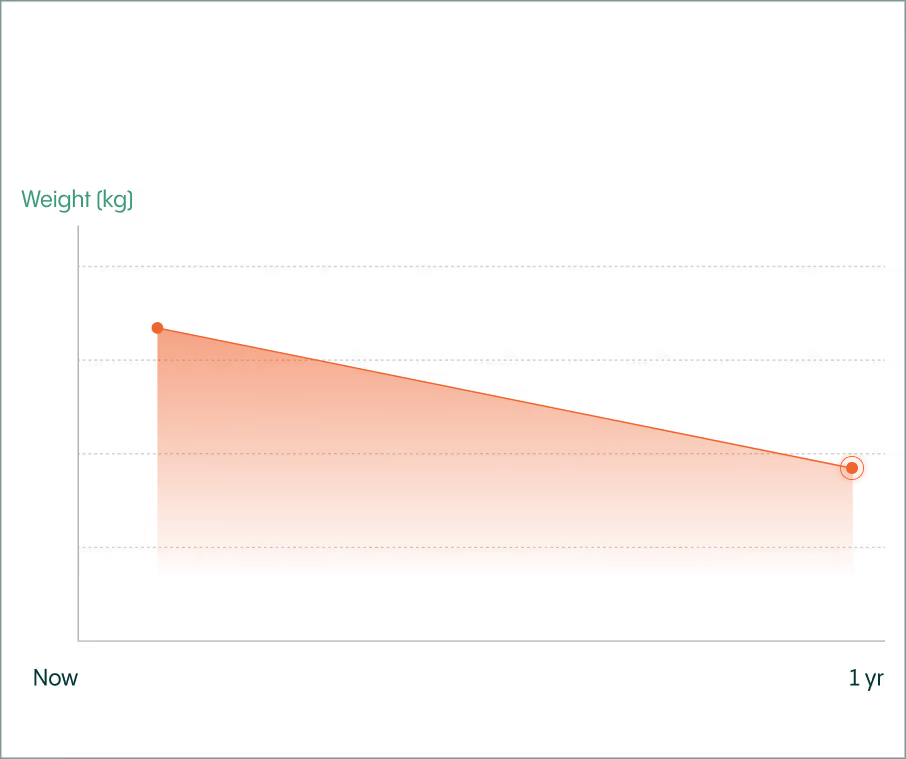
Obesity is an independent risk factor for ED. Excess visceral fat disrupts hormonal balance, promotes inflammation, and impairs vascular function — all of which contribute to erectile dysfunction.
The Esposito et al. trial found that men who lost an average of 15 kg through diet and exercise saw significant improvement in erectile function1. Even modest weight loss (5–10% of body weight) can produce meaningful improvements.
→ See also: noah™ Weight Loss Programme
Smoking is a major, modifiable risk factor for ED. It damages the endothelium, accelerates atherosclerosis, and impairs the nitric oxide pathway critical for erection.
A meta-analysis confirmed that current smokers have a significantly higher risk of ED compared to non-smokers2. Importantly, smoking cessation can improve erectile function — particularly in younger men and those with mild-to-moderate ED.
The relationship between alcohol and ED follows a J-curve: moderate consumption may slightly reduce anxiety and improve confidence, but chronic heavy drinking significantly impairs erectile function.
HPB recommends no more than 2 standard drinks per day for men. A standard drink is approximately: - 1 can (330 ml) of regular beer - 1 glass (100 ml) of wine - 1 nip (30 ml) of spirits
For best sexual health: limit to 1–2 drinks on occasions when you anticipate sexual activity.
Sleep deprivation suppresses testosterone production, disrupts autonomic nervous system function, and increases cortisol — all of which impair erectile function. Multiple studies have demonstrated links between poor sleep quality and ED severity.
Testosterone production peaks during deep sleep. Studies show that restricting sleep to 5 hours per night for one week reduces testosterone levels by 10–15% in young men(Based on MOH guidelines and prescribing information). This is clinically significant and directly relevant to erectile function.
Chronic stress activates the sympathetic nervous system (fight-or-flight response) and elevates cortisol — both directly antagonistic to the parasympathetic activation needed for erection.
Singapore's work culture — with some of the longest working hours in the developed world — makes stress management particularly important. Men in high-pressure industries (finance, tech, legal) are at elevated risk.
While no single food "cures" ED, overall dietary patterns that support cardiovascular health also support erectile function.
The Mediterranean diet — rich in fruits, vegetables, whole grains, fish, olive oil, and nuts — has been associated with reduced ED risk in observational studies(Based on MOH guidelines and prescribing information).
Lifestyle changes and medication are not mutually exclusive — they work synergistically. The optimal approach for many men involves:
ED medications are available at a range of price points in Singapore. Generic options (e.g., sildenafil, tadalafil) typically cost SGD $3–15 per dose, while branded versions (e.g., Viagra, Cialis) range from SGD $15–30 per dose. Online telehealth platforms like noah™ often offer competitive pricing with the convenience of discreet home delivery.
Prices are approximate and may vary. Updated April 2026.
Most men notice improvements within 2–3 months of consistent lifestyle change. The Esposito et al. trial measured outcomes at 2 years and found sustained improvements1. Be patient but persistent.
For some men, yes — particularly those whose ED is primarily driven by obesity, sedentary lifestyle, or smoking. The Esposito trial found that lifestyle changes alone restored erectile function in about one-third of obese men1.
The evidence for ED supplements is weak and inconsistent. L-arginine (a nitric oxide precursor) has shown modest benefit in some small studies, but the effect size is far smaller than PDE5 inhibitors. Ginseng has limited evidence. No supplement should replace proven medical treatment.
Prolonged cycling (especially on a narrow saddle) can compress the perineal nerves and arteries, potentially contributing to ED. If you cycle regularly and experience ED, consider a wider saddle, padded shorts, or reducing cycling intensity. Occasional cycling is not a concern.
You can do both simultaneously. There's no need to "earn" medication by trying lifestyle changes first. For many men, medication provides immediate relief while lifestyle changes produce longer-term benefit.
→ Return to pillar: Complete Guide to ED Treatment in Singapore
This article is for informational purposes only and does not constitute medical advice. Always consult a licensed doctor before starting any treatment.
Esposito K, Giugliano F, Di Palo C, et al. Effect of lifestyle changes on erectile dysfunction in obese men. JAMA. 2004;291(24):2978-2984. PMID: 15213209 ↩↩↩↩↩
He J, Reynolds K, Chen J, et al. Cigarette smoking and erectile dysfunction among Chinese men without clinical vascular disease. Am J Epidemiol. 2007;166(7):803-809. PMID: 16949200 ↩

Articles featured on Noah are for informational purposes only and should not be constituted as medical advice, diagnosis or treatment. If you have any medical questions or concerns, please talk to your healthcare provider.