Sexual Health
April 17, 2026
·
8 min read
read
Natural Ways to Boost Testosterone


Before you consider any medical treatment for low testosterone, the fundamentals matter. For many men — particularly those with borderline low levels driven by lifestyle factors — targeted changes to sleep, exercise, diet, and stress management can meaningfully shift testosterone levels.
This isn't about miracle supplements or internet broscience. It's about the interventions with the strongest evidence base, explained clearly.
That said, natural optimisation has limits. If you have clinically confirmed low testosterone with significant symptoms, lifestyle changes alone may not be enough. This guide helps you understand what's achievable — and when to seek medical assessment.
Testosterone production is tightly regulated by the hypothalamic-pituitary-gonadal (HPG) axis. Signals from the brain (GnRH from the hypothalamus, LH and FSH from the pituitary) tell the testes how much testosterone to produce.
Multiple lifestyle factors disrupt this axis:
Understanding these mechanisms helps explain why the interventions below work.
If you do nothing else on this list, fix your sleep.
Testosterone is primarily produced during sleep, with levels peaking in the early morning hours. Studies show that even one week of sleep restriction (5 hours per night) can reduce testosterone levels in healthy young men by 10–15%.
A study by Leproult and Van Cauter (2011) published in JAMA found that sleep restriction to 5 hours per night for one week reduced testosterone levels by 10–15% in young healthy men — an effect equivalent to 10–15 years of ageing (PMID: 21632481).
What to do:
Resistance exercise is one of the most well-established natural testosterone boosters. Compound movements — squats, deadlifts, bench press, rows — are particularly effective because they recruit large muscle groups.
Acute testosterone responses to resistance training are well documented. However, the longer-term benefit for chronically low testosterone comes from the metabolic effects: reduced body fat, improved insulin sensitivity, and reduced inflammatory markers.
What to do:
Note on overtraining: Excessive endurance training (e.g., marathon training with very high weekly mileage) can suppress testosterone. Balance is key.
Obesity is one of the strongest predictors of low testosterone. Visceral fat (abdominal fat) contains high levels of aromatase, the enzyme that converts testosterone to oestradiol. More body fat = more oestradiol, which feeds back to suppress the HPG axis.
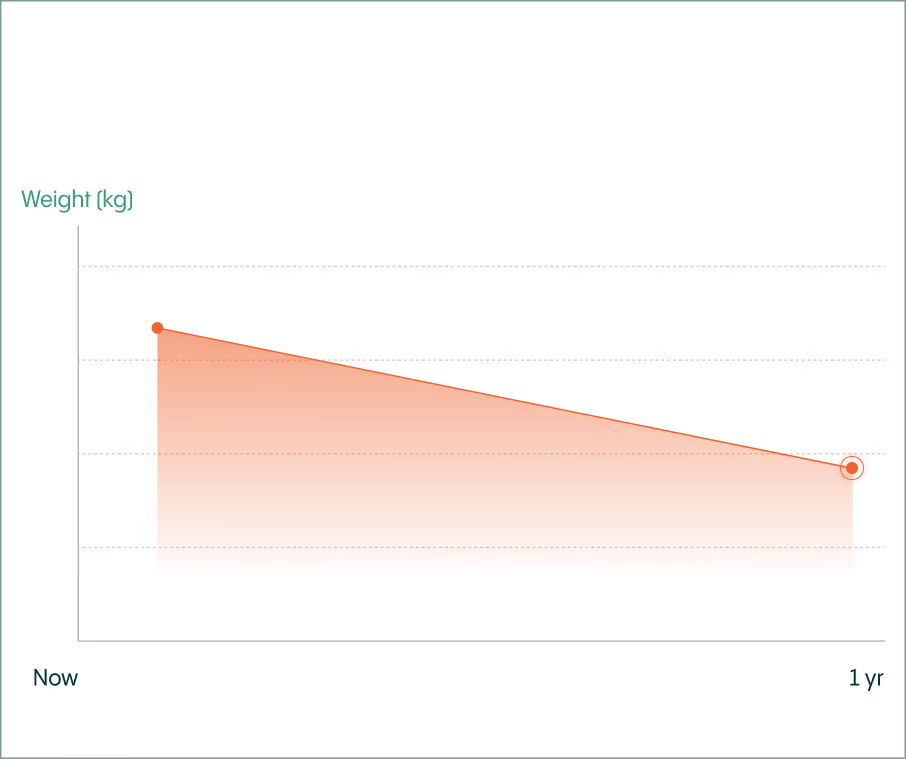
The good news: weight loss reliably raises testosterone. A meta-analysis by Grossmann et al. found that weight loss interventions (dietary and surgical) significantly increased total testosterone in overweight and obese men — with bariatric surgery having the largest effect.
What to do:
No single "testosterone superfood" exists, but overall dietary quality and specific nutrients matter:
Severe calorie restriction lowers testosterone. Very low-fat diets may also reduce testosterone, as dietary fat is a precursor for steroid hormones (cholesterol → pregnenolone → testosterone).
Zinc is essential for testosterone synthesis and is found in oysters, red meat, poultry, pumpkin seeds, and legumes. Deficiency is associated with lower testosterone. A classic study by Prasad et al. (1996) showed that zinc supplementation in zinc-deficient elderly men doubled serum testosterone (PMID: 8875519).
If you eat a varied diet, zinc deficiency is uncommon — but it's worth knowing about for men who eat very little meat or animal products.
Vitamin D receptors exist on Leydig cells (the testosterone-producing cells in the testes). Low vitamin D levels are associated with lower testosterone, and supplementation in deficient men has shown modest testosterone-boosting effects in some studies.
In Singapore, despite abundant sunshine, vitamin D deficiency is surprisingly common due to indoor lifestyles and sunscreen use. A blood test can determine if you're deficient.
Magnesium plays a role in testosterone metabolism, partly by reducing SHBG (sex hormone-binding globulin), which releases more free (bioavailable) testosterone. Good sources include green leafy vegetables, nuts, seeds, and whole grains.
Cortisol, the primary stress hormone, and testosterone have an inverse relationship. Chronic psychological stress keeps cortisol elevated, which directly inhibits testosterone synthesis and the HPG axis.
What to do:
Alcohol is a direct testicular toxin at higher doses. Studies consistently show that heavy and chronic drinking significantly lowers testosterone levels.
Even moderate drinking affects sleep quality and recovery. Reducing alcohol is one of the more impactful changes for men who drink regularly.
Obstructive sleep apnoea (OSA) is a severely underdiagnosed condition — particularly in overweight men — that causes repeated nocturnal hypoxia (oxygen drops during sleep). OSA profoundly disrupts the hormonal patterns of sleep, suppressing testosterone.
Treatment with CPAP (continuous positive airway pressure) has been shown to increase testosterone levels in hypogonadal men with OSA, sometimes substantially.
If you snore loudly, have been told you stop breathing during sleep, or wake unrefreshed despite adequate sleep time, ask your doctor about a sleep study.
The supplement market is full of products claiming to boost testosterone — ashwagandha, fenugreek, D-aspartic acid, tribulus terrestris, and dozens more.
The honest summary:
No over-the-counter supplement should be expected to resolve clinically confirmed low testosterone. They are at best adjuncts to lifestyle optimisation.
If you've been consistently implementing these strategies for 3–6 months and still have symptoms of low testosterone, it's time for a proper medical assessment. Some men have primary hypogonadism (testicular failure) that cannot be corrected by lifestyle changes regardless of how well they eat and train.
A blood test and consultation with a doctor can determine whether your levels and symptoms warrant medical treatment.
Q: How quickly can lifestyle changes raise testosterone?
A: Changes in sleep and stress management can have measurable effects within days to weeks. Weight loss effects take longer — typically 3–6 months of sustained effort.
Q: Do cold showers raise testosterone?
A: There is no good clinical evidence that cold showers significantly raise testosterone, despite popular claims online.
Q: Does intermittent fasting boost testosterone?
A: Some studies suggest short-term fasting may transiently increase LH pulsatility. The effect on sustained testosterone levels is modest and indirect — mainly through weight loss benefits.
Q: Can I boost testosterone with diet alone?
A: Diet can support testosterone optimisation, particularly by addressing deficiencies and managing weight. But diet alone is unlikely to correct clinically low testosterone.
Q: Are testosterone booster supplements safe?
A: Most are low-risk but also low-efficacy. Some supplements contain undisclosed ingredients or interact with medications. Always check with a doctor before starting any supplement.
Sleep, resistance training, healthy body weight, good nutrition, and stress management are the most evidence-supported ways to optimise testosterone naturally. For men with lifestyle-driven low-normal testosterone, these changes can make a real difference.
For men with confirmed clinical hypogonadism, lifestyle optimisation is an important complement to — but usually not a replacement for — medical treatment.
This article is for informational purposes only and does not constitute medical advice. Consult a licensed medical professional before making any decisions about your health or treatment.
Not sure if your testosterone levels are the issue? Get a proper assessment with a Noah doctor — no guesswork, just evidence.