

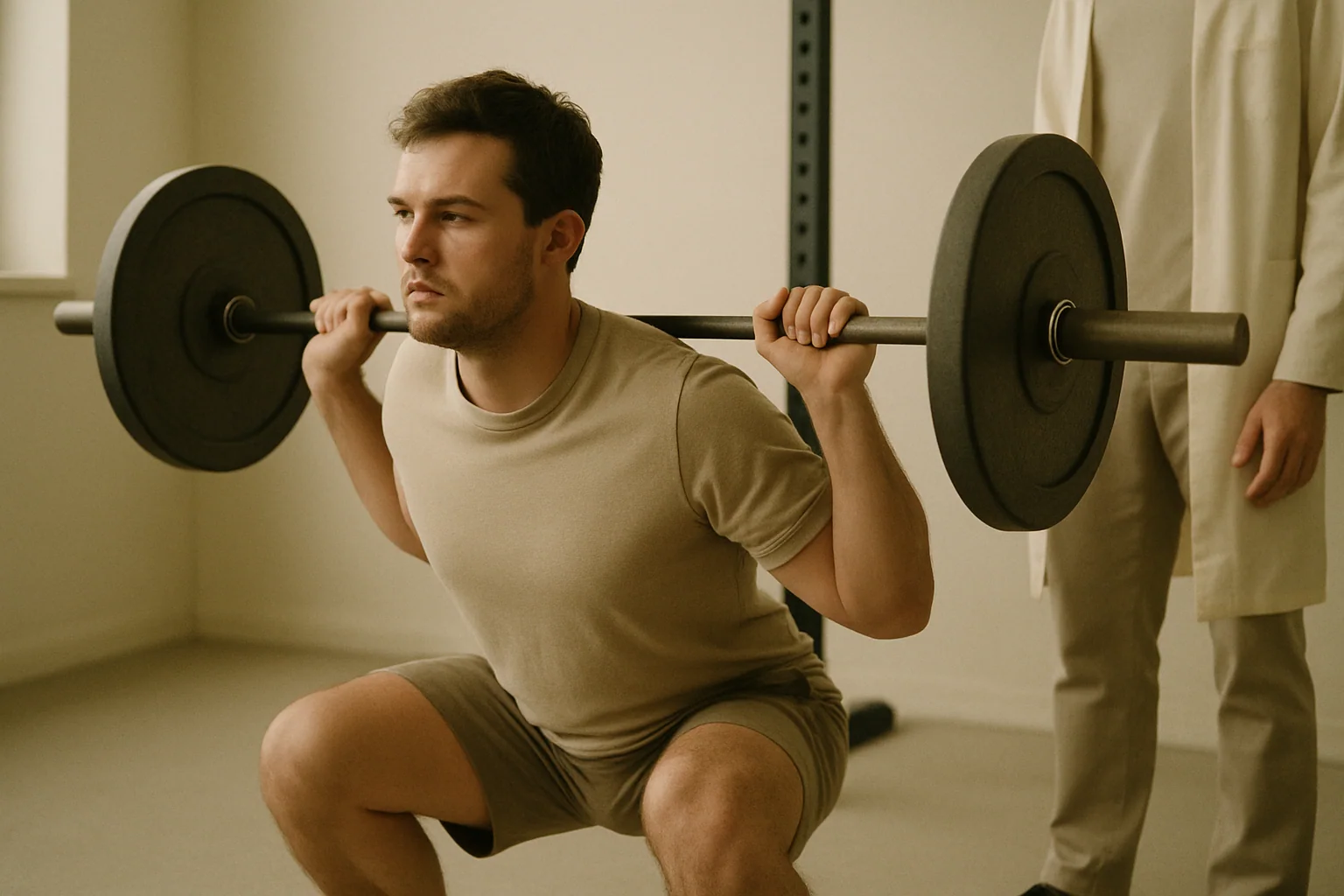
Strength training is one of the most reliable lifestyle interventions for supporting testosterone and overall male health — but its effects on the hormone itself are more modest than most marketing suggests. This guide explains what the evidence actually supports and how to structure training for real benefit.
1What strength training actually does for testosterone
The acute (immediate post-workout) testosterone response to heavy compound lifts is real but short-lived. Baseline testosterone changes from regular strength training in men with normal levels are modest. The more durable benefit isn't a big rise in testosterone — it's that strength training preserves muscle and bone, improves insulin sensitivity, supports body composition, and prevents the cascade of age-related changes that compound with low T.
In men with low or borderline testosterone, the picture shifts. Resistance training in this group is one of the most useful interventions, not because it dramatically raises hormone levels but because it slows the decline in muscle, bone, and metabolic health that low T accelerates.
2A reasonable structure
Frequency: 2–4 sessions per week. Three is a sweet spot for most men with full-time work.
Focus on compound lifts. The lifts that engage multiple large muscle groups produce the most muscular and hormonal response per unit of effort. A reasonable core set:
- Squat variations (back squat, front squat, goblet squat)
- Hinge variations (deadlift, Romanian deadlift, kettlebell swing)
- Vertical press (overhead press)
- Horizontal press (bench press, push-up)
- Vertical pull (chin-up, pull-down)
- Horizontal pull (row variations)
Volume: Typically 3–5 working sets per major movement per session, 5–10 reps per set with appropriate weight. Beginner programmes can start lower; intermediate trainers can do more.
Intensity: Heavy enough that the last 1–2 reps of a set are challenging. Not necessarily to failure every set.
Progressive overload: Doing the same workout indefinitely produces decreasing returns. Increase weight, reps, or volume over time as you adapt.
3What doesn't matter as much as marketing suggests
- Specific "testosterone-boosting" programmes — well-designed standard programmes are fine
- Time of day to train — small effects on acute hormonal response; consistency matters more
- Hardcore-only intensity — sustainable progress beats short bursts
- Specific supplements during training — adequate protein and recovery matter more than any timing trick
4What matters more than you might think
- Recovery: Sleep, days off, managing total stress load
- Protein intake (around 1.6–2.2g per kg bodyweight per day for active men)
- Consistency over years, not weeks
- Form and technique — protects from injury, which is the biggest enemy of consistency
5Frequently asked questions
Will lifting raise my testosterone?
Modestly, particularly in men with low or borderline levels. In men with normal levels, baseline testosterone changes are small. The main benefits are body composition, muscle preservation, and metabolic health.
How long until I see results?
Strength gains in 4–6 weeks; visible body composition changes in 3–6 months; durable hormonal supportive effects across years.
Should I do cardio too?
Some moderate cardiovascular exercise is supportive. Excessive endurance volume can suppress testosterone, particularly when combined with under-eating. Balance is the point.
6Speak to a doctor on Noah
If you're combining training with concerns about hormones, you can book a confidential consultation with a Singapore-licensed doctor on Noah.
7References
Storer TW, et al. Effects of testosterone on muscle mass and strength. JCEM. 2017.
Schoenfeld BJ. The mechanisms of muscle hypertrophy. Journal of Strength & Conditioning Research. 2010.
Articles on Noah are for informational purposes only and do not replace medical advice from a qualified doctor. To consult on Noah, click here. Noah's editorial standards are described on our editorial standards page.
That wasn’t so hard. Got questions?
That’s what a consult is for. Five minutes of questions, then a short video chat.
- $20.10 consult
- Pay for treatment only once it’s approved