

Sleep and Testosterone: How Sleep Affects Your Hormones (and Vice Versa)
Sleep and testosterone have a bidirectional relationship: poor sleep lowers testosterone, and low testosterone disrupts sleep. A doctor-overseen guide to the science and what to do about it.
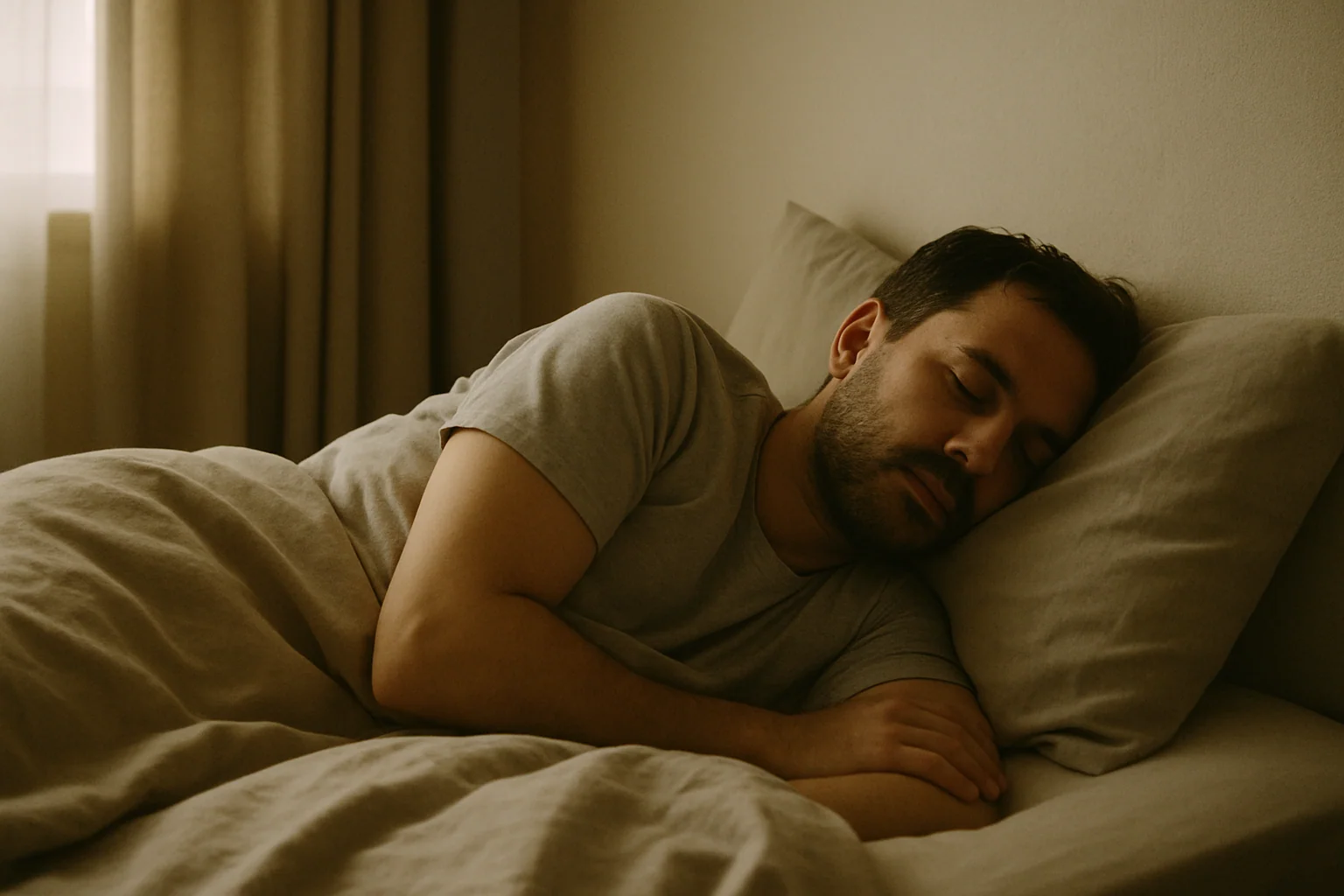
Of all the lifestyle factors that affect testosterone, sleep may be the most underrated. It is also one of the few that has been studied with proper randomised controlled trials in men. This guide walks through what the evidence shows, why the relationship runs both ways, what role sleep apnoea plays, and what practical changes are most worth making.
For broader context on low testosterone, see our complete guide.
1The science: sleep restriction lowers testosterone
The most-cited study on sleep and testosterone is a randomised trial published in JAMA in 2011 by Leproult and Van Cauter. They restricted healthy young men to 5 hours of sleep per night for one week. The result: testosterone levels in the late afternoon dropped by 10–15% compared with baseline. The men felt the symptoms too — reduced vigour, increased fatigue, lower mood.
That is a substantial hormonal effect from just one week. Chronic sleep restriction, the kind that becomes baseline for many busy adults, has a sustained suppressive effect on testosterone production. Most testosterone is produced during sleep, with the largest production occurring during REM. Less sleep means less production.
2The relationship is bidirectional
Sleep affects testosterone, and testosterone affects sleep. Men with low testosterone often report fragmented sleep, difficulty falling asleep, and unrefreshing sleep — not because they are tired (though they often are), but because testosterone supports sleep architecture itself.
This sets up a feedback loop. Poor sleep lowers testosterone; lower testosterone worsens sleep quality; worse sleep further lowers testosterone. For some men, breaking this loop is the single most important intervention.
3The sleep apnoea factor
Obstructive sleep apnoea (OSA) is a condition in which the airway repeatedly closes during sleep, causing brief drops in oxygen and frequent micro-awakenings. It is significantly under-diagnosed in men, particularly overweight men, and it has a powerful suppressive effect on testosterone.
Treating OSA — typically with CPAP (continuous positive airway pressure) — frequently improves testosterone, sometimes substantially, without any other intervention. If you snore loudly, have witnessed pauses in breathing, wake up unrefreshed despite enough time in bed, or have a high BMI plus daytime fatigue, getting assessed for sleep apnoea is one of the highest-leverage moves you can make.
Importantly, untreated OSA is also a contraindication for starting TRT. Treating one without the other is not appropriate.
4How much sleep is enough?
Major sleep medicine bodies recommend 7–9 hours per night for most adults. The exact need varies between individuals, but the practical signal is straightforward: if you consistently wake up feeling unrested, you are probably either getting too little sleep, sleeping at irregular times, or have a sleep quality issue.
Consistency matters as much as quantity. Going to bed and waking up at roughly the same time, including on weekends, has a meaningful effect on sleep quality and the hormonal rhythms that depend on it.
5Practical improvements that move the needle
In rough order of typical impact:
- Get a sleep apnoea assessment if there's any suggestion — snoring, witnessed pauses, daytime fatigue, BMI elevation. This is the single biggest move for many men.
- Protect 7–9 hours of sleep opportunity — actually in bed, not on a screen.
- Keep a consistent sleep schedule, including on weekends.
- Limit alcohol, particularly in the evening. Alcohol fragments sleep architecture and reduces REM, even when it makes you feel like you fell asleep faster.
- Avoid heavy late-evening meals.
- Cool, dark, quiet bedroom — standard sleep hygiene, but it matters.
- Reduce screen use in the hour before bed — the bigger benefit here is often mental wind-down, not blue light per se.
What helps less than the marketing suggests: sleep tracking apps, specific bedding products, expensive blackout setups, and various sleep supplements. None of these are harmful, but they are not the levers most men actually need.
6Frequently asked questions
How quickly does sleep affect testosterone?
Quickly. Acute sleep restriction lowers testosterone within days. Sustained sleep deprivation produces sustained suppression. Improvements in sleep typically translate to improvements in testosterone within 2–4 weeks.
If I get more sleep, will my testosterone go back to normal?
If sleep deprivation is the main driver, yes — often substantially. If there are other contributors (weight, age-related changes, medications), better sleep helps but may not fully restore levels.
Do I need a sleep study?
Worth discussing with a doctor if you have any of: loud snoring, witnessed pauses in breathing, severe daytime sleepiness, unrefreshing sleep, BMI in the overweight or obese range, hypertension, or a partner reporting unusual breathing during sleep.
Is melatonin useful for sleep and testosterone?
Melatonin can help with sleep onset and circadian rhythm issues in some men. Its direct effect on testosterone is minimal. Use it as a sleep tool, not a hormone tool.
7Speak to a doctor on Noah
If poor sleep is affecting your day-to-day and you suspect it might be connected to low testosterone, you can book a confidential consultation with a Singapore-licensed doctor on Noah.
8References
Leproult R, Van Cauter E. Effect of 1 week of sleep restriction on testosterone levels in young healthy men. JAMA. 2011;305(21):2173–2174.
Wittert G. The relationship between sleep disorders and testosterone in men. Asian Journal of Andrology. 2014;16(2):262–265.
Patel P, et al. Impaired sleep is associated with low testosterone in US adult males. World Journal of Urology. 2019;37(7):1449–1453.
Articles on Noah are for informational purposes only and do not replace medical advice from a qualified doctor. To consult on Noah, click here. Noah's editorial standards are described on our editorial standards page.
That wasn’t so hard. Got questions?
That’s what a consult is for. Five minutes of questions, then a short video chat.
- $20.10 consult
- Pay for treatment only once it’s approved