Hair loss doesn't always start in the same place. Some men first notice their hairline creeping back; others spot thinning at the crown, often only because someone points it out. Both are common patterns, and understanding them helps you make sense of what's happening. At Noah, we think clarity here is useful — while emphasising that a doctor's assessment is what turns observation into a sensible plan.
This article is general education, not medical advice. A licensed Singapore doctor can assess your hair loss.
Two Common Patterns
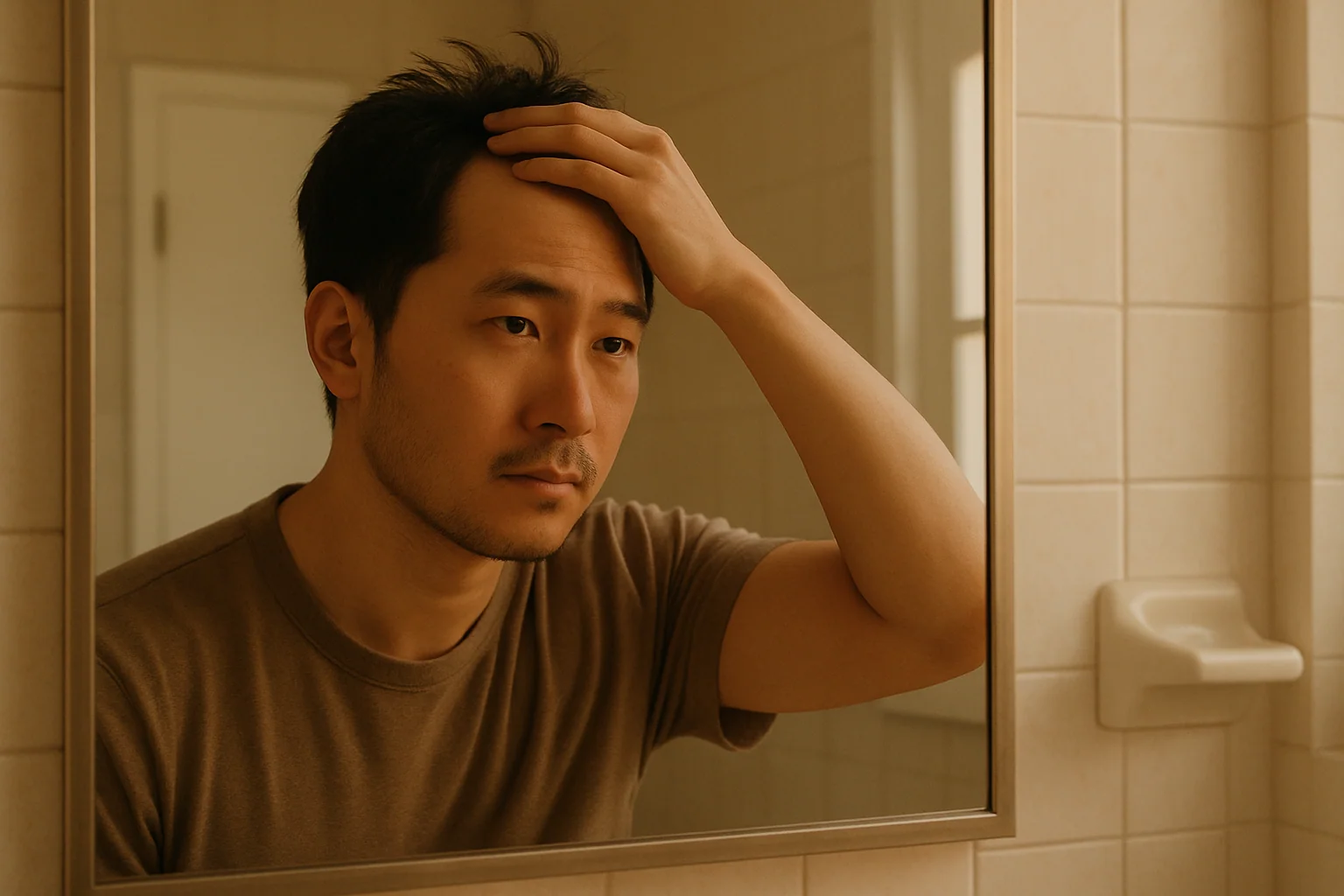
A receding hairline and crown thinning are two recognisable patterns of male hair loss. A receding hairline involves the front hairline moving back over time, often at the temples. Crown thinning involves hair becoming sparser at the top-back of the head. Both are frequently associated with male pattern hair loss, which tends to follow these recognisable patterns in genetically susceptible men. Some men experience one, some the other, and some both.
Why the Pattern Reflects the Cause
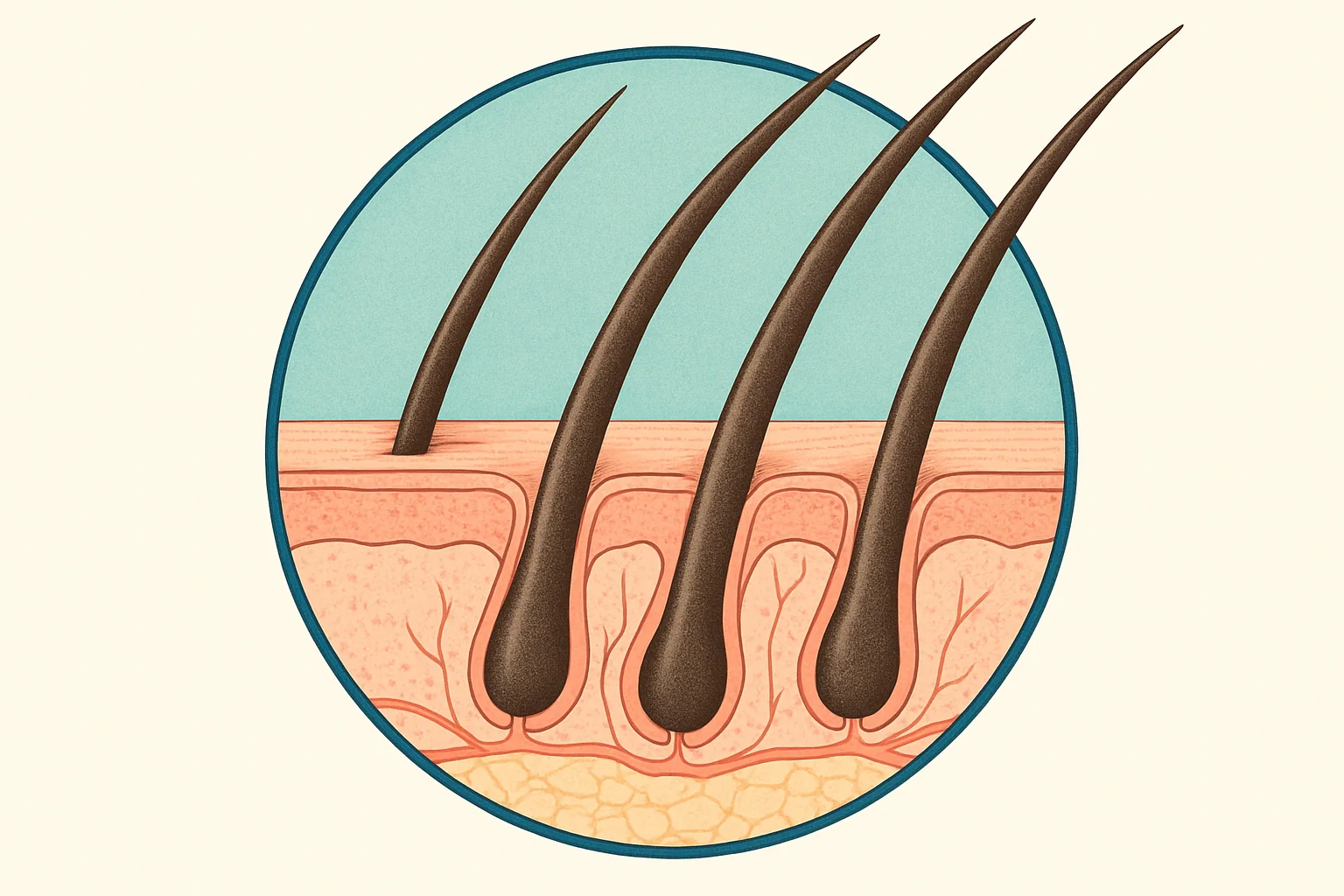
These patterns aren't random. In male pattern hair loss, certain follicles — typically along the hairline and crown — are genetically sensitive to DHT, a hormone derived from testosterone. Over time, this sensitivity contributes to gradual follicle miniaturisation in those areas, producing the familiar receding hairline or thinning crown. This is why the pattern itself carries information about the likely cause, and why doctors pay attention to where and how hair loss is occurring.
Why Crown Thinning Is Often Noticed Late
One practical difference: crown thinning is harder to see in the mirror, so it's often noticed later — sometimes by a barber, a photo, or someone else. A receding hairline, by contrast, is right in front of you. This means crown thinning can progress unnoticed for a while. If you suspect it, it's worth getting it assessed rather than waiting, since earlier assessment generally gives you more options.
Do Different Patterns Mean Different Approaches?
To some extent, yes — the appropriate approach depends on the cause, pattern, and extent of hair loss, as well as individual factors. While both patterns are often part of male pattern hair loss, how they're approached can differ between individuals, and a doctor weighs this in any recommendation. This is exactly why a proper assessment matters: it allows any approach to be matched to your specific pattern and situation, rather than applied generically.
Why Crown Thinning Often Goes Unnoticed
A practical difference between the two patterns is visibility. A receding hairline is right in front of you in the mirror, while crown thinning at the top-back of the head is harder to see — often spotted late by a barber, a photo, or someone else. This means crown thinning can progress for a while before you notice it. If you suspect it, getting it assessed rather than waiting is sensible, since earlier assessment generally gives you more options. Being aware of this blind spot helps you catch changes you might otherwise miss.
Matching the Approach to the Pattern
While both patterns are often part of male pattern hair loss, the appropriate approach depends on the cause, pattern, and extent of hair loss, along with individual factors. How a given pattern is approached can differ between people, and a doctor weighs this in any recommendation. This is exactly why a proper assessment matters — it lets any approach be matched to your specific pattern and situation rather than applied generically. For pattern hair loss, a doctor may discuss options such as medical treatments, prescribed and supervised where suitable.
When to Speak to a Doctor
It's worth speaking to a licensed doctor if you've noticed a receding hairline, thinning at the crown, or any change you're unsure about. A doctor can assess the pattern and likely cause, explain which approaches are appropriate for your situation, and set realistic expectations, since outcomes vary. Earlier assessment often means more options.
For male pattern hair loss, a doctor may discuss options that can include medical treatments such as finasteride or minoxidil, prescribed and supervised where suitable. These require medical assessment rather than self-direction.
Speak to a Licensed Doctor on Noah
If you want to understand your pattern of hair loss and options, a doctor can help. Noah connects you with MOH-licensed Singapore doctors through discreet, confidential online consultations. Start a consultation to discuss your hair loss.
This article is for general education and is not medical advice. A consultation with a licensed doctor is required before any treatment.
Reading about it is a good start.
Talking to a doctor is better. Answer a few questions online and a licensed Noah doctor will take it from there, privately.
Get started
Written by our Editorial Team
Last updated 15 Jun 2026