

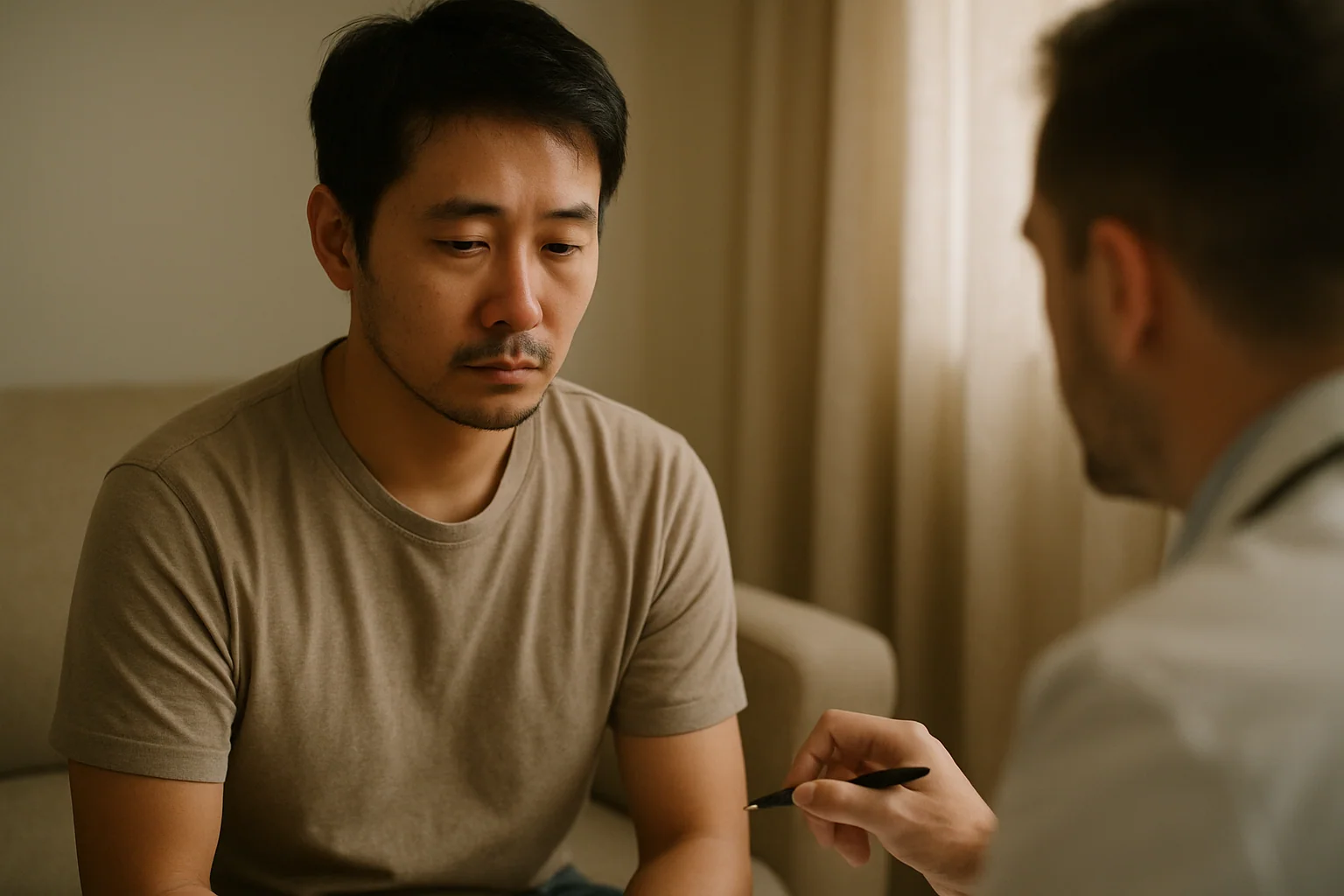
Low testosterone is usually framed as a problem of middle age, but a meaningful number of men in their 30s experience genuinely low levels. The clinical picture, causes, and treatment considerations differ in important ways from the over-45 group. This guide explains what's normal for men in their 30s and when symptoms warrant investigation.
For broader context, see our complete guide to low testosterone.
1What's normal in your 30s
Testosterone typically peaks in the late teens and early twenties and begins a slow, gradual decline from around age 30. For most healthy men, levels remain well within the normal range throughout the thirties — the noticeable drop usually doesn't show up until the late forties or fifties.
So when a man in his 30s has measurably low testosterone, it usually isn't "early ageing." It's more likely to be a specific cause that's worth identifying.
2Common causes in younger men
- Severe obesity, particularly with significant visceral fat
- Untreated obstructive sleep apnoea
- Past or current anabolic steroid use — the body's own production can be suppressed for years afterwards
- Opioid use, even prescription opioids over time
- Chronic high stress and burnout
- Severe under-eating or extreme endurance training
- Genetic conditions like Klinefelter syndrome (sometimes diagnosed later than expected)
- Pituitary or hypothalamic conditions — rare but more important to identify in younger men
- Past testicular injury, mumps orchitis, or undescended testes
- Certain medications (long-term corticosteroids, some others)
3Why diagnosis matters more in younger men
In a man in his 60s with gradual symptoms, the explanation is usually age plus lifestyle. In a man in his 30s with confirmed low testosterone, a specific underlying cause is more likely — and finding it matters for two reasons. First, some causes are treatable in their own right (a pituitary issue, weight, medications, sleep apnoea). Second, fertility considerations are usually live, which shapes treatment decisions substantially.

4Fertility considerations
Most men in their 30s either want children in the future or aren't ruling it out. This shapes the conversation:
- TRT typically suppresses sperm production. For a man planning to have children soon, TRT is usually not the right first-line approach.
- Alternatives such as clomiphene or human chorionic gonadotropin (hCG) can raise testosterone while preserving fertility in many men. These are prescription medical treatments requiring a doctor's assessment.
- Sperm preservation before TRT is an option for men who want flexibility.
Any treatment conversation in a man in his 30s should explicitly cover fertility. If your doctor doesn't bring it up, raise it.
5When to investigate
A testosterone test in a man in his 30s is reasonable when:
- There are several persistent low-T symptoms (fatigue, low libido, reduced muscle, mood change, low motivation)
- There's a specific risk factor (history of steroid use, opioid prescription, significant weight gain, possible sleep apnoea)
- Fertility is being explored and the workup is appropriate
- Other endocrine symptoms are present (significant changes in body hair, signs suggestive of a pituitary issue)
6Frequently asked questions
Is testosterone supposed to drop in your 30s?
A very slow age-related decline begins around 30, but for most men it's not clinically meaningful until the 40s or 50s.
Can I do TRT in my 30s if I want kids later?
Standard TRT suppresses sperm production. Alternatives that preserve fertility exist and should be discussed with a doctor before any treatment decision.
Could past steroid use be why my testosterone is low?
Yes — anabolic steroid use suppresses the body's own production, and recovery can take months to years, sometimes incomplete. Mention any past use to your doctor; it shapes the investigation.
7Speak to a doctor on Noah
If you're in your 30s with persistent symptoms, you can book a confidential consultation with a Singapore-licensed doctor on Noah.
8References
Bhasin S, et al. Endocrine Society Clinical Practice Guideline. JCEM. 2018.
Rahnema CD, et al. Anabolic steroid-induced hypogonadism: diagnosis and treatment. Fertility & Sterility. 2014.
Articles on Noah are for informational purposes only and do not replace medical advice from a qualified doctor. To consult on Noah, click here. Noah's editorial standards are described on our editorial standards page.
That wasn’t so hard. Got questions?
That’s what a consult is for. Five minutes of questions, then a short video chat.
- $20.10 consult
- Pay for treatment only once it’s approved