

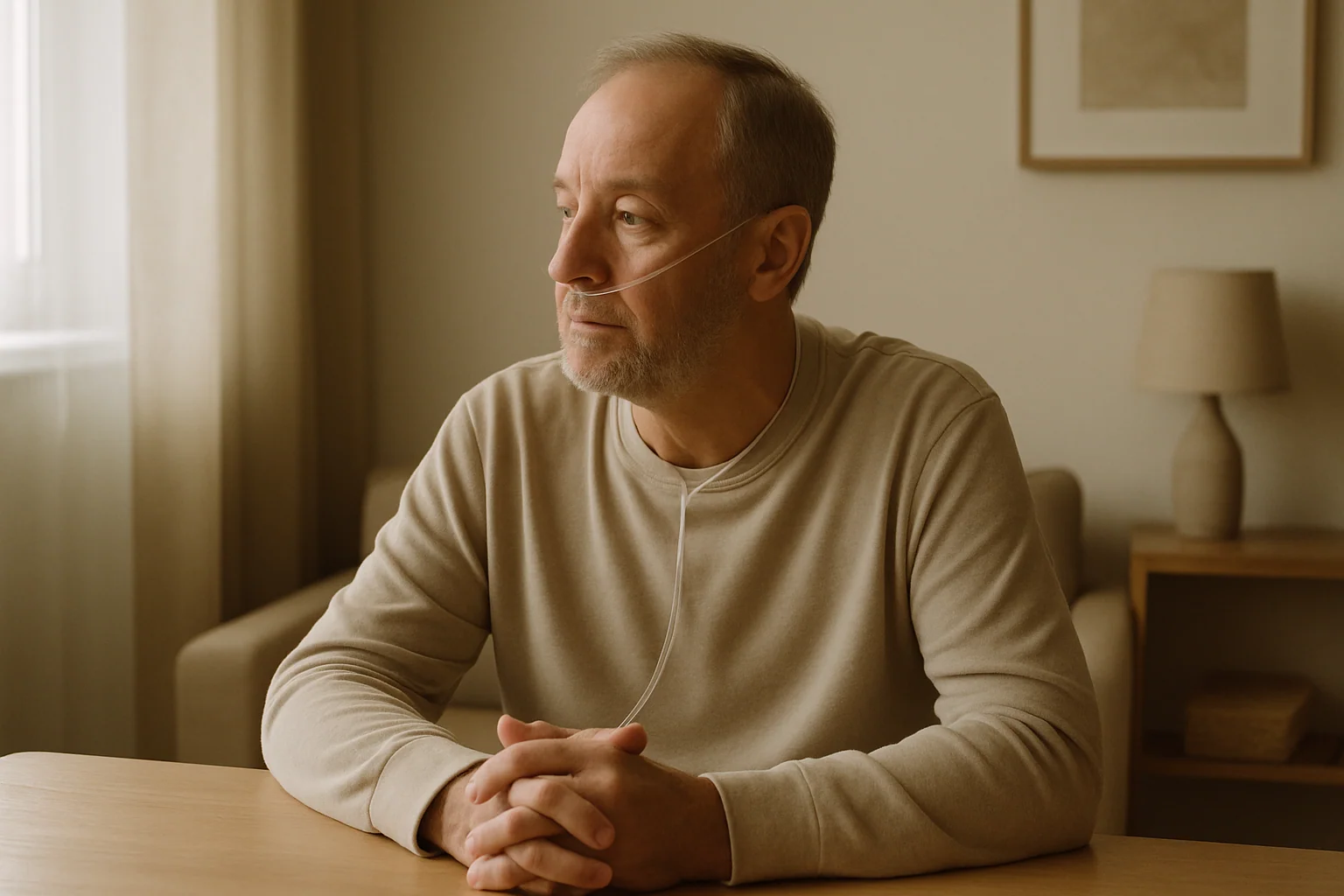
Cancer treatment — particularly chemotherapy, radiation involving the pelvis, and androgen deprivation therapy for prostate cancer — commonly affects testosterone. The picture is different from age-related low T and requires its own clinical thinking. This guide is a starting point for men in or post-cancer treatment who suspect their testosterone is affected.
For broader context, see our complete guide to low testosterone.
This article is informational and is not a substitute for ongoing care from your oncology team. Decisions about testosterone treatment in cancer survivors must be made with your treating doctors.
1How cancer treatments affect testosterone
Androgen deprivation therapy (ADT) for prostate cancer is the most direct — it deliberately lowers testosterone as part of treating the cancer. Many men on ADT experience hot flashes, fatigue, loss of libido, mood changes, and muscle and bone loss as a result. These are not "side effects" in the avoidable sense; they are part of how the treatment works.
Chemotherapy can damage testicular function, sometimes recoverably, sometimes not. The risk depends on the specific drugs and doses used.
Radiation to the pelvis or near the testes can affect testicular function.
Surgery involving the testes, pituitary, or hypothalamus can affect hormone production.
2What's worth investigating
If you've completed cancer treatment and are experiencing persistent symptoms (fatigue, low libido, mood change, muscle loss, hot flashes), it is worth raising with your treating team. A testosterone test, alongside the rest of your surveillance, can clarify whether hormonal effects are contributing.
3What is and isn't appropriate for treatment
For men on ADT: TRT is not appropriate because it counteracts the cancer treatment. Symptom management focuses on the side effects directly — there are evidence-based approaches for hot flashes, mood, and bone health that don't involve testosterone replacement.
For men with treated prostate cancer not on ADT: the appropriateness of TRT depends on cancer status, time since treatment, and ongoing risk assessment. Major urological and oncological guidelines have evolved — the older blanket contraindication of TRT in any prostate cancer history has softened in carefully selected cases. This is a decision that must involve your oncology team.
For men post-chemotherapy or pelvic radiation with confirmed low T and significant symptoms (without active cancer): TRT may be appropriate. The picture is similar to non-cancer-related hypogonadism with careful additional surveillance.

4Who should be involved in decisions
Decisions about testosterone in cancer survivors should always involve:
- Your treating oncologist (or surveillance team)
- A doctor experienced in men's health or hormone management
- You, with a clear understanding of trade-offs
A Singapore-licensed doctor on Noah can help with the hormone side of the conversation, in coordination with your oncology team.
5Frequently asked questions
Is TRT safe after prostate cancer?
It depends on the case. Older guidelines treated prostate cancer history as an absolute contraindication; newer evidence and guidelines allow for carefully-selected cases. This is a decision for your oncology team plus a hormone specialist, not for self-direction.
Will my testosterone come back after chemotherapy?
Sometimes — it depends on the agents used, doses, and individual recovery. Some men's testosterone recovers fully; others have persistent suppression. A test at appropriate intervals after treatment can clarify.
Can hot flashes from ADT be treated?
Yes. Several evidence-based options exist (some antidepressants, certain other agents) that can reduce ADT-related hot flashes without affecting the cancer treatment. Discuss with your oncology team.
6Speak to a doctor on Noah
If you are post-cancer treatment and dealing with hormonal symptoms, you can book a confidential consultation with a Singapore-licensed doctor on Noah to discuss your situation alongside your oncology care.
7References
Khera M, et al. Testosterone replacement therapy after prostate cancer. European Urology. 2019.
Mulhall JP, et al. AUA Guideline on Testosterone Deficiency. 2018 (updated 2023).
Howell SJ, Shalet SM. Effect of cancer therapy on pituitary-testicular axis. Reviews in Endocrine & Metabolic Disorders. 2005.
Articles on Noah are for informational purposes only and do not replace medical advice from your treating doctors. Decisions about hormone treatment in cancer survivors require coordination with your oncology team. To consult on Noah, click here. Noah's editorial standards are described on our editorial standards page.
That wasn’t so hard. Got questions?
That’s what a consult is for. Five minutes of questions, then a short video chat.
- $20.10 consult
- Pay for treatment only once it’s approved