

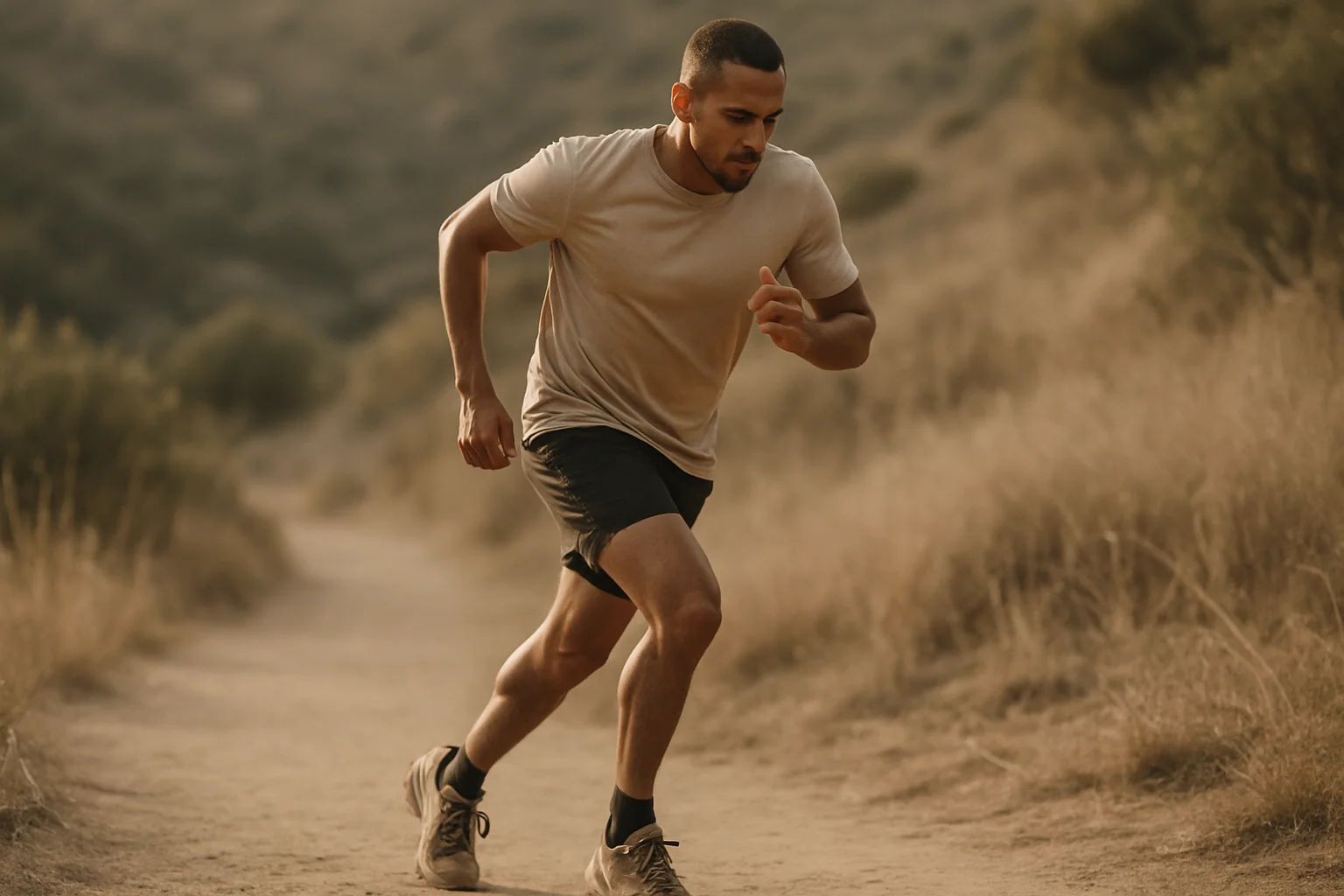
There's a common assumption that active men don't get low testosterone. The reality is more nuanced. Recreational athletes and serious lifters can develop low T — sometimes because of how they train rather than despite it. This guide explains how, who's most at risk, and what to do.
For broader context, see our complete guide to low testosterone.
1The patterns that lower testosterone in active men
Under-eating relative to training load. Sometimes called "relative energy deficiency in sport" (RED-S), this is when an athlete's caloric intake doesn't match the demands of their training. The body responds by reducing reproductive function, including testosterone. Common in endurance athletes, weight-class athletes, and physique-focused trainers.
Excessive endurance training volume. Very high training loads, particularly in endurance sports, can suppress testosterone independently of caloric intake — the body diverting resources away from reproductive function.
Chronic sleep deprivation. Common in athletes balancing training, work, and family. The same physiology applies.
Past or current anabolic steroid use. The most underrecognised cause in physique-focused men. After steroid use, the body's own production can stay suppressed for months to years, sometimes incomplete.
Selective androgen receptor modulators (SARMs) and other unregulated performance-enhancing compounds can also suppress endogenous production.
2When to suspect it
A testosterone test is reasonable for an active man when:
- Training response has plateaued or reversed despite consistent effort
- Recovery is significantly slower than it used to be
- Libido has dropped
- Mood, motivation, or sleep have shifted
- There's a history of steroid or SARM use, even if discontinued
- Training volume is very high and caloric intake may not be matching it
3What works
Treatment depends on cause:
- For RED-S: increasing caloric intake to match training, often with professional guidance from a sports dietitian. Recovery of normal hormone function follows within months in most cases.
- For overtraining: reducing volume, improving recovery, sometimes a structured break.
- For post-steroid suppression: depending on severity and time since use, recovery may be spontaneous or may benefit from medical treatment (clomiphene, hCG) to support the body's own production rather than starting TRT outright — particularly important if fertility is a consideration.
- For confirmed long-term hypogonadism after appropriate workup: TRT may be considered, with careful attention to fertility, monitoring, and a doctor's clinical assessment.
Athletes considering treatment should also be aware of anti-doping rules where relevant; testosterone use can disqualify from competitive sport without a therapeutic use exemption.
4Frequently asked questions
Can endurance training lower my testosterone?
Very high volumes can, particularly when combined with under-eating. Moderate training is supportive, not suppressive.
I used steroids years ago — could my testosterone still be low because of that?
Yes. Recovery after anabolic steroid use can be incomplete years later in some men. Mention it to your doctor.
Will TRT help me get bigger?
In men with confirmed low testosterone, TRT supports the response to training. In men with normal levels, TRT is not appropriate; using it for muscle gain is misuse and carries health, legal, and competitive consequences.
5Speak to a doctor on Noah
If you're an active man with symptoms that suggest low testosterone, you can book a confidential consultation with a Singapore-licensed doctor on Noah.
6References
Mountjoy M, et al. The IOC consensus statement: relative energy deficiency in sport (RED-S). BJSM. 2014.
Rahnema CD, et al. Anabolic steroid-induced hypogonadism. Fertility & Sterility. 2014.
Articles on Noah are for informational purposes only and do not replace medical advice from a qualified doctor. To consult on Noah, click here. Noah's editorial standards are described on our editorial standards page.
That wasn’t so hard. Got questions?
That’s what a consult is for. Five minutes of questions, then a short video chat.
- $20.10 consult
- Pay for treatment only once it’s approved