

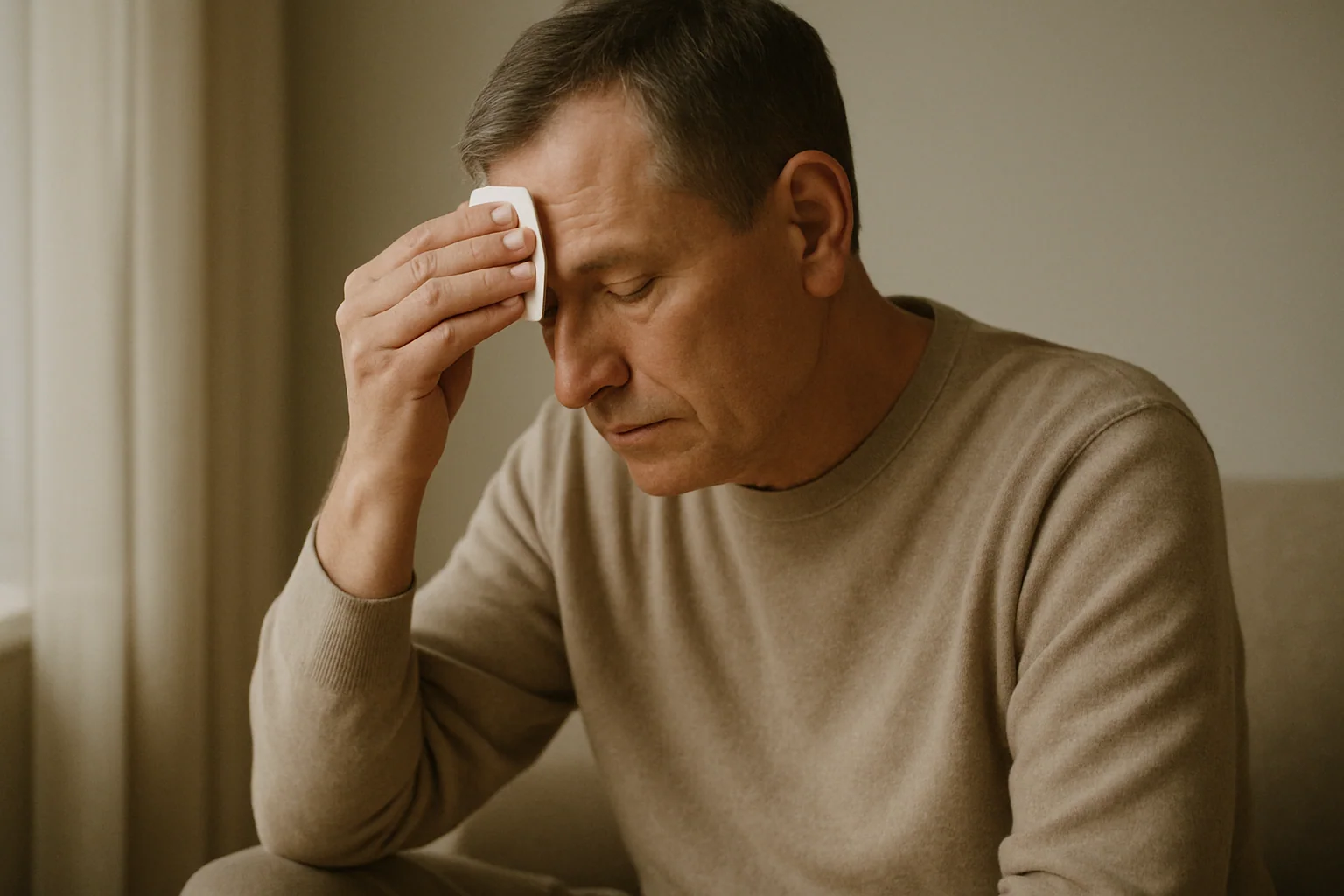
Hot flashes are usually thought of as a female menopausal symptom, but they can occur in men too. When they do, they often signal a hormonal shift worth investigating — most commonly involving testosterone. This guide explains when, why, and what to do about hot flashes in men.
For broader context, see our complete guide to low testosterone.
1What hot flashes feel like
A hot flash is a sudden, brief sensation of heat — usually spreading across the chest, neck, and face — often accompanied by sweating and sometimes followed by a chill. Episodes typically last seconds to a few minutes. They can happen day or night; night sweats are the same phenomenon happening during sleep.
2Why they happen
Hot flashes are caused by a temporary disruption of the body's temperature regulation — specifically, the hypothalamus's response to changes in sex hormone levels. The mechanism is the same in men and women: sudden shifts or sustained low levels of sex hormones (testosterone in men, oestrogen in women) confuse the temperature-setting machinery, and the body responds by trying to cool itself rapidly.
3Common causes in men
Significantly low testosterone from any cause, particularly when the drop has been steep. Late-onset hypogonadism (andropause) can produce hot flashes in some men.
Androgen deprivation therapy (ADT) for prostate cancer is the single most common medical cause of hot flashes in men. ADT deliberately lowers testosterone as part of cancer treatment, and hot flashes are one of the most commonly reported side effects.
Other endocrine causes: hyperthyroidism, certain pituitary disorders, and rare conditions like carcinoid syndrome.
Medication side effects: some antidepressants, opioids, certain blood pressure medications.
Lifestyle and other triggers: alcohol (particularly in some men), caffeine, spicy foods, anxiety, and hot environments can all trigger or worsen flashes.

4When to see a doctor
Hot flashes in men are worth a conversation with a doctor when:
- They are happening regularly (not just occasionally)
- They are disrupting sleep (night sweats)
- They appear alongside other symptoms suggestive of low testosterone (fatigue, low libido, mood change)
- They started suddenly without obvious trigger
- You are on a medication that could be contributing
- There are red flags — unexplained weight loss, fever, persistent night sweats, lymph node swelling — in which case see a doctor sooner
5What helps
Treatment depends on the cause. If low testosterone is confirmed and significant, addressing that may resolve the hot flashes. If medication is contributing, your doctor may adjust the prescription. Lifestyle factors that often help: limiting alcohol and caffeine, managing room temperature at night, layered clothing, stress management.
6Frequently asked questions
Are hot flashes in men dangerous?
The flashes themselves aren't dangerous, but they can signal an underlying condition worth investigating. Most causes are treatable.
Will TRT stop my hot flashes?
If hot flashes are being driven by significantly low testosterone, TRT often improves or resolves them. If the cause is ADT for prostate cancer, TRT is not appropriate.
Are night sweats different from hot flashes?
They are the same phenomenon — hot flashes happening during sleep. Night sweats can also have other causes (infection, certain cancers, medications), which is why persistent night sweats warrant a doctor's review.
7Speak to a doctor on Noah
If you are experiencing recurrent hot flashes or night sweats, you can book a confidential consultation with a Singapore-licensed doctor on Noah.
8References
Spetz AC, et al. Hot flushes in a male population aged 55, 65, and 75 years. Menopause. 2003.
Frisk J. Managing hot flushes in men after prostate cancer. Maturitas. 2010.
Bhasin S, et al. Endocrine Society Clinical Practice Guideline. JCEM. 2018.
Articles on Noah are for informational purposes only and do not replace medical advice from a qualified doctor. To consult on Noah, click here. Noah's editorial standards are described on our editorial standards page.
That wasn’t so hard. Got questions?
That’s what a consult is for. Five minutes of questions, then a short video chat.
- $20.10 consult
- Pay for treatment only once it’s approved