If you've looked into hair transplants, you've likely run into two acronyms: FUE and FUT. They're both established surgical approaches to restoring hair, and the "which is better" debate online can be confusing. At Noah, we think it helps to understand the basic difference between them — while being clear that surgery is a significant decision best guided by a qualified doctor who can assess you in person.
This article is general education, not medical advice. Hair transplant suitability requires assessment by a licensed Singapore doctor.
The Shared Idea
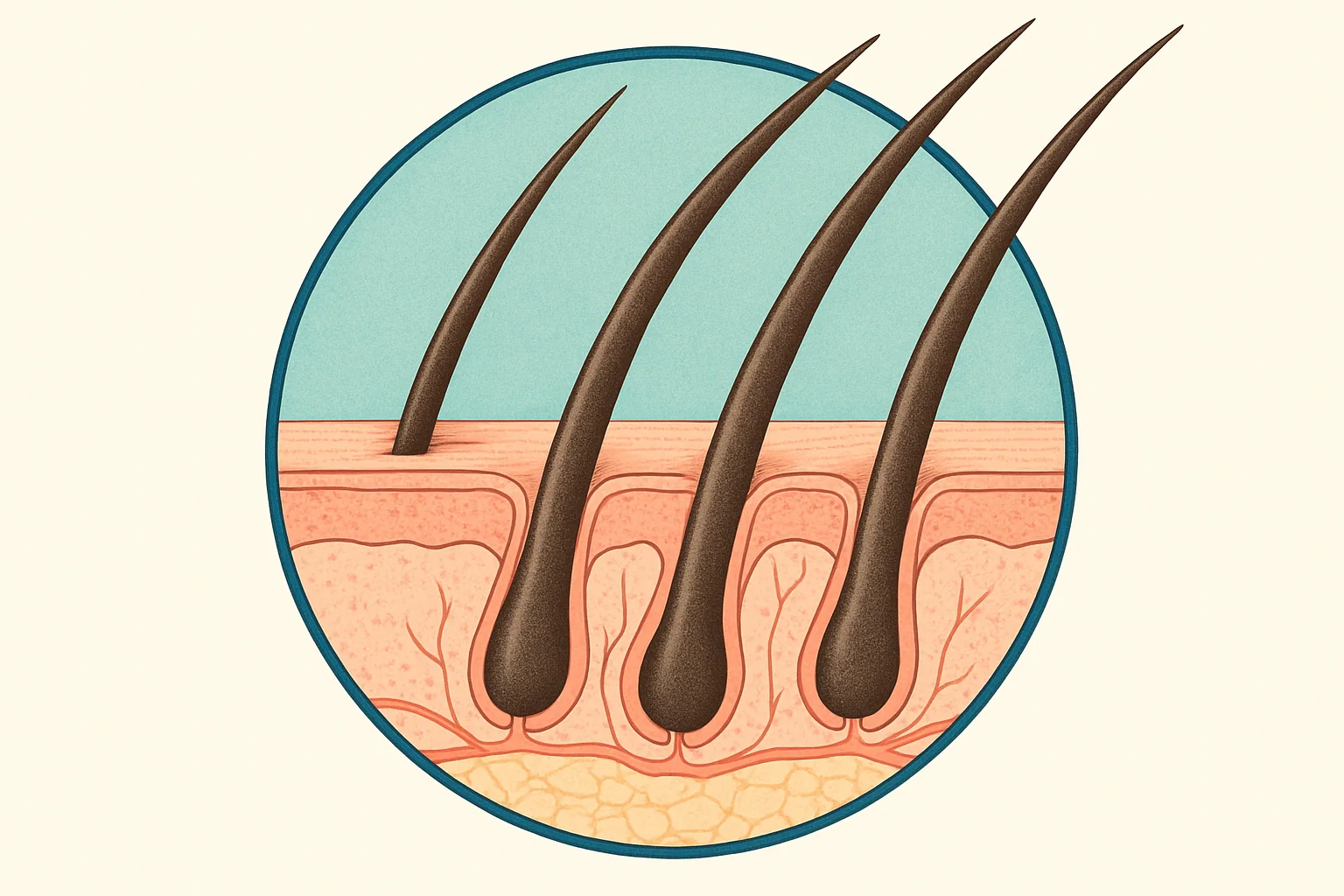
Both FUE and FUT are forms of hair transplant surgery built on the same principle. Hair from areas of the scalp that are typically resistant to pattern hair loss is relocated to thinning areas. Because the relocated hair retains its original characteristics, the goal is a more natural, lasting result in the treated area. The difference between FUE and FUT lies mainly in how the hair is harvested.
FUE in Brief
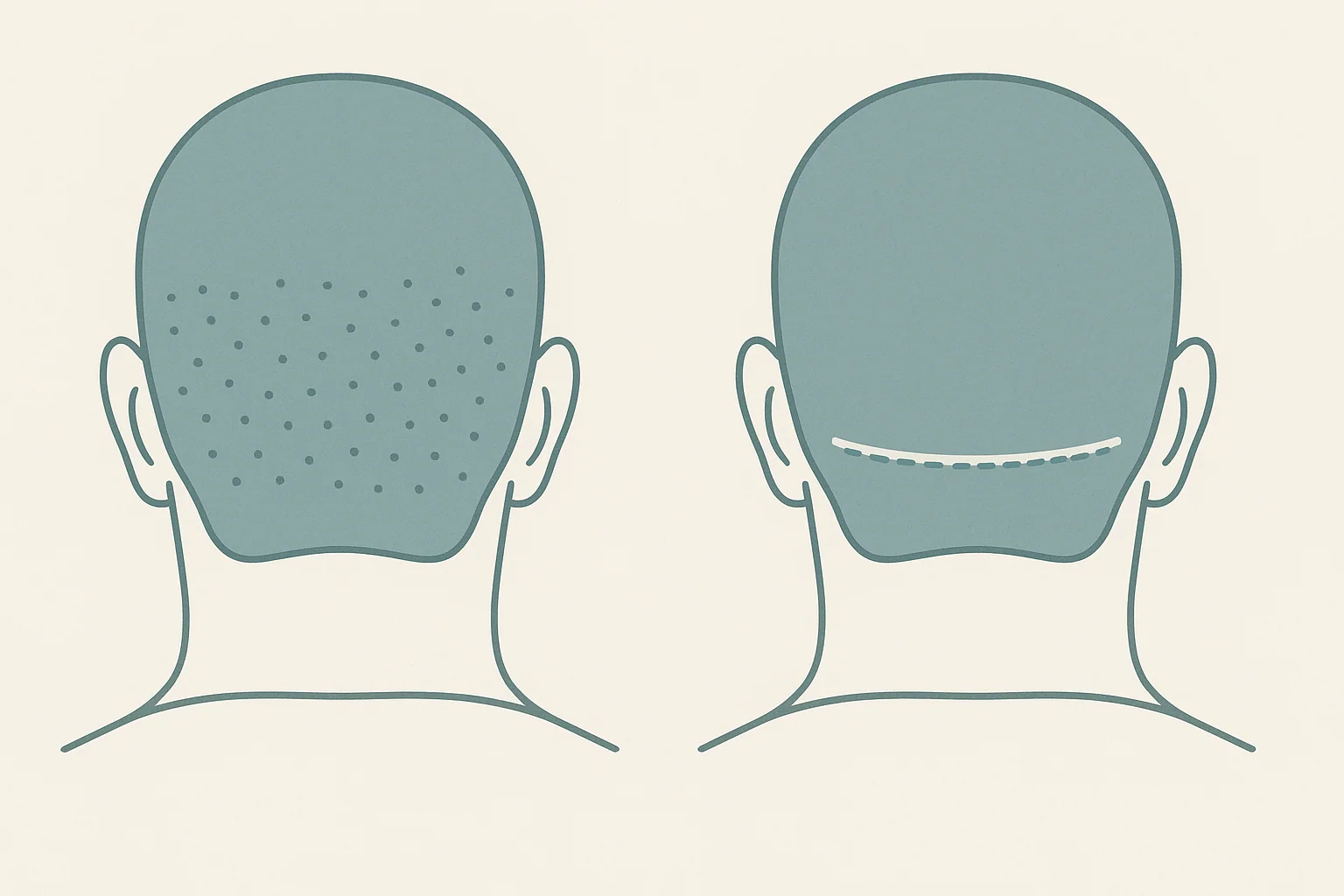
FUE (follicular unit extraction) involves harvesting individual follicular units directly from the donor area. Because of how the hair is taken, it generally doesn't leave a single linear scar, which some men prefer — particularly if they like to wear their hair very short. It's a meticulous approach, and the specifics of how it's done and how recovery goes vary by individual and provider.
FUT in Brief
FUT (follicular unit transplantation) involves removing a strip of skin from the donor area, from which follicular units are then separated for transplanting. This approach leaves a linear scar in the donor area, which is usually hidden by surrounding hair. For some patients and situations, it can be an efficient way to obtain grafts. As with FUE, suitability and outcomes depend on the individual.
How Doctors Think About the Choice
There's no universally "better" technique — the right choice depends on the person. A qualified doctor considers factors such as the extent and pattern of hair loss, donor area characteristics, hair type, your preferences (including how you like to wear your hair), and your goals and expectations. Two men can be advised toward different techniques for good reasons.
This is also why online comparisons only go so far. The meaningful comparison happens in a proper assessment, where a doctor can evaluate your specific situation rather than generalise.
Setting Realistic Expectations
Hair transplant surgery is a significant procedure, not a quick fix, and outcomes vary between individuals. Results take time to develop, and no responsible provider can guarantee a particular outcome. It's also worth knowing that surgery addresses existing thinning areas but doesn't stop ongoing pattern hair loss elsewhere, so a doctor may discuss how it fits with other approaches. Going in with realistic expectations is part of making a good decision.
Why Online Comparisons Only Go So Far
The "FUE versus FUT" debate online can be endless, but the meaningful comparison happens in a proper in-person assessment. A qualified doctor can evaluate factors only visible up close — your donor area, hair characteristics, the pattern and extent of your hair loss — and weigh them against your preferences and goals. Two men can be advised toward different techniques for good reasons. So rather than trying to settle the debate from articles, the more useful step is an assessment where these individual factors can actually be considered, which is where a real recommendation comes from.
Surgery Is One Part of the Picture
It's worth remembering that a transplant addresses existing thinning areas but doesn't stop ongoing pattern hair loss elsewhere. This is why a doctor may discuss how surgery fits alongside other approaches, and why realistic expectations matter so much. Results take time to develop and vary between individuals, and no responsible provider can guarantee a particular outcome. Seeing a transplant as one element of managing hair loss — rather than a standalone, permanent solution to all thinning — leads to more satisfied decisions and a clearer sense of what surgery can and can't do.
When to Speak to a Doctor
It's worth speaking to a licensed doctor if you're considering a hair transplant, want to understand whether you're a suitable candidate, or are weighing it against other approaches. A doctor can assess your hair loss, explain the realistic trade-offs, and help you decide whether surgery makes sense for you — and if so, which approach.
This is a major decision. Proper assessment protects you from unsuitable procedures and unrealistic promises.
Speak to a Licensed Doctor on Noah
If you're exploring hair restoration options, a doctor can help you think it through. Noah connects you with MOH-licensed Singapore doctors through discreet, confidential online consultations. Start a consultation to discuss your hair loss and options.
This article is for general education and is not medical advice. A consultation with a licensed doctor is required before any treatment.
Reading about it is a good start.
Talking to a doctor is better. Answer a few questions online and a licensed Noah doctor will take it from there, privately.
Get started
Written by our Editorial Team
Last updated 15 Jun 2026