

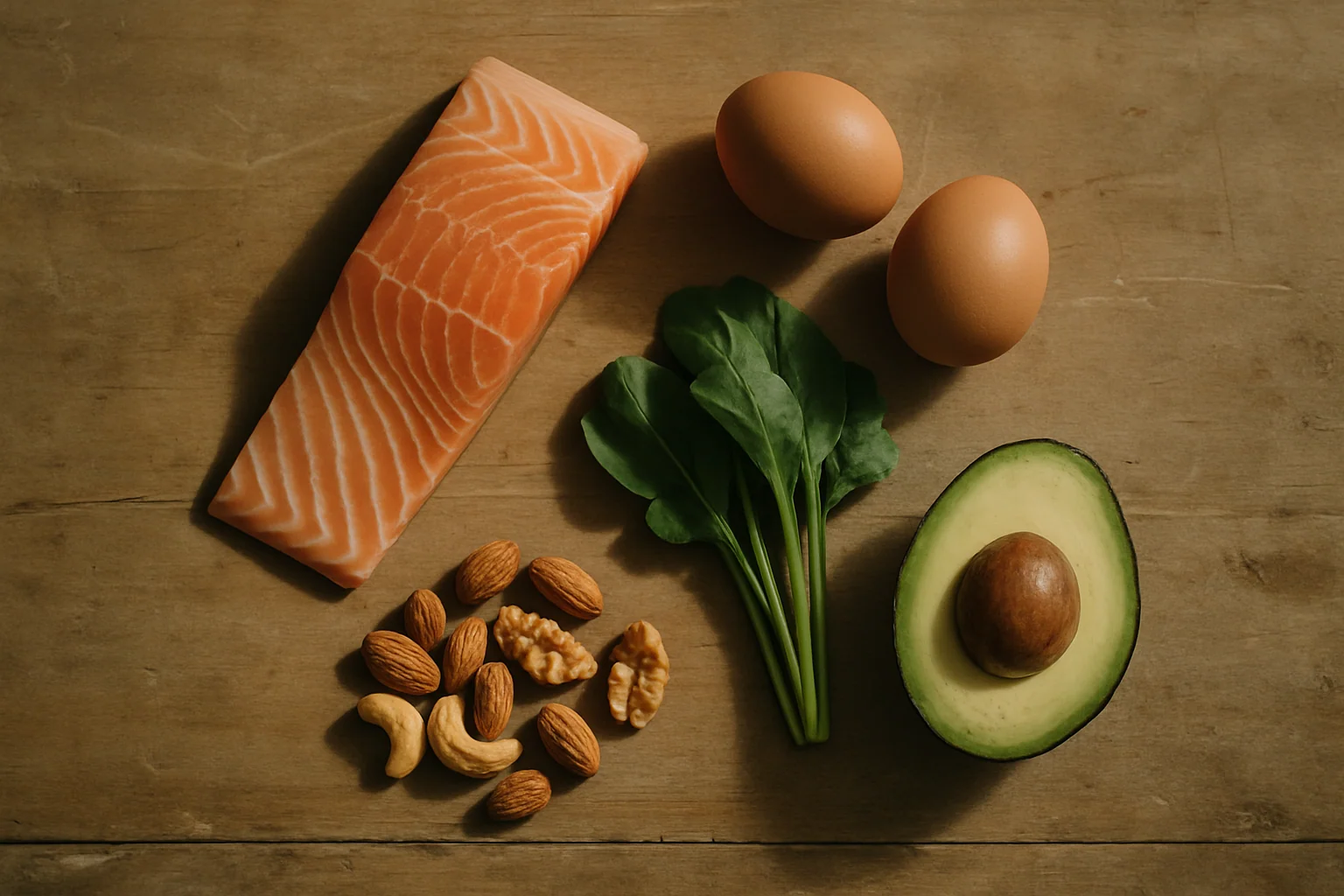
Despite what some marketing suggests, there is no single "testosterone superfood" that will transform your hormone levels. There are, however, dietary patterns and specific nutritional factors that genuinely support healthy testosterone, and some that suppress it. This guide separates them.
1The broad pattern that matters most
The dietary pattern that best supports testosterone is the same one that supports cardiovascular and metabolic health more generally: adequate protein, reasonable amounts of healthy fats, plenty of vegetables, sufficient micronutrients, not too much processed food and added sugar, and total caloric intake aligned with goals.
There's no need to chase a specific named diet. Whatever sustainable eating pattern supports the broader picture will support testosterone.
2Specific factors with credible evidence
Adequate dietary fat. Very-low-fat diets can modestly lower testosterone, particularly when fat falls below about 20% of total calories. Maintaining 25–35% of calories from a mix of healthy fats (olive oil, fatty fish, nuts, eggs) is supportive.
Avoiding extreme caloric deficit. Severe caloric restriction, particularly when sustained, suppresses testosterone in men. Reasonable deficits during weight loss are fine; very-low-calorie dieting is not testosterone-supportive.
Adequate protein. Around 1.6–2.2g per kg bodyweight per day for active men. More for muscle and recovery than for testosterone directly.
Vitamin D-rich foods or supplementation in deficient men. Fatty fish (salmon, sardines), egg yolks, fortified foods. Singapore men are often vitamin D deficient despite the climate — indoor lifestyles limit sun exposure.
Zinc-rich foods. Oysters, red meat, poultry, beans, nuts. Severe zinc deficiency does impair testosterone production.
Magnesium-rich foods. Leafy greens, nuts, seeds, whole grains.
3Specific factors that can suppress testosterone
Heavy alcohol intake, as covered in our alcohol and testosterone article.
Persistent caloric deficit when intense training is also present — the body responds by reducing reproductive function.
Highly processed diets with persistent sugar excess, particularly when they drive insulin resistance and weight gain. The mechanism is metabolic, not directly chemical.
Trans fats, where present in older industrial fats; mostly avoided now in regulated food supplies.
4What's likely overhyped
- Soy and "oestrogenic" foods. Moderate soy intake does not meaningfully suppress testosterone in men at typical consumption levels. The fear is overblown in popular discussion.
- Specific "testosterone foods" like garlic, ginger, pomegranate. Modest evidence at best; not transformative.
- Carnivore diets specifically for testosterone. Adequate protein and fat is the relevant variable, not eliminating plant foods.
- Eating raw eggs. Cultural curiosity, not a testosterone strategy.
5A practical plate
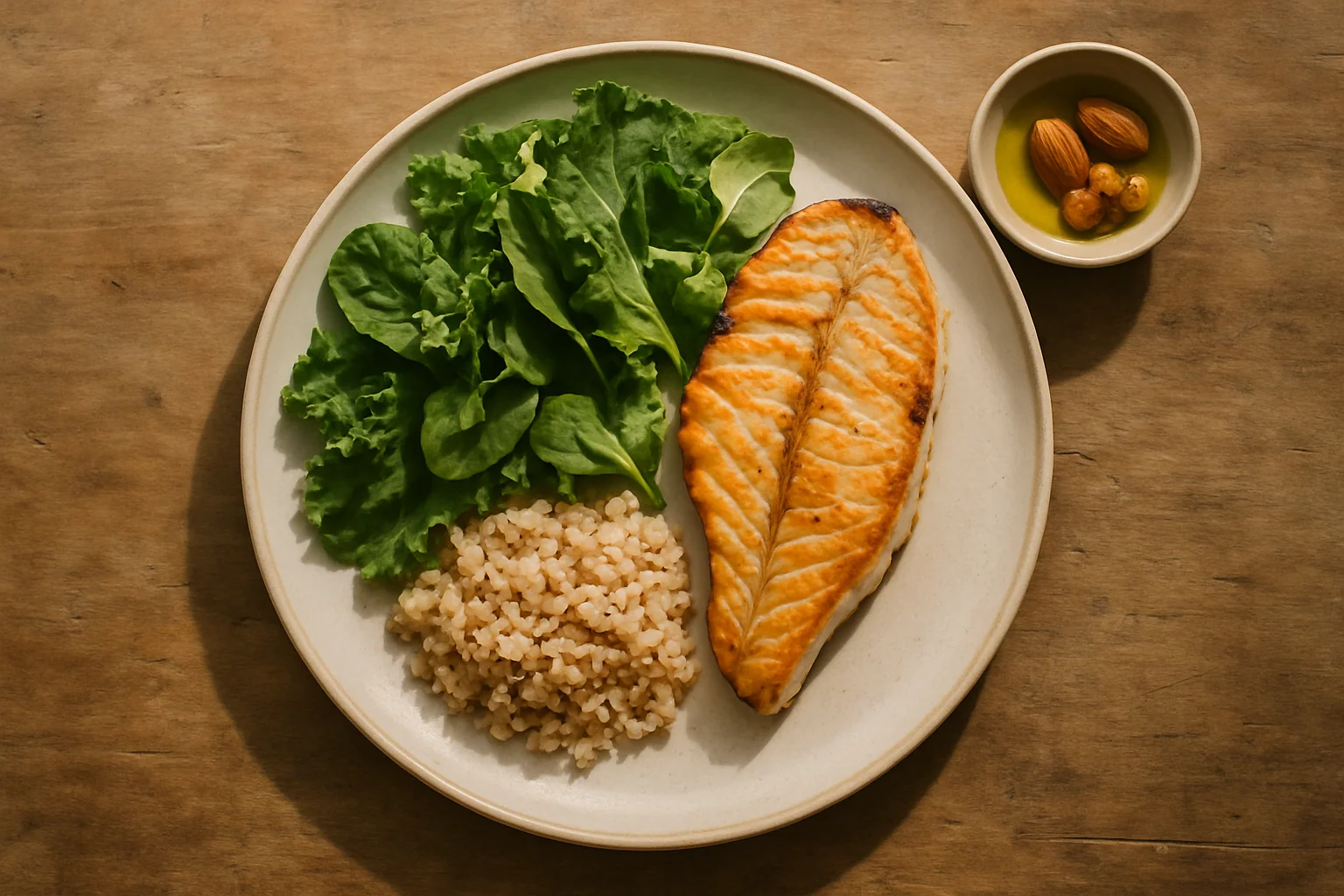
A practical pattern looks like: protein source (fish, poultry, lean meat, eggs, legumes) at each meal; vegetables filling half the plate; healthy fats in cooking and food choices; whole grains or starchy vegetables in modest portions; minimal added sugar and processed snacks; alcohol moderated.
Boring works.
6Frequently asked questions
Does soy lower testosterone?
At typical consumption levels, no. Meta-analyses do not show clinically meaningful effects on testosterone in men.
Are eggs good for testosterone?
Eggs contain protein, healthy fats, and cholesterol (used in hormone synthesis). They are a reasonable component of a testosterone-supportive diet but not a miracle food.
Should I cut carbs to raise testosterone?
Not specifically. What matters is total caloric balance, adequate protein, and adequate dietary fat. Some men do well on lower-carb approaches; others don't.
7Speak to a doctor on Noah
If you want to discuss dietary factors alongside your broader symptom picture, book a confidential consultation with a Singapore-licensed doctor on Noah.
8References
Hamalainen E, et al. Diet and serum sex hormones in healthy men. Journal of Steroid Biochemistry. 1984.
Whittaker J, Wu K. Low-fat diets and testosterone in men. Journal of Steroid Biochemistry & Molecular Biology. 2021.
Messina M. Soy and testosterone: meta-analysis. Reproductive Toxicology. 2010.
Articles on Noah are for informational purposes only and do not replace medical advice from a qualified doctor. To consult on Noah, click here. Noah's editorial standards are described on our editorial standards page.
That wasn’t so hard. Got questions?
That’s what a consult is for. Five minutes of questions, then a short video chat.
- $20.10 consult
- Pay for treatment only once it’s approved